Owner’s manual
 Error Codes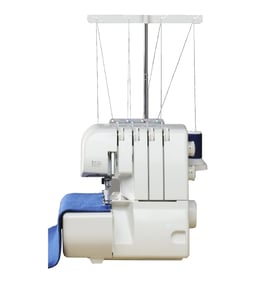

What does overlock mean in a sewing machine?
On the Singer 14SH754, “overlock” means the machine forms a stitch that wraps the raw fabric edge while trimming and finishing the seam, so the edge does not fray and the seam looks clean. It uses loopers and 2, 3, or 4 threads depending on the stitch.
- Trims excess seam allowance with the built-in knife (when engaged)
- Wraps thread around the cut edge to prevent fraying
- Seams and finishes in one pass (faster than sewing then zigzagging)
- Handles knits and stretch fabrics well when differential feed is set correctly
- Creates specialty finishes like rolled hems and flatlock seams
The 14SH754 supports multiple stitch setups based on needle position, threading, and tension settings.
| Stitch type | Threads | Typical use |
|---|---|---|
| Rolled hem | 2 or 3 | Lightweight fabrics, narrow edge finish |
| Three-thread overlock | 3 | General seaming and overedging |
| Four-thread safety stitch | 4 | Strong seams on stretch fabrics |
| Flatlock | 3 | Decorative seams that can open flat |
- For normal overedge stitching, set differential feed to 1.0.
- If knits ripple or stretch out, increase differential feed above 1.0 and test on scrap.
- If you need to sew without trimming, move the movable knife to the nonworking position.
Overlocking is the main reason people choose a serger (overlock sewing machine): it gives a durable, professional-looking edge finish and reduces fraying, especially on knits and loosely woven fabrics.
For stitch charts, threading paths, and settings (stitch length, overedge width, differential feed), use the owner's manual.
Last updated: February 2026
What is the difference between a sewing machine and an overlock sewing machine?
A standard sewing machine primarily builds seams with straight and zigzag stitches, while the Singer 14SH754 overlock sewing machine forms an overlock stitch that trims the fabric edge and finishes the seam at the same time for a clean, durable edge. For stitch setups and threading paths, use the owner's manual.
- Sewing machine: construction seams, topstitching, buttonholes, zippers, quilting
- Overlock (serger): seam finishing, seam seaming plus edge finishing in one pass, rolled hems, stretch seams on knits
- Both together: sew the garment on a sewing machine, then overlock raw edges for a professional finish
The 14SH754 is a 2, 3, or 4 thread overlock machine with differential feed, which helps control stretching or puckering on knits and lightweight fabrics.
- 2 thread stitch (lightweight fabrics)
- 3 thread overlock (general seaming and overedge finishing)
- 3 thread flatlock (decorative or ladder style seams)
- 4 thread stretch mock safety stitch (stronger seams on stretch fabrics)
| Feature | Sewing machine | Overlock (Singer 14SH754) |
|---|---|---|
| Cuts fabric edge while sewing | No | Yes (with knife engaged) |
| Typical thread count | 1 needle thread plus bobbin | 2 to 4 threads (needle plus loopers) |
| Best for stretchy knits | Good with the right stitch | Excellent with differential feed |
| Seam finish look | Depends on stitch | Clean, wrapped edge finish |
Using the right machine saves time and improves results: an overlock stitch prevents fraying and strengthens seams, while a sewing machine gives you precision for construction details (zippers, hems, and topstitching).
Last updated: February 2026
What is the overlock sewing machine model 14SH754?
The Singer 14SH754 is a 2, 3, or 4-thread overlock (serger) sewing machine with differential feed, designed for household sewing and for finishing seams, edging, and rolled hems with a clean, professional look. For stitch setups and adjustments, use the owner's manual.
An overlock machine trims and overcasts fabric edges as it sews, which helps prevent fraying and speeds up seam finishing.
Common uses include:
- Finishing raw edges on woven fabrics
- Sewing and finishing seams in one step
- Rolled hemming lightweight fabrics
- Stretch seaming on knits (when using a 4-thread setup)
- Decorative edge finishes (wrapped edge variations)
The stitch type depends on needle position(s), threading path, and tension settings.
| Setup | Typical stitch types | Common use |
|---|---|---|
| 2-thread | Standard rolled hem | Lightweight fabrics, narrow hems |
| 3-thread | Overlock, flatlock, wrapped edge | General edge finishing, decorative seams |
| 4-thread | Stretch mock safety stitch | Stronger seams on knits and stress areas |
These are the core performance specs called out for the differential-feed version of this machine.
- Max sewing speed: up to 1,300 stitches per minute
- Stitch length (feed amount): 1 to 4 mm
- Differential feed ratio: 0.7 to 2.0
- Overedge stitch width: about 3.0 to 6.7 mm (rolled hem about 1.5 mm)
Knowing this is an overlock machine (not a standard sewing machine) helps you choose the right needles, thread paths, and settings for seam finishing. Differential feed is especially useful for preventing wavy seams on knits and puckering on lightweight fabrics.
Last updated: February 2026
Can you use an overlocker as a sewing machine?
An overlocker (serger) like the Singer 14SH754 is designed to trim fabric and finish raw edges while stitching, so it does not replace a regular sewing machine for most construction tasks (zippers, buttonholes, topstitching, precise straight stitching). It is best used alongside a standard machine.
Overlockers are built for speed and edge finishing using loopers and multiple threads.
- Finishes seams and raw edges in one pass (stitching plus trimming)
- Creates stretch-friendly seams for knits (for example, mock safety and stretch overedge)
- Produces specialty finishes like rolled hems, flatlock, and wrapped edge overlock
- Helps reduce fraying on woven fabrics
- Can do decorative effects with specialty thread in the upper looper
A conventional sewing machine is the right tool when you need precision and attachments.
- Straight stitch construction and accurate seam allowances
- Zippers, buttonholes, bartacks, and most garment closures
- Topstitching and edge stitching without trimming fabric
- Quilting, piecing, and detailed pivoting around corners
- Sewing on small pieces where a knife cut would be risky
| Task | Overlocker (Singer 14SH754) | Regular sewing machine |
|---|---|---|
| Finish raw edges | Excellent | Good (zigzag/overcast) |
| Sew knits with stretch | Excellent | Good (stretch stitches) |
| Install zipper/buttonhole | Not intended | Best choice |
| Topstitch without trimming | Limited | Excellent |
Use the overlocker to assemble and finish seams, then switch to your sewing machine for details.
- Serge seam allowances after cutting pieces
- Use a 4-thread seam for strength on knits and stress areas
- Use a rolled hem for lightweight fabrics and scarf edges
- Use flatlock for decorative seams, then press the seam flat
- Test stitch and adjust tension and differential feed before sewing the garment
An overlocker’s knife and multi-thread stitch formation are perfect for clean, durable seam finishes, but those same features make it the wrong tool for many precision operations. Pairing the two machines gives you professional-looking seams and better control over construction details.
For stitch types and setup guidance (rolled hem, flatlock, blind hem, differential feed), follow the owner's manual.
Last updated: February 2026
Can I buy Singer parts online?
Yes. You can buy replacement parts for your Singer 14SH754 overlock sewing machine online by using the model-based parts listing and diagrams to match the exact component you need. For model-specific maintenance and part identification, use the owner's manual.
Because many Singer parts look similar across models, we recommend confirming fit by model number and by where the part sits on the machine.
- Match the model number exactly: 14SH754
- Use the parts diagram location (looper cover area, needle area, light cover area)
- Confirm the function (threading, cutting, lighting, feeding)
- Compare any markings on the old part (stamped numbers, shape, mounting holes)
- If you are replacing a wear item, inspect nearby parts for damage (for example, knife holder screws)
These are typical overlock sewing machine items people replace or restock; availability varies by diagram.
| Part type | What it affects | Common reason to replace |
|---|---|---|
| Needles | Stitch formation | Skipped stitches, bent/dull needle |
| Cutting knives (upper/lower) | Fabric trimming and edge finish | Ragged cut, fraying, uneven trimming |
| Light bulb (15W bayonet type) | Visibility at needle area | Burned out bulb |
| Thread guides/tension components | Thread control | Thread breaks, inconsistent tension |
- Unplug the machine before inspecting parts or removing covers.
- If you are chasing stitch issues, start with the basics: correct needle type/size, correct threading path, and small tension changes.
- For knife or bulb replacement, follow the step-by-step procedure and safety notes in the manual.
Ordering by model helps you avoid returns and downtime. On an overlock machine like the Singer 14SH754, small differences in needles, knives, and thread path parts can change stitch quality, cutting performance, and fabric feeding.
Last updated: February 2026