Error Codes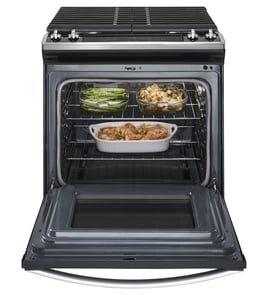



How to find Whirlpool gas range model number?
For a Whirlpool free standing gas range like model WFG550S0LZ5, the model number is typically printed on a rating label around the oven frame or storage drawer area. We use that exact model number to match the correct Whirlpool parts and diagrams for your range.
Where to look on a Whirlpool gas range
Check these common label locations (in this order):
- Oven door frame: open the oven door and look along the left or right front frame
- Storage drawer area: pull the bottom drawer out and look on the frame behind it
- Warming drawer area (if your range has one): pull the drawer out and check the frame behind it
- Broiler drawer area (on some models): check the frame just inside the drawer opening
- Back panel: if you can safely access the rear, look for a label on the back of the range
What the label looks like
Most Whirlpool rating labels include:
- Model number (example: WFG550S0LZ5)
- Serial number
- Gas type (natural gas or LP) and electrical rating
- Certification markings
Quick checklist: model number vs. part number
Use this to avoid ordering the wrong item.
| You are looking at | Example | What it’s used for |
|---|---|---|
| Model number | WFG550S0LZ5 | Identifies the exact range version |
| Part ID | WPW10333842 | Identifies a specific replacement part |
| Part number | W10333842 | Manufacturer’s part number for that part |
Why it matters
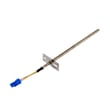
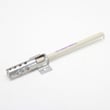
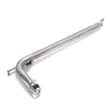
Whirlpool often makes small design changes within the same series. Using the exact model number helps us match the correct components (for example, the range oven burner igniter WPW10333842 or the correct door hardware) so fit and wiring connections are right.
Last updated: February 2026
What is the lifespan of a Whirlpool stove?
A Whirlpool stove like the Whirlpool WFG550S0LZ5 free standing gas range typically lasts 15 years with normal household use. Keeping burners clean, protecting the oven door seal, and fixing ignition issues early helps you reach (and often exceed) that expected service life.
Typical lifespan by range type
Most household ranges fall into a fairly consistent lifespan range.
| Appliance type | Typical lifespan |
|---|---|
| Gas range (like WFG550S0LZ5) | ~15 years |
| Electric range | ~13 years |
| Dual-fuel range | ~15 years |
What shortens the life of a gas range
These are the most common wear points we see on gas ranges and what to watch for:
- Weak or delayed oven ignition (long preheat, gas smell before lighting): often points to a failing igniter such as the range oven burner igniter WPW10333842.
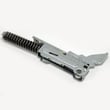
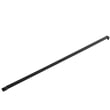
- Door not closing tightly (heat escaping, uneven baking): check hinge tension and alignment; worn hinges like range oven door hinge WPW10299224 can cause sagging.
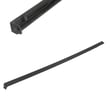
- Worn door gasket (hot handle, longer cook times): a flattened or torn seal such as seal, door W11542153 lets heat leak.
- Constant clicking or no spark at burners: can be related to the spark system (switches, wiring, or the spark module).
- Heavy spills and corrosive cleaners: can damage burner heads, electrodes, and finishes.
Maintenance that adds years (simple, high impact)
- Wipe up boilovers quickly so ports and igniters do not get coated.
- Keep burner caps seated correctly for a steady flame.
- Avoid slamming or leaning on the oven door to protect hinges and the door seal.
- If you smell gas or ignition is slow, stop using the oven and address the cause before it worsens.
- Use non-abrasive methods for stainless surfaces; see how to clean stainless steel appliances video.
Why it matters
A range that lights quickly, seals heat properly, and maintains stable flame burns cleaner, cooks more evenly, and puts less strain on components like the igniter, spark system, and electronic control.
Last updated: February 2026
Why is my Whirlpool cooktop igniter not working?
On a Whirlpool WFG550S0LZ5 free standing gas range, a cooktop igniter usually stops working because the burner cap is mis-seated, the electrode is dirty or cracked, or the spark system (switch, wiring, or spark module) is failing. Start with cleaning and alignment checks before testing parts.
Quick checks we recommend first
- Confirm the burner cap sits flat and centered on the burner base (a tilted cap can stop sparking).
- Clean and dry the igniter tip and the area around it; grease or moisture can short the spark to ground.
- Make sure the burner head ports are not clogged.
- Try a different burner knob position; a worn switch can act intermittent.
- If you hear rapid clicking but no flame, verify gas is on and the burner ports are clear.
What the symptoms usually mean
| What you notice | Most likely cause | What to do next |
|---|---|---|
| No clicking on that burner | Bad igniter switch, broken wire, failed spark module | Inspect wiring; test switch continuity; consider spark module replacement |
| Clicking but no spark at the electrode | Cracked/dirty electrode, poor ground, wire arcing | Clean, dry, inspect ceramic; check for visible arcing |
| One burner works, others do not | Switch harness issue or spark module output problem | Compare burners; inspect harness connections |
| All burners stopped sparking | Spark module, power supply issue, or harness connection | Check outlet power; inspect module and harness |
Parts that commonly fix ignition problems
If cleaning and cap alignment do not restore spark, these model-matched parts are common next steps:
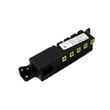
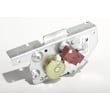
- Module-spark W11162730 (controls spark output to the surface burners)
- Spark module (red) WPW10475149 (alternate spark module used on some configurations)
Safe testing tips (basic)
- Unplug the range before removing panels or handling wiring.
- Look for burned terminals, loose spade connectors, or rubbed-through insulation.
- If you use a meter, follow a proven method such as how to use a multimeter to test electrical parts video.
Why it matters
A weak or misdirected spark can prevent ignition and allow gas to flow briefly without lighting. Restoring a strong spark at the electrode improves reliable lighting and helps prevent delayed ignition.
Last updated: February 2026