
Are old KitchenAid mixers worth anything?
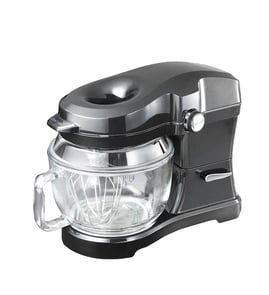
Yes. Older KitchenAid stand mixers, including the KitchenAid KP26M1XPM4, are worth real money because they’re durable, repairable, and still useful for everyday baking. Value depends most on working condition, cosmetic shape, and whether key drive and speed-control parts are intact.
What drives the value most
- Runs smoothly at all speeds (no surging, dead spots, or burning smell)
- Gearcase condition (no loud grinding or slipping under load)
- No oil or grease leakage around the planetary or housing seams
- Complete setup (bowl, attachments, hub cover, and any accessories)
- Cosmetics (paint, dents, corrosion, and missing trim)
Quick condition check you can do at home
Unplug the mixer first, then do these basic checks:
- Turn the beater shaft by hand; it should rotate with steady resistance.
- Run it briefly on low to high; listen for clicking, grinding, or speed hunting.
- Check for grease seepage; old grease can separate and leak after years of storage.
- Confirm the bowl locks in securely and the head/column feels tight.
Repairability matters (and helps resale)
Many “not worth much” mixers become valuable again after common repairs like a gear refresh, re-grease, or speed control fix. For KP26M1XPM4, these parts are often involved:
| Symptom | Common cause | Example part on this model page |
|---|---|---|
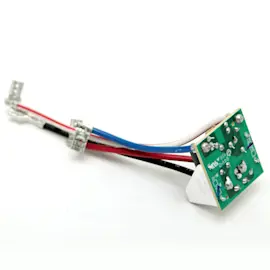
| Speeds jump or won’t change | Speed control issue | Mixer control assembly WP9706648 |
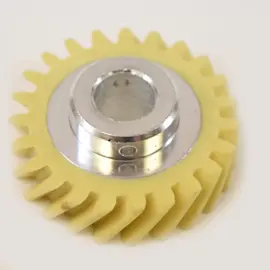
| Loud grinding, won’t mix under load | Worn gear | Stand mixer worm follower gear W11086780 |
| Grease/oil leaking | Seal or gasket issue | Seal WP9706247 |
Why it matters
A working, well-maintained KitchenAid stand mixer can serve for decades; buyers pay more for mixers that are quiet, stable under load, and easy to service with available parts.
Last updated: February 2026
What is the most common problem with the KitchenAid mixer?
For the KitchenAid KP26M1XPM4 stand mixer, the most common issues we see are beater-to-bowl clearance being off (beater hits the bowl or misses ingredients), grease seepage or loud gear noise from aging lubricant, and the mixer shutting off under heavy loads due to overheating or a worn drive gear.
Quick symptoms and what they usually mean
- Beater hits the bowl: beater height needs adjustment; continued use can damage the bowl and attachments.
- Beater misses the bottom: ingredients stay unmixed; adjustment typically fixes it.
- Grease leaking or “oil” drip: internal grease is separating with age or heat; re-greasing is the long-term fix.
- Grinding/clicking under load: common sign of a worn gear in the drivetrain.
- Mixer stops, then works again later: thermal overload protection tripped from heavy dough, high speed, or long run time.
What we recommend first (safe, fast checks)
- Unplug the mixer and remove the bowl and attachment.
- Check beater clearance (the “dime test” concept): the beater should just skim close to the bowl without striking.
- Reduce load and speed for heavy doughs: use lower speeds and shorter mixing intervals.
- Listen for gear noise: rhythmic clicking or grinding that worsens with load points to internal wear.
Parts that commonly solve the “stops, surges, or wrong speeds” complaint
If the mixer runs only on certain speeds, surges, or will not maintain speed, the speed control components are a common fix:
| Symptom | Most likely area | Part to consider for KP26M1XPM4 |
|---|---|---|
| Won’t change speeds or speeds are erratic | Speed control | Mixer control assembly WP9706648 |
| Runs but struggles under load, noisy gears | Gearcase drivetrain | Stand mixer worm follower gear W11086780 |
Why it matters
Catching these problems early prevents secondary damage, like a gouged bowl, stripped gears, or overheating the motor. A simple adjustment can restore mixing performance, while worn gears or failing speed control parts can turn into a no-run condition if ignored.
Last updated: February 2026
Which is the best model of KitchenAid stand mixer?
The “best” KitchenAid stand mixer depends on what you make most often. For frequent bread doughs and large batches, we recommend a bowl-lift model like your KitchenAid KP26M1XPM4 because it’s built for heavier mixing; for everyday cookies and cakes, many people prefer a lighter tilt-head style.
Quick way to choose the right KitchenAid mixer
- Choose bowl-lift for stiff doughs, big batches, and frequent use.
- Choose tilt-head for lighter mixing and easier access to the bowl.
- Match the bowl size to your typical batch size (small, medium, or large).
- Prioritize attachments you will actually use (pasta, grinder, shredder).
- Consider storage space and weight if you move the mixer often.
Bowl-lift vs tilt-head (what changes in real use)
| Feature | Bowl-lift (like KP26M1XPM4) | Tilt-head |
|---|---|---|
| Best for | Bread, pizza dough, large batches | Cookies, frosting, quick batters |
| Stability under load | Higher | Moderate |
| Bowl access | Bowl raises/lowers | Head tilts up |
| Typical feel | More “commercial” | More “everyday” |
If you already own KP26M1XPM4, here’s what to optimize
If your KP26M1XPM4 struggles, surges, or won’t hold a steady speed, the most common improvement is restoring consistent speed control and drive performance.
- For speed issues (won’t change speeds, jumps speeds, stalls): check the mixer control assembly WP9706648.
- For grinding noises or slipping under load: inspect the stand mixer worm follower gear W11086780.
- For leaks or grease migration: replace the seal WP9706247 and use the correct grease W11200218 during reassembly.
Why it matters
Choosing the right mixer style prevents overheating, stripped gears, and inconsistent mixing. A bowl-lift stand mixer like KP26M1XPM4 is the better long-term fit when you regularly mix dense doughs or run longer kneading cycles.
Last updated: February 2026
Is there a better mixer than KitchenAid?
Yes. For some baking styles, certain stand mixers outperform a KitchenAid like the KitchenAid KP26M1XPM4, especially for frequent bread dough or very large batches; the “better” choice depends on capacity, motor design, and how you use attachments.
How to decide what’s “better” for your kitchen
We recommend comparing mixers by what you actually make most often:
- Bread and pizza dough weekly: prioritize torque and cooling (less strain under heavy loads)
- Cakes, cookies, and frosting: prioritize speed control and consistent mixing at low speeds
- Large batches: prioritize bowl capacity and stability (weight, base footprint)
- Hands-free convenience: prioritize timers, auto shutoff, and easy scraping access
- Attachment use (grinders, pasta, etc.): prioritize power delivery and accessory support
Common “better than KitchenAid” scenarios
Some alternatives can be a better fit than a KitchenAid stand mixer when:
- You knead stiff doughs often and want a mixer that runs cooler under load
- You want an open-bowl design that makes adding ingredients and scraping easier
- You need a larger capacity for double or triple batches
- You want more built-in features (timer, auto-sensing, specialty kneading action)
If you already own the KP26M1XPM4: upgrades that can feel like a “better mixer”
Before replacing the whole mixer, fixing performance issues often restores power and control.
- If speeds surge, stall, or won’t change smoothly, check the mixer control assembly WP9706648
- If you hear grinding or the beater stops under load, inspect the stand mixer worm follower gear W11086780
- If you see grease leakage or oiling around the planetary area, replace the seal WP9706247
- If you’re rebuilding gears, use the correct food-grade lubricant such as grease W11200218
Quick comparison guide
| If your priority is… | A “better” mixer usually means… | What to check on KP26M1XPM4 first |
|---|---|---|
| Heavy dough performance | higher torque, better cooling | worm gear, grease condition |
| Precision at low speed | stable speed control | speed control assembly |
| Bigger batches | larger bowl and stronger drive | bowl fit, drivetrain wear |
Why it matters
A stand mixer that matches your dough load and batch size lasts longer, mixes more consistently, and avoids common failures like stripped gears, speed hunting, and grease leaks.
Last updated: February 2026