 Installation guide
 Owner’s manual


What is the life expectancy of a GE washing machine?
A GE washing machine typically lasts 10 to 14 years. For your GE GTW810SSJ1WS top-load washer, lifespan depends most on load size, water quality, and routine care; following the maintenance guidance in the owner's manual helps you get the full expected service life.
- Overloading (stresses the drive system, basket, and suspension)
- Water quality (hard water can increase buildup and wear)
- Detergent use (too much can cause residue and odor issues)
- Drain and fill health (slow draining or filling increases cycle strain)
- Vibration and leveling (excess vibration accelerates wear)
We recommend these practical habits for GE top-load washers like the GTW810SSJ1WS:
- Keep the washer level on firm flooring to reduce vibration during spin.
- Check for hose leaks after installation, again about a month later, then every 3 to 6 months.
- Replace water supply hoses every 5 years to reduce failure risk.
- Use the right cycle and water level for the load; avoid packing the basket tight.
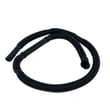
- If draining is slow or you see leaks at the back, inspect the drain path and consider replacing the washer drain hose WH41X10319 if it is kinked, cracked, or soft.
| Usage pattern | Typical life range | What to watch first |
|---|---|---|
| Light (few loads/week) | 12 to 14 years | Hoses, minor leaks, vibration |
| Average (most households) | 10 to 12 years | Drain performance, lid lock issues |
| Heavy (daily, large loads) | 8 to 10 years | Drive components, control issues |
Knowing the expected 10 to 14-year lifespan helps you decide when maintenance and small repairs (hoses, drain hose, lid lock) make sense versus planning for a replacement, especially if you are seeing repeated draining, spinning, or filling problems.
Last updated: February 2026
How to force GE washer to drain and spin?
On the GE GTW810SSJ1WS washer, the quickest way to force a drain and spin is to cancel the current cycle, then run Drain + Spin and press Start/Pause. If it still will not drain, check for a drain setup issue or a restriction in the drain hose.
- Press Power to wake the control.
- Press Start/Pause to pause, then Cancel/Drain (or hold Start/Pause for a few seconds if your panel uses a hold-to-cancel).
- Select Drain + Spin.
- Choose Spin speed (start with a lower speed if the load is unbalanced).
- Press Start/Pause to begin.
A “won’t drain” complaint is usually a drain hose problem (kink, clog, or siphoning) or an installation height issue.
- Make sure the drain hose is not kinked or crushed behind the washer.
- Confirm the standpipe or laundry tub drain is flowing freely.
- Prevent siphoning: keep an air gap around the hose and do not push the hose too far down the standpipe.
- Verify drain height: the discharge point must be at least 30 inches high and no more than 8 feet above the washer base.
- In a standpipe, keep 7 inches or less of hose inserted.
For the exact drain-hose routing and height requirements for this model, follow the installation guide.
| What you see | What it usually means | What to do next |
|---|---|---|
| Hums but no water leaves | Restriction or kink | Inspect hose path; clear blockage |
| Drains slowly | Partial clog or slow house drain | Check standpipe/tub drain flow |
| Drains then refills or never finishes | Siphoning | Pull hose back; maintain air gap |
| Won’t spin after draining | Unbalanced load or lid lock issue | Redistribute load; retry Drain + Spin |
Running Drain + Spin is the safest way to clear standing water before troubleshooting. Correct drain hose height and an air gap prevent siphoning, which can stop draining and cause repeated fill and drain behavior.
Last updated: February 2026
Is GE GTW810SSJ1WS considered high end?
GE GTW810SSJ1WS is generally considered an upper-tier (feature-rich) GE top-load washer rather than a true luxury, “high-end” machine. It typically sits above basic top-load models because it uses more advanced controls and components, but it is still in the mainstream GE lineup.
We look at a few practical factors that affect performance, convenience, and repair cost:
- Cycle and option variety (specialty cycles, deep fill options, etc.)
- Control type (electronic control board vs. simpler timer-based controls)
- Drive system complexity (direct-drive motor components, sensors)
- Convenience features (lid lock behavior, diagnostics)
- Typical part costs for major repairs (control board, basket, drive components)
A washer can feel “high end” if it has advanced features, but it is not automatically luxury-grade.
For GE GTW810SSJ1WS, the parts list shows several higher-cost, higher-tech components that are common in premium-feature top-load washers:
- Washer electronic control board assembly WH12X25674
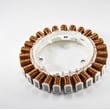
- Washer motor stator WH39X20678
- Basket assembly WH45X22983
- Washer lid lock assembly WH12X20357
These parts support more sophisticated operation and diagnostics than entry-level models.
| Tier (typical) | What you usually get | Where GTW810SSJ1WS fits |
|---|---|---|
| Basic | Simple controls, fewer cycles, lower repair-part costs | Above this |
| Upper-tier mainstream | More cycles/options, electronic controls, sensors | Most accurate match |
| Luxury | Premium materials, highest-end fit/finish, brand “luxury” positioning | Usually above this |
If you are deciding whether it is “high end,” the practical takeaway is ownership cost and repair approach. Upper-tier washers often deliver more features, but repairs can involve higher-cost electronics and motor components. For operating features and cycle guidance specific to this model, use the owner's manual.
Last updated: February 2026


