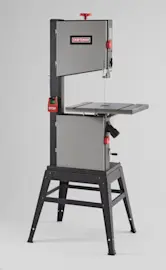
Owner’s manual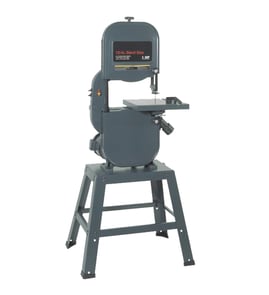

How do you tell the size of a bandsaw?
A band saw’s “size” is usually the wheel diameter, not the maximum cut height (resaw capacity). For the Craftsman 113244401 10-inch band saw, the size refers to the 10-inch wheel class; your actual cutting capacity depends on the frame and guide setup.
What “band saw size” typically means
Most woodworking band saws are named by wheel diameter (the diameter of the upper and lower wheels), because that’s a quick way to group machines by overall class.
Common naming examples:
- 10-inch band saw: wheel diameter class (like Craftsman 113244401)
- 14-inch band saw: larger wheel diameter class
- Benchtop vs. floor model: refers to mounting style, not wheel size
- Throat capacity: distance from blade to frame (limits width of cut)
What actually determines cutting capacity
Even if two saws are both “10-inch,” they can have different capacities. These specs matter most:
- Resaw height (max height of stock under the guides)
- Throat (max width from blade to frame)
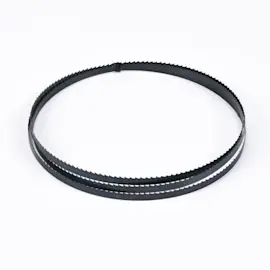
- Blade length (must match the saw)
- Blade width range (affects curve cutting vs. straight tracking)
- Guide and thrust roller adjustment range
For the Craftsman 113244401, the manual specifies it uses 72 5/8-inch blades and supports 1/4-inch or 3/8-inch blade widths. See the 113244401 owner’s manual for the exact setup and adjustment procedure.
Quick reference: “size” vs. “capacity”
| Term people say | What it usually refers to | What to measure/check |
|---|---|---|
| “10-inch band saw” | Wheel diameter class | Wheel diameter, overall saw class |
| “Resaw capacity” | Max cut height | Distance table to guides at max |
| “Throat” | Max cut width | Blade to frame distance |
| “Blade size” | Blade fitment | Blade length and width range |
Why it matters
Buying blades, setting tension, and tuning tracking all depend on the correct blade length and width range. Using the wrong blade size can cause poor tracking, excess vibration, and premature tire or blade wear.
Last updated: January 2026
What is the 3-tooth rule for bandsaws?
The 3-tooth rule means your bandsaw blade should have at least three teeth engaged in the material at all times during a cut. On the Craftsman 113244401 10-inch band saw, following this rule helps reduce tooth stripping, rough cuts, and blade grabbing by matching blade TPI (teeth per inch) to the thickness of the workpiece.
How to apply the 3-tooth rule (quick method)
Measure the material thickness, then choose a blade TPI that keeps 3 or more teeth in the cut.
- Thicker stock needs lower TPI so gullets can clear sawdust
- Thin stock needs higher TPI so the blade does not snag
- If the cut feels jerky or the blade “hooks” the work, you usually have too few teeth engaged
- If the blade heats up or burns, you often have too many teeth engaged (gullets pack up)
- Feed with gentle pressure and let the blade cut; forcing the work increases heat and drift
For safe operating basics (guide height, feed pressure, and general use), follow the 113244401 owner’s manual.
Practical TPI guidance (typical ranges)
These are common starting points for wood-cutting band saws like the Craftsman 113244401 (this model is intended for wood cutting, not metal).
| Material thickness | Typical blade TPI range | What you’ll notice if wrong |
|---|---|---|
| Under 1/4 inch | 10 to 18 TPI | Snagging if TPI is too low |
| 1/4 to 3/4 inch | 6 to 10 TPI | Burning if TPI is too high |
| Over 3/4 inch | 3 to 6 TPI | Rough cut if TPI is too low |
Why it matters
Keeping at least three teeth in the cut stabilizes the blade and spreads cutting load across multiple teeth. That improves cut quality, reduces vibration, and helps the blade last longer.
Related setup tips that support better cuts
- Set the upper guide assembly to just clear the workpiece
- Confirm blade teeth point downward toward the table
- Verify blade tracking stays centered on the tires
- Use both hands to control the workpiece and keep it flat on the table
Last updated: January 2026
What is the specs of the Craftsman 12 inch bandsaw 113244401?
The Craftsman model 113244401 is a 10-inch band saw (not a 12-inch). From the model documentation, we can confirm key build and service details (like it ships without steel legs and includes a switch and cord assembly); for exact cutting capacity and motor specs, use the 113244401 owner's manual.
Key specs we can confirm for Craftsman 113244401
From the manual excerpts for this specific model, these details are confirmed:
- Product type: 10-inch band saw
- Model number: 113244401
- Ships without steel legs: steel legs are not included in the carton
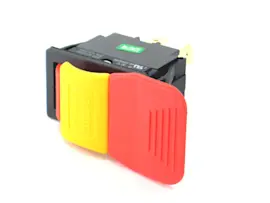
- Electrical components shown in parts list: on-off switch, switch key, cord with plug, wire connector, motor cover
- Service note: motor repair is intended for a qualified service technician
Commonly requested specs (typical for 10-inch band saws)
Some specs are often asked for (throat depth, max cut height, table size, blade length, motor HP). For a Craftsman 10-inch saw like the 113244401, typical ranges are:
- Throat depth: about 9 to 10 inches
- Max cutting height: about 4 to 6 inches
- Blade length: commonly around 70-1/2 inches (varies by design)
- Table tilt: often 0 to 45 degrees
Use the manual to match these to the exact factory numbers for your saw.
| Spec | What it means | Where to confirm |
|---|---|---|
| Throat depth | Distance from blade to frame | Manual specifications section |
| Max cut height | Tallest stock you can cut | Manual specifications section |
| Blade length | Correct blade size to buy | Blade selection guide |
| Table tilt | Angle cutting capability | Setup/adjustment section |
Why it matters
Getting the specs right prevents buying the wrong band saw blade, setting incorrect blade tension, or expecting more cutting capacity than the 10-inch frame is designed to handle. That directly affects cut accuracy and blade life.
Quick tip if you are comparing “12-inch” listings
If you saw “12-inch” online, it is often a different Craftsman model or a listing error. For parts and fit, always match the full model number 113244401.
Last updated: January 2026