 Installation guide
 Owner’s manual


What is the most common problem with a GE dishwasher?
For the GE PDW7880N15SS dishwasher, the most common issues we see are the dishwasher not running, not draining well, or not cleaning well. These problems are often caused by a tripped breaker or wall switch, an unlatched door, a clogged drain path or air gap, or a dirty filter and spray system.
- Won’t run or start: check the breaker or fuse, and confirm any nearby wall switch supplying power is ON.
- Beeps every 30 seconds: the door is left open or not latched during operation.
- START/RESET light flashing: the cycle was canceled or power was interrupted; the unit may drain for about 90 seconds.
- Not draining well: clean the sink air gap (if you have one) and check for a drain restriction.
- Dishes not clean: verify hot water supply temperature and clean wash components.
- Make sure the door closes and latches fully; do not start a cycle with the door partially latched.
- Reset power: turn off power at the breaker (or wall switch) for 30 seconds, then turn it back on.
- If it is not draining, clean the air gap (if installed) and check the drain hose routing for kinks.
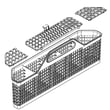
- Clean the filter area and inspect the spray arm for clogs or damage.
- If you see an error indication, match it to the chart in the owner's manual.
| Symptom | Common area | Example part for PDW7880N15SS |
|---|---|---|
| Poor cleaning | Filter or spray system | Dishwasher filter WD12X10109 |
| Poor cleaning | Spray arm not spinning or clogged | Dishwasher spray arm WD22X10047 |
| Not draining | Drain pump or drain restriction | Dishwasher drain pump WD26X10025 |
A dishwasher that won’t start, won’t drain, or won’t clean usually has a simple root cause. Fixing the basics first (power, door latch, drain path, filter, spray arm) prevents repeat cycle failures and helps protect the pump and motor from strain.
Last updated: February 2026
What are the dimensions of a GE PDW7880N15SS dishwasher?
The GE PDW7880N15SS is a standard built-in dishwasher designed to fit a 24-inch-wide opening that is at least 24 inches deep and about 34 1/2 inches high (floor to underside of countertop). For the exact cutout and clearance details, use the installation guide.
These are the key fit measurements called out for installing this model:
- Opening width: 24 inches minimum
- Opening depth: 24 inches minimum
- Opening height: approximately 34 1/2 inches (floor to underside of countertop)
- Corner installs: allow 2 inches minimum clearance to adjacent cabinet/wall
- Door swing clearance (corner installs): allow 28 3/8 inches minimum
Most customers mean one of these:
| Measurement type | What it describes | What to use for PDW7880N15SS |
|---|---|---|
| Cutout (opening) size | Cabinet space needed | 24" W x 24" D x ~34 1/2" H |
| Product size | Dishwasher body size | Use the installation guide for exact values |
| Door clearance | Space needed to open the door | 28 3/8" min in a corner install |
- Measure the width between cabinets at the front and back
- Measure depth from the back wall to the front of the cabinet frame
- Measure height from finished floor to the underside of the countertop
- Check the floor for level; uneven floors can change fit and door alignment
- If installing in a corner, confirm the 2-inch side clearance and door swing clearance
Correct opening size and clearances prevent installation problems like a door that hits a wall, a tub that rubs the cabinet, or a unit that cannot be leveled properly. Proper fit also helps reduce vibration and leaks around the tub and door.
Last updated: February 2026
Does a GE dishwasher have a filter that needs to be cleaned?
Yes. GE dishwashers such as model PDW7880N15SS use filtration to keep wash water circulating cleanly, and routine cleaning helps prevent gritty residue, poor cleaning, and drain problems. Use the steps in the owner's manual for the exact filter access and cleaning method for your dishwasher.
- Turn the dishwasher off and let it cool.
- Pull out the lower rack.
- Look in the bottom of the tub under or around the lower spray arm area for a filter screen or filter assembly.
- Remove the filter (many styles unlock with a twist) and lift it out.
- Rinse under warm water; use a soft brush for stuck-on debris.
- Reinstall the filter fully seated and locked before running a cycle.
- Do not run the dishwasher with the filter removed.
- Do not use abrasive pads that can damage fine mesh.
- Do not force parts; if it does not release easily, follow the model-specific directions in the manual.
If cleaning does not improve results, these model-matched parts are often involved in circulation and filtration issues:
| Symptom | Common area to check | Model-matched part example |
|---|---|---|
| Grit or debris left on dishes | Filter and intake area | Dishwasher filter WD12X10109 |
| Poor spray or weak wash action | Spray arm and bearing surfaces | Dishwasher spray arm WD22X10047 |
| Standing water or slow drain | Drain path and pump | Dishwasher drain pump WD26X10025 |
A clogged filter restricts water flow and can trap food soil, which reduces spray pressure and can contribute to odors and draining complaints. Keeping the filter clean helps the circulation pump and spray arm work the way they should.
If the issue is more than routine maintenance, we use these troubleshooting steps to narrow it down quickly:
Last updated: February 2026
Is GE PDW7880N15SS considered high end?
Yes; the GE PDW7880N15SS is commonly considered a premium dishwasher within GE’s lineup because it uses higher-end materials and features than basic models. For this model, the owner's manual specifically calls out a stainless steel interior tub and inner door, which is a premium construction cue.
The manual for this dishwasher series highlights stainless steel interior construction as a durability and corrosion-resistance benefit.
- Stainless steel interior tub and inner door
- Built for long-term exposure to heat and moisture
- Interior scratches or dents during normal use do not rust or corrode
- Care guidance focuses on protecting stainless finishes
“High end” usually means a combination of materials, cleaning system design, and convenience features.
- Stainless steel tub (durability, odor resistance, heat tolerance)
- More wash options and targeted cycles
- Better rack design and spray coverage
- Quieter operation compared with entry-level units
| Cue | Entry-level dishwasher | Premium-style dishwasher |
|---|---|---|
| Tub material | Often plastic | Often stainless steel |
| Drying performance | Basic | Stronger heat handling and drying potential |
| Noise control | Minimal insulation | More insulation and refined operation |
If wash results drop on the PDW7880N15SS, these model-compatible parts are common maintenance or repair items:
- Dishwasher filter WD12X10109 (clogging reduces water flow and cleaning)
- Dishwasher spray arm WD22X10047 (clogged jets reduce spray pressure)
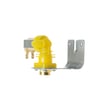
- Dishwasher water inlet valve WD15X10014 (slow fill can weaken wash action)
Premium construction, especially a stainless interior, holds up better to heat, detergent, and moisture. That helps maintain cleaning performance and reduces issues tied to odors, staining, and interior corrosion over time.
Last updated: February 2026





