Error Codes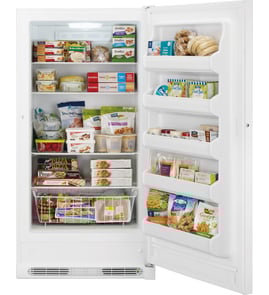






How big is a 16 cubic foot upright freezer?
A 16 cubic foot upright freezer (including the Gibson FV16M4WSFC) typically measures about 60 to 73 inches tall, 23 to 30 inches wide, and 27 to 30 inches deep. Exact exterior size varies by cabinet design, door thickness, and hinge style.
Typical dimensions you can expect
Most freestanding 16 cu ft upright freezers fall into these common ranges:
- Height: 60 to 73 inches
- Width: 23 to 30 inches
- Depth: 27 to 30 inches
- Door swing clearance: plan extra space on the hinge side
- Ventilation clearance: leave space behind and above for airflow
Quick planning table (space and fit)
Use this as a practical checklist when measuring your kitchen, garage, or basement.
| What you are measuring | What to plan for | Why |
|---|---|---|
| Cabinet footprint | 23 to 30 in wide; 27 to 30 in deep | Fits the freezer body |
| Height clearance | 60 to 73 in | Avoids cabinet or shelf interference |
| Door swing space | +2 to 6 in on hinge side (typical) | Lets the door open fully |
| Airflow space | +1 to 3 in behind/above (typical) | Helps cooling performance |
Why it matters
Getting the size right prevents door clearance problems, overheating from poor airflow, and installation headaches. It also helps you plan shelf access and loading space, especially in tight utility rooms.
Related parts that affect usable space (not exterior size)
Interior storage can change if shelves or supports are missing or damaged. For this model, we commonly see these parts involved:
- First shelf 08037939 (interior shelf position and storage layout)
- Shelf 08037940 (additional shelf surface)
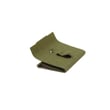
- Shelf support 297001500 (supports shelf mounting)
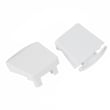
- Shelf support 297001600 (supports shelf mounting)
Last updated: February 2026
What causes an upright freezer to stop freezing?
An upright freezer like the Gibson FV16M4WSFC usually stops freezing because cold air is not being produced or not being circulated. The most common causes are a dirty condenser area, a failed defrost system creating an ice blockage, a door seal air leak, or a compressor start problem.
Quick checks we recommend first
- Confirm the temperature control is set colder and the unit has had 24 hours to stabilize after changes.
- Make sure the door closes tightly; look for gaps, torn gasket areas, or heavy frost near the door.
- Check for heavy frost on the back interior panel; this points to a defrost problem blocking airflow.
- Clean dust from the condenser area (unplug first); poor heat release can stop cooling.
- Listen for the compressor: steady hum is normal; repeated clicking often indicates a start issue.
What the symptoms usually mean
| Symptom | Most likely cause | What to do next |
|---|---|---|
| Freezer warm, compressor runs a lot | Dirty condenser, poor airflow | Clean condenser area; verify clearance around cabinet |
| Heavy frost on back wall, weak airflow | Defrost failure or air passage blocked | Defrost fully (unplug, doors open) and check return of frost |
| Compressor clicks on and off | Start device or compressor issue | Have a technician test start components and compressor |
| Frost near door edge, moisture inside | Door not sealing | Inspect gasket/liner fit; correct door alignment |
Parts that can be involved on this model
If you find wiring damage or intermittent power to cooling components, the harness is a common repair point.
If you see signs of a sealed-system restriction (runs but barely cools), a technician may reference sealed-system components during diagnosis.
Why it matters
When an upright freezer is not freezing, food safety and compressor wear become immediate concerns. Fixing airflow, defrost, or condenser heat-release issues early prevents long run times and helps the freezer return to stable temperatures.
Last updated: February 2026
What is the difference between a garage ready freezer and a regular freezer?
A garage-ready freezer is designed to keep food safely frozen even when the room around it gets very hot or very cold, while a regular freezer is built for stable indoor temperatures. For a Gibson FV16M4WSFC upright freezer, using it in a garage depends on how extreme your garage temperatures get and how steady they stay.
What “garage ready” usually means
Garage-ready models typically include design features that help the sealed system and controls operate across a wider ambient temperature range.
Common differences include:
- Wider operating temperature range (handles colder winters and hotter summers better)
- More robust temperature control strategy (reduces warm-ups and nuisance shutoffs)
- Heavier-duty door sealing to limit warm air leaks
- Compressor and start components selected to tolerate tougher conditions
- Better insulation and airflow design to reduce run time in heat
Why a regular freezer can struggle in a garage
Most standard freezers are intended for conditioned indoor spaces. In a garage, they can:
- Run almost constantly in high heat (higher energy use, more wear)
- Have temperature swings that soften food during hot spells
- Shut down or under-cool in cold weather (controls may not call for cooling)
- Build excess frost if the door seal leaks or humidity is high
Quick comparison
| Feature | Garage-ready freezer | Regular freezer |
|---|---|---|
| Best location | Garage or indoor | Indoor |
| Handles extreme ambient temps | Yes (typically) | Often no |
| Risk of thawing in heat | Lower | Higher |
| Risk of under-cooling in cold | Lower | Higher |
What to do if you plan to use FV16M4WSFC in a garage
We recommend focusing on temperature stability and door sealing.
- Place it where temps are most stable (away from direct sun and exterior doors)
- Keep clearance around the cabinet for airflow
- Verify the door closes firmly; replace worn latch parts if needed (see latch 5309949966)
- If you see heavy frost or warm spots, check for air leaks and overloading
- Use an appliance thermometer to confirm it holds about 0°F consistently
Why it matters
Freezers protect food safety by staying at or below 0°F. When ambient conditions push a non-garage-rated unit outside its design range, you can get thawing, excess run time, and premature component wear.
Last updated: February 2026
Where to find model number on upright freezer?
On a Gibson upright freezer like model FV16M4WSFC, the model number is printed on the appliance’s rating label, usually inside the cabinet near the door opening. Check the upper side wall, the ceiling area, or near the bottom front edge behind the kickplate.
Most common label locations
Look for a paper or foil sticker that includes the model number and serial number.
- Inside the freezer compartment on the left or right wall near the front
- On the cabinet frame around the door opening (hinge side is common)
- On the ceiling area just inside the door
- Behind the lower front toe grille or kickplate area
- On the back exterior panel near the power cord entry
What the label looks like (and what to copy)
The rating label typically includes several identifiers. We recommend copying these exactly:
- Model number (example: FV16M4WSFC)
- Serial number
- Electrical rating (volts/amps)
- Refrigerant type (for service reference)
| Label item | Why we need it | Example format |
|---|---|---|
| Model number | Ensures parts fit your exact freezer | FV16M4WSFC |
| Serial number | Helps match production changes | Letters and numbers |
| Electrical info | Useful for diagnosing power issues | 115V, 60Hz |
Why it matters for parts and troubleshooting
Gibson freezers can use different shelves, door hardware, and wiring components across similar-looking units. Using the exact model number helps us match the correct parts list and diagrams for your freezer.
If you are replacing interior hardware, common model-matched items include shelf supports such as the shelf support 297001500 or shelf support 297001600.
Last updated: February 2026