Owner’s manual
 View engine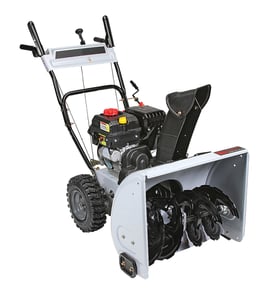



Where can I find my snowblower model number?
Your Craftsman snow thrower model number is printed on the product identification label; on model 536885202, it’s commonly found on the rear of the unit between the wheels or on the side of the frame near the auger housing. Confirm the exact label location in the 536885202 owner's manual.
Common places to check on a snowblower
- Rear of the snowblower between the wheels (most common)
- Side of the frame near the auger housing
- On the motor box or frame rail area
- Near the handle mounting area
- On or near the engine mounting plate (less common)
What the label looks like and what to write down
The label usually includes more than just the model number. Record these items so we can match the correct Craftsman parts list and diagrams:
- Model number (for this unit: 536885202)
- Serial number (if shown)
- Engine information (often a separate engine model/type code)
| Item on label | Why it matters | Example for this unit |
|---|---|---|
| Model number | Matches the correct parts diagrams | 536885202 |
| Serial number | Helps identify production variations | Varies |
| Engine ID | Helps match engine tune-up parts | Varies |
Why it matters
Craftsman snowblower parts can vary by model and even by production run. Using the exact model number helps ensure you get the right belts, scraper blade, auger components, and engine maintenance parts the first time.
Last updated: February 2026
Is sae 30 the same as 5W30 for snowblower?
No. SAE 30 and 5W-30 are not the same oil, and for the Craftsman 536885202 snow thrower we recommend using SAE 5W-30 because it flows better for cold starts while still protecting the engine when it warms up; SAE 30 is thicker in cold weather and can make starting harder.
What the numbers mean (SAE 30 vs 5W-30)
- SAE 30 is a single-weight oil; it does not thin out as well in cold temperatures.
- 5W-30 is a multi-grade oil; the “5W” rating helps it flow in winter conditions.
- Both can be “30 weight” at operating temperature, but they behave very differently at startup.
- For snowblower use, cold-start lubrication is the priority.
What your Craftsman 536885202 manual calls for
Our guidance for this model matches the manual:
- Add SAE 5W-30 motor oil to the FULL mark before operating.
- Check oil level before starting and after every 5 hours of continuous use.
- Change oil every 25 hours or at least once a year.
- For 0°F and below, a partial synthetic 5W-30 helps with easier starting.
For the exact fill and change procedure, use the owner's manual.
Quick decision guide
| Your typical operating temperature | Best choice | Why |
|---|---|---|
| Around 32°F down to 0°F | 5W-30 | Easier starting, faster oil flow |
| 0°F and below | Partial synthetic 5W-30 | Best cold-flow protection |
| Cold weather use (most snowblower use) | Avoid SAE 30 | Can be too thick at startup |
Why it matters
Using the right viscosity helps the engine build oil protection quickly during cold starts, reduces wear on internal parts, and helps your snowblower start and run more consistently during storms.
Parts that help with seasonal maintenance
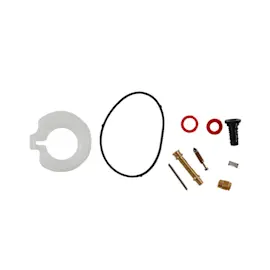
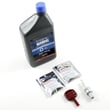
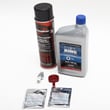
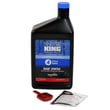
If you are doing an oil change and tune-up at the same time, we often see customers pair the correct oil with a basic service kit such as the snowblower engine tune-up kit 730280. You can also search by model on Sears PartsDirect if you need additional maintenance parts.
Last updated: February 2026
How to tell year of Craftsman snowblower by serial number?
For a Craftsman snow thrower like model 536885202, the year is typically encoded in the serial number, but the exact pattern depends on who built the unit (Craftsman used multiple manufacturers). We recommend matching your serial-number format to the decoding examples in the 536885202 owner's manual so you can identify the correct year code.
Where to find the serial number
Most Craftsman snowblowers list the model and serial on a rating label. Common locations include:
- On the rear of the frame near the handles
- On the side of the auger housing
- Near the engine mounting area
- On the underside of the control panel area
How to decode the year (common Craftsman patterns)
Craftsman serial numbers are not one universal format. Use the format that matches what you see on your label.
- Pattern A (character-based code): the 5th character often represents the year within a decade (for example, “1” can indicate a year ending in 1). Use the surrounding characters to confirm the decade.
- Pattern B (MTD-style date code): the first 5 characters often represent a build date; the letter indicates the month (A = Jan through L = Dec), followed by digits for day and year within the decade.
- Engine date code (if you are dating the engine): many small engines have a separate engine code that indicates the engine’s manufacture date; this can be close to, but not always the same as, the snowblower’s build year.
Quick comparison
| What you are decoding | Where you read it | What it tells you |
|---|---|---|
| Snowblower build info | Snowblower rating label | Most accurate for the unit’s year |
| Engine manufacture date | Engine tag/stamp | Useful cross-check, not always exact |
Tips to avoid a wrong year
- Write the serial number exactly as shown (include letters and dashes).
- If the “year” digit repeats every 10 years, use clues like the label style, engine family, and parts diagrams to confirm the decade.
- If you are ordering maintenance items, use the model number 536885202 to match parts rather than relying only on the year.
Why it matters
The correct year helps you match the right parts and adjustments for your Craftsman 536885202, especially for wear items like belts, shear pins, and ignition parts. For seasonal maintenance, a kit such as the snowblower engine tune-up kit 730280 can help you cover common service items in one step.
Last updated: February 2026
What is the typical lifespan of a gas snowblower?
A typical gas snowblower lasts 10 to 20 years when it’s maintained on schedule. For your Craftsman 536885202 snow thrower, consistent oil changes, lubrication, and seasonal storage steps from the 536885202 owner's manual are what most directly determine whether you land closer to 10 years or closer to 20.
What most affects lifespan
- Oil care: Check oil before starting and after every 5 hours of continuous use; change oil every 25 hours or at least yearly.
- Fuel and storage habits: Prevent gum deposits and moisture issues by following proper end-of-season fuel steps.
- Wear items: Spark plugs, drive belts, and shear pins wear out during normal use and should be replaced as needed.
- Lubrication and rust prevention: Lubricate points regularly and protect bare metal surfaces before storage.
- Safe operation: Clearing jams correctly helps prevent damage to the auger system and engine components.
Maintenance schedule we recommend (easy reference)
| Item | Typical interval | Why it matters |
|---|---|---|
| Check engine oil level | Before each use (and every 5 hours of continuous use) | Prevents low-oil wear and overheating |
| Change engine oil | Every 25 hours or at least once per year | Extends engine life and improves cold starting |
| Tune-up (spark plug, filters, basic checks) | Once per season | Restores performance and reduces hard-start issues |
| Storage prep | End of season or 30+ days unused | Prevents fuel system varnish and corrosion |
When replacement makes more sense than repair
We typically recommend considering replacement when one or more of these are true:
- The machine struggles with normal snowfall even after a tune-up.
- You’re replacing multiple major wear systems in the same season (drive, auger, and fuel issues together).
- Corrosion or damage is widespread (housing, auger area, fasteners).
- Repair costs approach about half the snowblower’s current value.
Parts that support longer life
A seasonal tune-up is one of the simplest ways to extend service life. If you’re doing routine maintenance, these kits are commonly used:
- Snowblower engine tune-up kit 730280
- Snowblower engine extreme tune-up kit 730285
- Craftsman snowblower engine deluxe extreme tune-up kit 730290
You can order replacement parts for Craftsman 536885202 from the parts list for this model, or search by model number on Sears PartsDirect.
Why it matters
Most “short lifespan” snowblower failures come from preventable causes: old oil, neglected lubrication, and fuel left untreated during storage. Following the manual’s maintenance and storage steps keeps the engine, drive system, and auger components working reliably season after season.
Last updated: February 2026
Is it worth fixing a snowblower?
Yes, it’s worth fixing a Craftsman snow thrower like model 536885202 when the problem is routine maintenance or a common wear item (spark plug, belts, fuel issues) and the machine is otherwise solid. If the unit has repeated major failures or severe vibration from damaged auger/impeller parts, replacement often makes more sense.
Quick decision checklist
- Fix it when it needs a tune-up, fresh fuel, oil service, or minor adjustments.
- Fix it when it fails to propel or discharge snow due to a loose/damaged belt or cable adjustment.
- Fix it when it runs poorly because of old fuel, water in fuel, or a dirty fuel system.
- Replace it when it has ongoing major drivetrain or engine problems that return quickly after repair.
- Replace it when it has excessive vibration tied to a damaged auger/impeller assembly.
What your manual says to check first (common, low-cost wins)
Our 536885202 owner's manual points to several issues that are usually repairable without major expense:
- Unit fails to propel itself: drive belt loose or damaged; adjust or replace.
- Unit fails to discharge snow: chute clogged or foreign object lodged in auger; clear safely.
- Engine runs erratically / loss of power: water or dirt in fuel system; drain/clean tank and refill with fresh fuel.
Safety step that matters
Before any adjustment or repair, disconnect the spark plug wire to prevent accidental starting.
Typical repair cost vs. replace guide
| Situation | Usually worth fixing? | Why |
|---|---|---|
| Seasonal maintenance (oil, spark plug check, tune-up) | Yes | Restores reliability and starting |
| Belt/cable adjustment issues | Yes | Common wear and straightforward service |
| Fuel system contamination after storage | Yes | Often solved with cleaning and fresh fuel |
| Persistent severe vibration from auger/impeller damage | No | Higher parts and labor, safety concern |
Parts that help you get ahead of breakdowns
If you’re trying to extend the life of this snowblower, a tune-up kit is a practical first step:
For maintenance habits that reduce future repair costs, use how to make your snowblower last longer.
Why it matters
A snowblower that is maintained, lubricated, and tuned up on schedule runs more reliably and avoids the most common mid-storm failures (belt slip, poor starting, fuel problems). That keeps repair costs predictable and extends the machine’s useful life.
You can order replacement parts for model 536885202 from the parts list for this model, or search by model number on Sears PartsDirect.
Last updated: February 2026