Owner’s manual
 Error Codes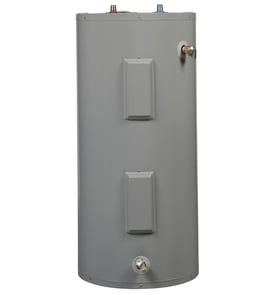



What is the average lifespan of an electric hot water heater?
Most electric tank-style water heaters, including the American E2F50HD045V, typically last 10 to 15 years. Lifespan is driven mainly by water quality and maintenance, especially controlling sediment and keeping the anode rod in good condition per the E2F50HD045V owner's manual.
Here are realistic expectations for electric water heaters:
- Tank-style electric water heater: 10 to 15 years
- With excellent maintenance and mild water conditions: up to about 20 years
- With aggressive water (high minerals or softened water) and little maintenance: often less than 10 years
| Water conditions and maintenance | What usually happens | Expected lifespan impact |
|---|---|---|
| Regular tank flushing and anode inspections | Less corrosion and sediment damage | Longer life |
| Heavy sediment buildup | Noisy operation, overheating, premature tank wear | Shorter life |
| Artificially softened water | More corrosive to the tank | Shorter life |
The manual calls out two big life-shorteners: corrosion control (anode rod) and sediment.
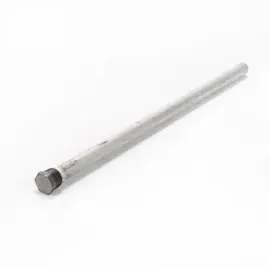
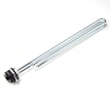
- Inspect the anode rod about every 3 years and replace it if it is more than 50% depleted.
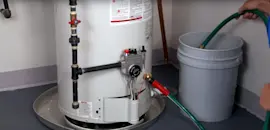
- Drain and flush the tank periodically to reduce sediment buildup.
- Watch for popping or rumbling sounds; sediment can create noise and contribute to premature tank failure.
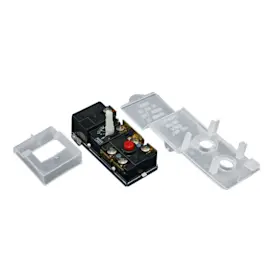
- Keep thermostats set to a reasonable temperature to reduce stress on heating components.
- Replace failed service parts promptly (for example, a burned-out heating element).
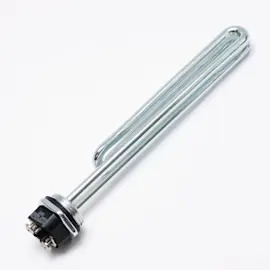
If you are troubleshooting heating performance, the element 100108290 is one of the model-listed heating elements for this water heater.
Once a tank begins corroding internally, performance issues (slow recovery, fluctuating temperatures, leaks) tend to accelerate. Simple maintenance, especially anode rod inspection and sediment control, is the most effective way to get the full expected lifespan from an American electric water heater.
Last updated: January 2026
What is the average cost to replace a 50 gallon electric water heater?
Replacing a 50-gallon electric water heater like the American E2F50HD045V typically runs about $800 to $2,500 installed, with basic tank swaps on the low end and higher-efficiency upgrades or more complex installs on the high end. The final total mainly depends on the heater type, local labor rates, and permit or electrical work.
- Heater type: standard electric tank vs. hybrid (heat pump) water heater
- Electrical work: new breaker, wiring, disconnect, or bringing the circuit up to code
- Permits and inspection: common in many areas for water heater replacement
- Plumbing modifications: shutoff valve, expansion tank, piping changes, pan and drain line
- Disposal and haul-away: removing the old tank
- Access and location: tight closets, attic installs, or long carry distances
| Cost item | Typical range | Notes |
|---|---|---|
| New 50-gallon electric tank | $400 to $1,200 | Higher for premium efficiency and longer warranty tiers |
| Labor (remove and replace) | $300 to $1,200 | Varies by region and complexity |
| Permit and misc. materials | $50 to $500 | Includes fittings, valves, pan, connectors |
| Electrical or plumbing upgrades (if needed) | $0 to $1,500+ | Biggest swing factor |
- Match the voltage and wattage requirements to your existing setup
- Replace worn service parts during the swap (thermostats, drain valve, element) to reduce callbacks
- Flush sediment periodically to help the tank and heating elements last longer
- Use the model data plate information (model and serial) when ordering parts or scheduling service
If you are troubleshooting performance before replacing the whole unit, our E2F50HD045V owner's manual covers maintenance items like draining and flushing, thermostat adjustment, and heating element replacement.
A 50-gallon electric water heater replacement cost is driven less by the tank itself and more by installation conditions. Planning for permits, access, and any electrical or piping updates helps you avoid surprise charges and downtime.
Last updated: January 2026
What is the downside of a hybrid water heater?
Hybrid (heat pump) water heaters can cost more up front and need more space, airflow, and a place to drain condensate than a standard electric tank like the American E2F50HD045V. They can also be noisier and may deliver less heat efficiently in colder locations.
- Higher purchase price than a standard electric water heater.
- Larger footprint and clearance needs; they require adequate air circulation.
- Noise from the compressor and fan (similar to a dehumidifier).
- Condensate management; many installs need a drain or condensate pump.
- Cold-space performance; efficiency drops in very cool basements or garages.
- More complex repairs; more components can mean higher repair cost over time.
| Feature | Hybrid (heat pump) water heater | Standard electric tank (like E2F50HD045V) |
|---|---|---|
| Upfront cost | Higher | Lower |
| Space/air needs | Needs airflow and clearance | Typically simpler placement requirements |
| Noise | Noticeable (fan/compressor) | Quiet |
| Efficiency | Very high in warm spaces | Steady, but typically lower |
| Installation needs | Often needs condensate drain | Often simpler plumbing and electrical |
If your water heater location is tight, cold, or has no easy drain nearby, a hybrid unit can be inconvenient even though it can save energy in the right conditions. For any water heater, we recommend following placement and drainage guidance in the E2F50HD045V owner's manual to help prevent property damage from normal condensate or leaks.
Last updated: January 2026