Installation guide
 Owner’s manual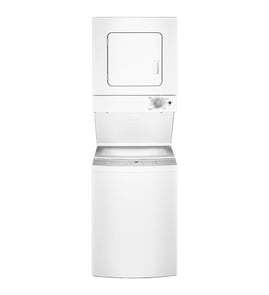



Where to find the model number on a Kenmore laundry center?
On the Kenmore laundry center model 36361542411, the model number is printed on the appliance’s identification label. You will typically find that label under the washer lid, on the washer cabinet (often near the lower side), or around the washer door opening on front-load versions; confirm the exact location in the owner's manual.
Common model number label locations
Check these spots in order (they are the most common for stacked laundry centers):
- Under the washer lid on the top frame or rim
- On the side of the washer cabinet, often near the bottom edge
- Inside the washer door jamb (front-load washer versions)
- On the back of the unit (sometimes near the electrical connection area)
- Behind the front access panel area if your unit has a service label nearby
How to read the label correctly
The label usually includes multiple identifiers. Use the model number for parts lookup and the serial number for age and production details.
| What you see on the label | What it’s used for | Example format |
|---|---|---|
| Model number | Matching the correct parts diagrams and parts list | 36361542411 |
| Serial number | Manufacturing date and production tracking | Letters and numbers |
| Electrical ratings | Verifying power requirements | Volts/amps |
Why it matters
Using the exact model number prevents ordering the wrong washer belt, dryer switch, control board, or other laundry center parts. Even small model number differences can change wiring, fit, and mounting points.
Quick tips before you order parts
- Write the model number exactly as shown (include all digits)
- Take a clear photo of the label for reference
- If the label is worn, check a second location on the cabinet
- Use the model number when selecting parts like a drive belt or door switch
Last updated: February 2026
What is the average lifespan of a Kenmore washer?
A Kenmore washer typically lasts 10 to 15 years with normal household use. For a Kenmore stacked laundry center like model 36361542411, good installation and routine care help you reach the high end of that range; chronic vibration, overloading, and drainage issues shorten it.
Typical lifespan and what affects it
Most washers land in the same general window, but these factors move the needle:
- Load size and frequency: frequent heavy loads wear belts, bearings, and the drive system faster.
- Vibration and leveling: an unlevel unit increases stress during spin.
- Drain performance: slow draining makes the pump work harder and can leave water behind.
- Water quality: sediment can contribute to valve and pump wear.
- Electrical supply: stable power and proper grounding reduce control and motor stress.
Maintenance habits that extend washer life
We recommend these practical habits for a laundry center washer:
- Keep loads balanced; avoid packing the basket tight.
- Use the right amount of detergent to reduce residue buildup.
- Check pockets and remove coins, screws, and hairpins.
- Periodically inspect hoses and connections for seepage.
- Make sure the unit sits solidly on all four legs; adjust leveling as needed (see the installation guide).
Common wear items you may replace over time
On the 36361542411 laundry center, these are typical “life-extending” repairs when symptoms show up:
| Symptom | Likely area | Example part on this model |
|---|---|---|
| Won’t spin or slips under load | Drive system | Washer drive belt WH01X20436 |
| Won’t drain or drains slowly | Drain system | Washer drain pump WH23X10040 |
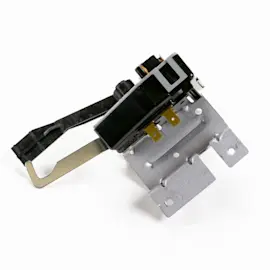
| Lid won’t lock, won’t start/spin | Safety interlock | Washer lid lock WH44X10288 |
Why it matters
Washer lifespan is mostly about mechanical stress. A solid, level installation and avoiding overloads reduce vibration and strain during spin, which helps protect the drive belt, motor, and tub support components.
Last updated: February 2026
How to remove front panel from Kenmore stackable washer?
On Kenmore laundry center model 36361542411, the front access panel is typically removed by disconnecting power, taking out the retaining screws, then lifting and pulling the panel forward to release it from the lower tabs. Use the steps and screw locations shown in the installation guide.
Before you start (safety and access)
- Unplug the laundry center; do not rely on the control being off.
- Turn off both hot and cold water shutoff valves.
- If you need to move the unit, protect the leveling legs to avoid vibration issues later.
- Keep a container and towels ready in case a hose or pump area drips.
- Work with good lighting; many fasteners are under the lower edge of the panel.
Front panel removal steps (typical for this unitized design)
- Disconnect power and verify the unit is dead.
- Remove the fasteners along the lower front edge of the access panel (some versions use 2 screws near the bottom corners).
- Lift the panel slightly, then pull the bottom outward to clear the retaining tabs.
- Lower and remove the panel from the cabinet.
- If you are accessing wiring, note that service information and the wiring diagram are located at the access panel area.
What you can reach after the panel is off
| Area behind panel | What you can inspect | Common next step |
|---|---|---|
| Wiring and connectors | Loose plugs, rubbed wires | Reseat connectors; repair damaged conductors |
| Drain/pump area (washer side) | Debris, leaks, noise | Check hoses and pump mounting |
| Belt and drive components (washer side) | Belt wear, pulley issues | Inspect belt tracking and pulley alignment |
Why it matters
Removing the front access panel is the quickest way to reach the wiring diagram and key service components. That helps you diagnose issues like no-start, no-drain, or unusual vibration without disassembling the entire stacked cabinet.
Parts that are commonly involved (if you are troubleshooting)
- If the washer will not spin or agitate and you find belt damage, check the washer drive belt WH01X20436.
- If the washer will not run because the lid will not lock, check the washer lid lock WH44X10288.
- If the washer will not drain and you hear humming or grinding, check the washer drain pump WH23X10040.
Last updated: February 2026
Is it worth repairing a Kenmore washing machine?
Yes, it’s usually worth repairing a Kenmore washer, especially on a stacked laundry center like model 36361542411, when the fix restores safe, reliable operation for less than the cost of replacement. We focus on the failure type, overall condition, and whether the repair addresses the root cause.
A practical way to decide
Use these checkpoints before you spend money on parts or labor:
- What failed: Wear items (belts, switches, pumps) are typically cost-effective repairs.
- How the washer behaves: No-drain, no-spin, or lid-lock issues are often straightforward.
- Any water leaks: Leaks can be simple (hose, pump) or major (tub related).
- Electrical symptoms: Intermittent power or dead controls can point to wiring or a control board.
- Total repair cost vs. replacement: If the repair is a long-lasting fix at a lower total cost, repair wins.
Common repairs that are often “worth it” on this model
For Kenmore 36361542411 laundry centers, these are frequent, high-impact fixes:
- Replace a failed drain pump: washer drain pump WH23X10040
- Fix a no-start or no-spin safety issue: washer lid lock WH44X10288
- Restore agitation/spin drive: washer drive belt WH01X20436
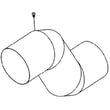
- Correct shifting problems: washer shifter spring WH01X10606
Quick cost-benefit guide
| Situation | Typical outcome | Usually worth repairing? |
|---|---|---|
| Won’t drain or leaves water in tub | Often pump or blockage related | Yes |
| Won’t spin, lid won’t lock | Often lid lock or switch related | Yes |
| Loud squeal/burning smell during spin | Often belt or pulley related | Yes |
| Major tub or basket damage | High parts and labor | Sometimes |
Why it matters
A targeted repair prevents repeat failures and protects the rest of the laundry center. For example, a washer that cannot drain can trigger overflow risk, and a washer that cannot lock the lid will not complete spin cycles by design.
What we recommend before ordering parts
- Confirm the symptom (no drain, no spin, no start, leak, noise).
- Check installation basics that can mimic failures (leveling and stable footing reduce vibration and misalignment); see the installation guide.
- If you’re testing electrical parts, use safe methods and the correct meter settings.
Last updated: February 2026
How many cubic feet is a Kenmore washer?
The washer in Kenmore laundry center model 36361542411 has a 3.9 cu. ft. wash basket capacity. This is the usable tub volume for the washer portion of the stacked unit; it helps you size loads correctly and compare capacity to other laundry centers.
How to confirm capacity on your unit
Use the model-specific documentation and the rating label so you are matching the correct product.
- Check the specifications section in the 36361542411 owner's manual
- Verify the model number on the rating plate (commonly found on the unit frame or behind an access panel)
- Compare the listed capacity to your typical load types (towels, jeans, bedding)
- If you are moving or installing, confirm clearances and hookups using the 36361542411 installation guide
What 3.9 cu. ft. means for load size
A 3.9 cu. ft. top-load washer is a large-capacity design for everyday family loads.
- Handles most mixed loads without crowding
- Washes towels and jeans effectively when not overfilled
- Bulky items fit better when washed one at a time
| Capacity | Typical fit | Best practice |
|---|---|---|
| 3.9 cu. ft. | Large everyday loads | Fill loosely; keep items below the top rim |
| 4.6 to 5.2 cu. ft. | Extra-large loads | Better for frequent bulky items |
Why it matters
Capacity affects cleaning performance and wear on parts. Overloading a laundry center can increase strain on the drive system and lid locking components such as the washer lid lock WH44X10288.
Last updated: February 2026