
What is the 4 inch rule for drill press?
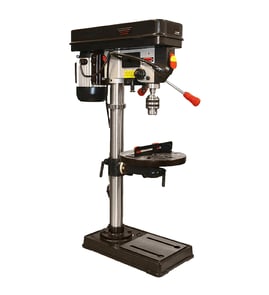
The 4-inch rule for a drill press means we keep our hands and fingers at least 4 inches away from the rotating drill bit, chuck, and spindle while using a drill press such as the Delta 70-200. This spacing helps prevent accidental contact if the workpiece shifts or the bit grabs.
How to follow the 4-inch rule on a drill press
- Clamp the workpiece to the table; do not hold small parts by hand.
- Use a drill press vise, V-block, or a clamp set so your hands stay outside the 4-inch zone.
- Use a scrap backer board to support small pieces and reduce spinning or tear-out.
- Stop the machine before clearing chips; use a brush, not your fingers.
- Remove the chuck key immediately after tightening the chuck.
Quick safety checklist (before you pull the handle)
| Item to check | What “good” looks like | Why it matters |
|---|---|---|
| Workpiece control | Clamped or held in a vise | Prevents spinning and hand injuries |
| Bit condition | Sharp, straight, fully seated | Reduces grabbing and wobble |
| Speed selection | Slower for large bits, faster for small bits | Improves control and cut quality |
| Personal safety | Eye protection, no loose sleeves or gloves | Reduces entanglement risk |
Why it matters
A drill press can apply a lot of torque; if the bit catches, the material can whip around instantly. Keeping a 4-inch buffer and using clamps or a vise protects your hands while also improving accuracy and hole placement.
Helpful DIY reference
If you are troubleshooting power, switches, or wiring on a drill press, we use the same basic electrical testing approach shown in how to use a multimeter to test electrical parts video.
Last updated: February 2026
What is the best drill press on the market?
The “best” drill press depends on what you drill and how often you use it. For most DIY and small-shop users, a floor-standing press like the Delta 70-200 is a strong all-around choice because it prioritizes stability, usable swing capacity, and repeatable drilling when it’s tuned and set up correctly.
How we recommend choosing the best drill press
Focus on the features that affect accuracy, safety, and day-to-day convenience.
- Type: benchtop for tight spaces; floor model for maximum stability
- Speed control: step-pulley is durable; variable speed is faster to adjust
- Quill travel: more travel helps with thicker stock and Forstner bits
- Runout and rigidity: tighter spindle runout and a stiffer column drill cleaner holes
- Table adjustment: easy height changes and solid tilt locks reduce frustration
- Power and chuck capacity: match horsepower and chuck size to your bit sizes and materials
Quick comparison: what “best” means for different users
| Your use case | What to prioritize | Typical best fit |
|---|---|---|
| Woodworking (furniture, cabinetry) | quill travel, table size, depth stop, low vibration | floor model or heavy benchtop |
| Metal drilling | low-speed range, rigidity, quality vise/clamping | floor model preferred |
| Small garage DIY | footprint, easy speed changes, value | benchtop with solid base |
| Precision repeat work | repeatable depth stop, minimal runout, good lighting | higher-end floor model |
Setup tips that make any drill press “better”
Even a premium drill press performs poorly if it is not set up correctly.
- Bolt the base to the floor or a heavy platform; add ballast if needed
- Square the table to the bit using a machinist square; re-check after tilting
- Use sharp bits and the right speed for wood vs. metal
- Clamp the workpiece; do not hand-hold small parts
- Check belt condition and tension; slipping belts reduce torque and accuracy
Why it matters
A drill press is all about repeatability. The right combination of speed range, rigidity, and table control reduces wandering holes, burning, broken bits, and out-of-round drilling.
For model-specific replacement parts and diagrams for your Delta 70-200, use the parts list for this model or search by model number on Sears PartsDirect.
Last updated: February 2026
How much does a Delta 70 200 drill press weight?
The Delta 70-200 20" drill press typically weighs about 345 lb. That weight is normal for a heavy, floor-standing drill press and helps reduce vibration for cleaner, more accurate drilling.
Quick specs snapshot
| Item | What to expect | Why it matters |
|---|---|---|
| Weight | About 345 lb | Stability and less chatter |
| Type | Floor-standing, 20" class | Built for larger workpieces |
| Best handling method | Dolly, pallet jack, or 2 to 4 people | Prevents injury and damage |
Why weight matters on a drill press
A heavier drill press like the Delta 70-200 is easier to keep steady when you are drilling larger holes, using Forstner bits, or working in hardwoods. More mass usually means:
- Less vibration and smoother holes
- Better accuracy when feeding the quill
- Less chance of the tool walking during startup
- More confidence when using larger accessories (vises, fences)
Moving and installing it safely
Because 345 lb is beyond what most people can safely lift, we recommend planning the move before you unload it.
- Unplug power and remove loose accessories (chuck key, bits, vise)
- Lower the table and lock it to reduce top-heaviness
- Use a dolly or pallet jack whenever possible
- Lift with help; keep the head and column supported
- Once placed, level it and bolt it down if your shop setup allows
If your drill press feels “too heavy” or hard to move
If you need to relocate it often, consider putting it on a heavy-duty mobile base rated above the drill press weight, or keep it on a dedicated spot and bring workpieces to the machine.
Helpful related DIY reading
For general safety planning and the right gear for a project like this, see are diy appliance repairs safe and must have tools for appliance repair.
Last updated: February 2026
What is a good horsepower for a drill press?
For a Delta 70-200 drill press, 1 HP is the right target for most serious home-shop drilling because it handles larger bits and metalwork without bogging down. In general, 1/2 HP works for light drilling, while 3/4 to 1 HP covers heavier, frequent use.
Quick horsepower guide (what to buy for your work)
- 1/3 to 1/2 HP: light-duty drilling in softwood, plywood, plastics; smaller twist bits
- 1/2 to 3/4 HP: general-purpose woodworking; occasional metal drilling with proper speeds
- 3/4 to 1 HP: frequent metal drilling, larger Forstner bits, hole saws, thicker stock
- Over 1 HP: production-style use, large cutters, continuous heavy loads
What matters as much as horsepower
Horsepower helps prevent stalling, but drill press performance depends heavily on setup and speed selection.
- Low-speed range: critical for large bits and drilling steel
- Sharp bits: dull tooling makes any motor feel underpowered
- Correct feed pressure: too aggressive overheats bits and strains the motor
- Belt and pulley condition: slipping belts mimic “low power”
- Rigidity (table, column, quill): reduces chatter and improves hole quality
Simple sizing table (HP vs. common drilling)
| Common work | Typical bit size | HP that fits best |
|---|---|---|
| Softwood, plastics | Up to 3/8 in. | 1/3 to 1/2 HP |
| Hardwood | Up to 1/2 in. | 1/2 to 3/4 HP |
| Steel/aluminum often | 1/4 to 1/2 in. | 3/4 to 1 HP |
| Large Forstner/hole saws | 1 in. and up | 1 HP or more |
Why it matters
Choosing enough HP lets you run the correct RPM for the bit size and material without stalling; that improves hole quality and reduces heat, belt wear, and bearing stress.
For help confirming you have the correct model number before researching repair parts, use how to find your appliance model number (and what it means for parts).
Last updated: February 2026