Owner’s manual
 View engine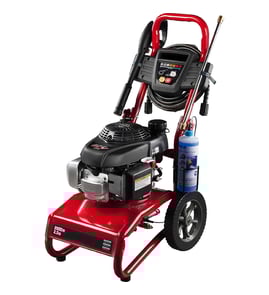



What PSI should my pressure washer be?
For the Craftsman pressure washer model 580752050, the rated maximum pressure is 2,550 PSI. In real use, the PSI at the surface varies by spray tip, distance, and water supply; confirm operating details in the 580752050 operator’s manual.
What “PSI should be” for this model
Your 580752050 is designed to deliver up to 2,550 PSI max at the pump. You typically choose the right PSI by selecting the correct spray tip and keeping a safe working distance.
- Use 40° (white) for delicate rinsing and lower pressure cleaning
- Use 15° (yellow) for general cleaning (decks, siding, patios)
- Use 0° (red) for maximum pressure on tough stains (use carefully)
- Use black for detergent application (low pressure)
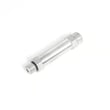
If spray feels inconsistent or “too hard,” a worn or incorrect nozzle can change performance; replacing the correct spray tip/nozzle can help (see pressure washer spray nozzle 195983XGS).
Quick PSI reference (typical use)
| Task | Typical PSI range | Tip style that usually fits |
|---|---|---|
| Cars, patio furniture | 1,200 to 1,900 | 40° (white) |
| Decks, fences, siding | 1,800 to 2,500 | 15° (yellow) |
| Concrete, heavy stains | 2,500+ | 0° (red), carefully |
Why your PSI may not feel “right”
Even with a 2,550 PSI-rated washer, these issues can reduce or alter pressure:
- Clogged spray tip or nozzle restriction
- Low garden hose supply (flow and inlet pressure)
- Air in the pump after hookup
- Kinked, leaking, or worn high-pressure hose
- Wrong tip for the job (0° can feel excessively aggressive)
Why it matters
Using more PSI than needed can damage wood, paint, seals, and even concrete surfaces; using too little PSI wastes time and can lead to overuse of detergent. Matching the spray tip and distance to the job protects your surfaces and your pump.
Last updated: January 2026
Can you put 87 gas in a pressure washer?
Yes. For the Craftsman 580752050 gas pressure washer, we recommend clean, fresh regular unleaded gasoline with a minimum 87 octane (87 AKI). Do not use E85, do not mix oil into the gas, and always leave room in the tank for fuel expansion; see the 580752050 operator’s manual.
Fuel guidelines for Craftsman 580752050
Use these fuel rules to prevent hard starting, surging, and fuel system damage:
- Use unleaded gasoline, 87 octane minimum.
- Gasoline with up to 10% ethanol (E10) is acceptable.
- Gasoline with up to 15% MTBE is acceptable.
- Do not use E85 or other unapproved fuels.
- Do not mix oil in the gasoline (this is a 4-cycle engine).
When higher octane helps (and when it does not)
For normal use at typical elevations, 87 octane is the correct choice. Higher octane usually will not improve cleaning power or reliability.
| Situation | What to use | Notes |
|---|---|---|
| Normal operation | 87 octane (regular) | Best match for this model’s fuel requirement |
| High altitude use | 85 octane minimum | High-altitude adjustment may be required |
| Storage 30+ days | Fresh fuel plus stabilizer | Helps reduce gum/varnish in the carburetor |
Why it matters
Using the right fuel helps your Craftsman 580752050 start easier, run smoother, and avoid carburetor and fuel-line issues that can look like “engine won’t start” or “engine losing power.” For broader troubleshooting steps, see solving pressure washer problems.
Last updated: January 2026
How to tell if your pressure washer pump is bad?
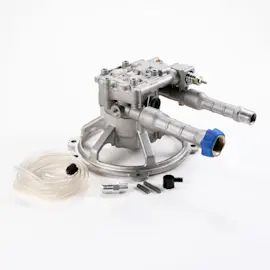
On the Craftsman 580752050, a “bad pump” usually shows up as low or pulsing pressure even with a good water supply and a clean spray tip. The quickest confirmation is checking pressure at the pump outlet; a spike that quickly drops often points to internal pump wear or valve issues (see the 580752050 operator's manual).
Quick checks before blaming the pump
Many “pump” symptoms are caused by restrictions or air leaks. We recommend checking these first:
- Verify the garden hose supply is strong and steady (cold water; inlet screen clean).
- Purge air: turn water on, hold the trigger until flow is steady before starting.
- Inspect for kinks, cuts, or leaks in the high-pressure line.
- Clean the spray tip; a clogged tip can cause pulsing and pressure problems.
- Confirm you are using the correct spray tip (0°, 15°, 40°, or detergent tip).
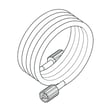
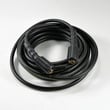
If your hose is damaged or leaking, replace it with the correct fit for this model, such as the pressure washer hose 84006753.
Pressure test (most direct way)
If you have a pressure gauge:
- Install the gauge at the pump outlet or between the pump and high-pressure hose.
- Start the engine with water on and trigger held to purge air.
- Squeeze the trigger and watch the gauge.
Typical results:
| What you see | What it usually means |
|---|---|
| Pressure spikes then drops to a trickle | Internal pump issue (valves/seals) likely |
| Pressure is consistently low | Supply restriction, worn nozzle, unloader issue, or pump wear |
| Pressure surges/pulses | Clogged tip, air in system, inlet restriction, or pump valve issue |
Why it matters
Running with low flow, air in the pump, or a restricted nozzle can overheat and damage the pump. Confirming the cause helps you avoid replacing the pump head when the real fix is a nozzle, hose, or inlet screen.
For more symptom-based troubleshooting steps, use solving pressure washer problems.
Last updated: January 2026