Installation guide
 Owner’s manual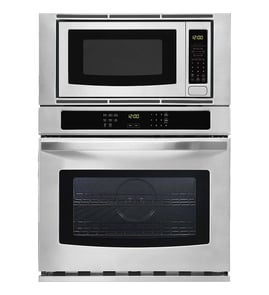




What is the life expectancy of a KitchenAid oven?
A KitchenAid electric wall oven like model KEMS308SSS02 typically lasts 15 years with normal household use and basic maintenance. Keeping the oven clean, ensuring good airflow for cooling, and fixing small issues early helps you reach (and often exceed) that lifespan.
Typical lifespan and what affects it
Most built-in electric ovens fall into a predictable range; the biggest differences come from heat exposure, electronics, and how often the oven runs at high temperatures.
- Average life expectancy: about 15 years
- Heavy use (daily high-heat cooking): often 10 to 12 years
- Light to moderate use: often 15 to 20 years
- Common early failures: control components, heating elements, temperature sensing, door hardware
Quick maintenance habits that extend oven life
We recommend these practical steps for the KEMS308SSS02 wall oven/microwave combo:
- Use the cleaning methods and products listed in the KEMS308SSS02 owner's manual to avoid damaging finishes.
- Keep the door closing smoothly; replace worn bumpers such as the range oven door bumper W10105790 if the door starts slamming or leaking heat.
- Avoid lining the oven bottom with foil; it can trap heat and stress components.
- If baking temperatures drift, test and replace the sensor if needed (example: wall oven temperature sensor WPW10131825).
- If the oven overheats or shuts down, check for airflow and a failing cooling fan assembly.
Parts that commonly influence “end of life”
When an oven seems “worn out,” it is often one or two serviceable parts.
| Symptom | Commonly involved part | Example part for this model |
|---|---|---|
| Slow preheat, uneven baking | Bake element | WPW10207398 |
| Temperature too hot/cold | Temperature sensor | WPW10131825 |
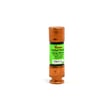
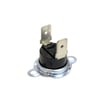
| Random shutdown after heating | Thermal fuse | WP8304452 |
| Door won’t close tightly | Door bumper | W10105790 |
Why it matters
A 15-year life expectancy is realistic for a KitchenAid built-in oven, but performance and safety depend on accurate temperature control and proper cooling. Replacing a bake element, sensor, or thermal fuse at the right time can restore normal cooking results and prevent repeat failures.
Last updated: January 2026
How do I reset my KitchenAid Superba oven?
To reset your KitchenAid KEMS308SSS02 Superba built-in oven controls, restore power by turning the circuit breaker OFF, then back ON; the display should light briefly and you may see “PF,” which indicates a power interruption reset.
Quick reset steps (recommended)
- Turn the oven circuit breaker OFF (or remove the fuse) for about 1 minute.
- Turn the breaker ON.
- Watch the display; “PF” commonly appears after power is restored.
- Set the clock if prompted (for example, “CLOCK ENTER TIME”).
- Press OFF/CANCEL to clear any remaining prompts.
If the control panel seems “stuck”
Sometimes the oven is not frozen; it is locked.
- If you see a lock message or most keys do not respond, try Control Lock.
- Touch and hold START for about 5 seconds to toggle the lock.
- When locked, only TIMER SET/START, TIMER OFF, and OVEN LIGHT typically work.
What “PF” means after a reset
| Display message | What it usually indicates | What to do |
|---|---|---|
| PF | Power failure or power interruption | Clear it with OFF/CANCEL, then reset the clock |
| CLOCK ENTER TIME | Clock needs to be set after power restore | Enter the time and confirm |
Why it matters
A hard power reset clears many temporary control glitches (blank display, unresponsive keypad, odd beeping) and gets the electronic control back to a known startup state. If “PF” keeps returning, focus on the home power supply or a loose connection at the breaker.
For model-specific control details and display messages, use the KEMS308SSS02 owner’s manual.
Last updated: January 2026
How to know if the KitchenAid wall oven thermostat is bad?
If your KitchenAid wall oven/microwave combo model KEMS308SSS02 consistently overheats, underheats, or swings widely in temperature even after you recalibrate the oven settings, the oven thermostat circuit is a likely cause. We use the KEMS308SSS02 owner's manual to confirm calibration steps and troubleshooting guidance before replacing parts.
Common signs the thermostat circuit is failing
- Oven temperature is consistently too hot or too cool compared to the set temperature.
- Temperature swings are large (food cooks unevenly, baking times vary a lot).
- The oven overheats and you smell excessive heat, even at moderate settings.
- The oven shuts down and shows an error condition (for example, “Err” on the lower oven display).
- Broil or bake heat seems abnormal (either weak heat or runaway heat).
Quick checks we recommend before replacing parts
- Confirm power is stable: a loose breaker connection or supply issue can cause odd heating behavior.
- Run a simple heat test: set Bake and verify the oven produces steady heat after several minutes.
- Recalibrate temperature (if your control allows it): many ovens can be offset a few degrees to match actual temperature.
- Compare actual vs set temp using an oven thermometer placed in the center of the lower oven.
Parts that are commonly involved (and how they differ)
| What you’re testing | What it does | When it’s the likely culprit |
|---|---|---|
| Thermostat/control circuit | Regulates heat cycling logic | Overheating or unstable cycling after calibration |
| Temperature sensor | Reports oven temperature to the control | Temps are consistently wrong or drift over time |
If your readings point to a sensor problem, the correct replacement for this model is the wall oven temperature sensor WPW10131825.
Why it matters
A thermostat or sensor problem can cause overheating (burned food, damaged cookware) or underheating (unsafe cooking results). Confirming the cause first helps you avoid replacing the wrong part.
Last updated: January 2026
What does F2 E0 mean on a KitchenAid oven?
On KitchenAid model KEMS308SSS02, the F2 E0 error code points to a problem in the temperature-sensing circuit, most often involving the oven temperature sensor or its wiring connection to the electronic oven control. This can cause overheating, underheating, or the oven shutting down for protection.
What to check first (safe, quick steps)
- Turn the oven off at the breaker for 1 minute, then restore power and retry Bake.
- Confirm the oven is not in a self-clean cycle or still hot from recent use.
- Check for obvious loose connections if you can access the sensor connector without removing the oven.
- If the code returns during preheat, stop using the oven until the cause is corrected.
- Use the troubleshooting guidance in the KEMS308SSS02 owner's manual.
Most common causes
- Failed oven temperature sensor (sensor out of range)
- Loose, corroded, or damaged sensor wiring harness
- Connector not fully seated at the control board
- Electronic oven control problem (less common)
Parts that commonly fix F2 E0 on this model
If testing shows the sensor is out of spec or intermittent, replacement is a common repair.
| Symptom pattern | Most likely issue | Common next step |
|---|---|---|
| Code appears during preheat | Sensor reading incorrect | Test sensor resistance; replace if failed |
| Code appears after moving/servicing oven | Loose connector | Reseat sensor/control connectors |
| Oven heats erratically, then faults | Wiring intermittently open/short | Inspect harness for heat damage |
Model-matched part to consider:
How to confirm the sensor is the problem
- Disconnect power.
- Access the sensor connector and check for a secure fit.
- Measure sensor resistance with a multimeter (room-temperature readings should be in a typical oven-sensor range; a shorted or open reading indicates failure).
- If wiring and sensor test good, the control board circuit is the next suspect.
Why it matters
The temperature sensor is the oven’s feedback device; when the control cannot trust that signal, it may stop heating or allow unsafe temperature swings. Fixing the sensor circuit restores accurate baking and protects components like the bake element and control.
Last updated: January 2026