Owner’s manual
 Error Codes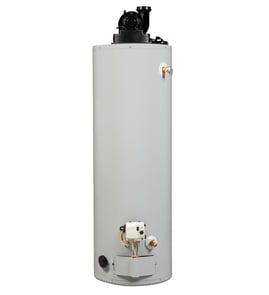






What's the average lifespan of a gas hot water heater?
Most gas water heaters, including the State GS640YRVIT, last 8 to 12 years. With consistent maintenance (especially flushing sediment and protecting the tank from corrosion), many reach 12 to 15 years before performance and reliability drop.
Typical lifespan ranges (what to expect)
| Condition | Typical lifespan | What you’ll notice |
|---|---|---|
| Normal use, average water quality | 8 to 12 years | Gradual loss of hot water capacity |
| Well maintained (flushed, inspected) | 12 to 15 years | Fewer burner and tank issues |
| Hard water, heavy use, little maintenance | 6 to 10 years | More noise, slower recovery, more leaks |
What shortens or extends lifespan
- Water quality: hard water accelerates sediment buildup and corrosion.
- Sediment in the tank: reduces efficiency and can overheat the tank bottom.
- Tank corrosion protection: a worn anode rod speeds up tank rusting.
- Combustion air and venting: restricted airflow can stress the burner system.
- Temperature setting: higher temps increase wear and scale.
Maintenance that helps a gas water heater last longer
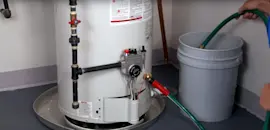
- Flush a few gallons from the drain valve periodically to reduce sediment.
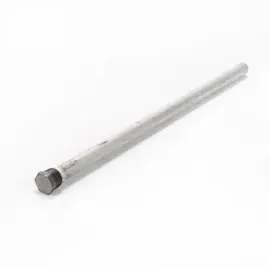
- Inspect and replace the anode rod when it’s heavily depleted (a common life-extender): anode rod 100109594.
- Keep the burner area and intake path clean; a clogged screen can affect combustion air: water heater air intake screen 100109216.
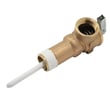
- Test the temperature and pressure relief valve for proper operation: how to replace a water heater temperature and pressure t and p relief valve.
- Follow the service intervals and safety steps in the GS640YRVIT manual.
Why it matters
Once a gas water heater gets past the 10 to 12 year mark, small issues (sediment, corrosion, ignition problems) tend to stack up. Staying ahead of maintenance helps protect hot water performance and reduces the chance of an unexpected tank failure.
Last updated: January 2026
Why are gas water heaters being phased out?
Gas water heaters are being phased out in some areas because local and State clean-air rules target nitrogen oxides (NOx) emissions from gas appliances, and many programs push electrification (often heat pump water heaters) to reduce smog-forming pollution. For your State GS640YRVIT, always follow the venting, combustion-air, and safety requirements in the GS640YRVIT owner's manual.
What “phased out” usually means
Most phase-outs are policy changes, not an immediate ban on every existing unit.
- New installation rules may tighten (for example, ultra-low NOx requirements)
- Rebates may favor electric or heat pump models over gas
- Permits and inspections may become stricter for gas venting and combustion air
- Some jurisdictions restrict gas hookups in new construction
- Existing gas water heaters are often allowed to run until replacement is needed
Common reasons behind the change
These are the most common drivers we see across U.S. markets.
| Driver | What it targets | What you may notice as a homeowner |
|---|---|---|
| Air quality (NOx) | Smog-forming emissions | More ultra-low NOx models required |
| Climate goals | Greenhouse gas reduction | More incentives for heat pump water heaters |
| Building electrification | All-electric new builds | Fewer gas options in some areas |
| Safety and compliance | Venting and combustion air | More inspection focus on venting and intake |
What to do if you are replacing a GS640YRVIT
We recommend confirming local requirements before buying a replacement.
- Check whether your area requires “ultra-low NOx” gas models
- Verify vent type, vent size, and allowable vent runs
- Confirm combustion-air requirements (especially in tight spaces)
- Keep the temperature and pressure relief valve discharge properly piped
- If your current unit is aging, plan for proactive maintenance (tank flushing, anode checks)
Why it matters
Local rules can change what models are legal to install and what venting or combustion-air upgrades are required. Getting this right prevents failed inspections, nuisance shutdowns, and unsafe operation.
Related help: State gas water heater error codes.
Last updated: January 2026
Why do plumbers not recommend tankless water heaters?
Plumbers often don’t recommend tankless water heaters because they can require expensive gas, venting, and electrical upgrades, plus regular descaling maintenance; in many homes, a standard tank-style unit like the State GS640YRVIT is simpler to install, easier to service, and more predictable when multiple fixtures run at once.
The most common reasons plumbers push back
- Installation complexity: Tankless units frequently need larger gas lines, different venting, and sometimes electrical changes.
- Higher upfront cost: The unit plus labor and upgrades can cost much more than a tank water heater.
- Maintenance requirements: Hard water often means annual descaling to prevent performance loss.
- Flow-rate limits: Running a shower, dishwasher, and laundry at the same time can exceed what some tankless units can deliver.
- Delayed hot water: You may still wait for hot water at the tap (tankless is not the same as “instant at the faucet”).
- Service familiarity: Many plumbers service tank units daily; tankless troubleshooting can be more time-consuming.
Tank vs. tankless: quick comparison
| Feature | Tank water heater (like GS640YRVIT) | Tankless water heater |
|---|---|---|
| Upfront cost | Lower | Higher |
| Install changes | Usually minimal replacement work | Often needs gas, venting, electrical upgrades |
| Maintenance | Periodic flushing; anode checks | Regular descaling is common |
| Multiple fixtures | Strong short-term surge capacity | Limited by max flow rate |
What to consider before switching
- Your gas line size and available BTU capacity
- Venting path and whether condensing venting is required
- Local water hardness and willingness to descale
- How many bathrooms and simultaneous hot-water demands you have
- Whether you want “endless hot water” or “fast recovery” (they are different)
Why it matters
A water heater that matches your home’s demand prevents lukewarm showers, nuisance shutdowns, and premature wear. For many households, maintaining a tank unit (including corrosion protection) is the most cost-effective path; for example, checking the anode rod 100109594 helps extend tank life.
Model-specific help for State GS640YRVIT
For maintenance intervals, safety checks, and operating guidance for your tank-style heater, use the GS640YRVIT manual. If you’re seeing diagnostic issues on a gas control, our State gas water heater error codes guide helps you narrow down the problem before replacing parts.
Last updated: January 2026
What is the most common problem with a gas hot water heater?
The most common problem we see with gas water heaters like the State GS640YRVIT is loss of ignition (pilot light goes out or the burner will not light), which leads to no hot water. Sediment buildup in the tank is another frequent issue because it reduces heating efficiency and can cause rumbling or popping noises. For model-specific checks and lighting steps, use the GS640YRVIT manual.
Most common causes (and what you notice)
- Pilot will not stay lit: burner never fires, water turns lukewarm or cold.
- Ignition system trouble: clicking, delayed ignition, or no flame.
- Sediment buildup: rumbling or popping sounds, slower recovery, higher gas use.
- Restricted combustion air: sooting, poor burner performance, shutdowns.
- Control or valve issues: inconsistent temperature, burner cycles oddly.
Quick checks we recommend first
- Confirm the gas shutoff valve is fully open and other gas appliances work.
- Look through the burner view area for signs of weak or unstable flame.
- Inspect and clean the intake area; a clogged screen can starve the burner of air (see water heater air intake screen 100109216).
- If the unit uses an igniter assembly and you have no ignition, inspect wiring connections and the igniter condition (see water heater burner igniter assembly 100110771).
- If you hear rumbling or popping, plan a tank flush to remove sediment.
Symptom-to-likely-cause guide
| Symptom | Most likely cause | Common next step |
|---|---|---|
| No hot water | Pilot out, ignition failure, gas supply issue | Relight per manual; verify gas supply |
| Hot water runs out fast | Sediment, dip tube issue | Flush tank; inspect inlet tube |
| Rumbling/popping | Sediment on tank bottom | Flush tank |
| Water leaking from discharge pipe | T&P valve opening | Test/replace T&P valve |
Why it matters
Ignition problems stop heating immediately, while sediment buildup quietly reduces efficiency and can shorten component life. Catching these early helps protect the gas control, burner, and tank.
Related help: State gas water heater error codes
Last updated: January 2026