 Error Codes





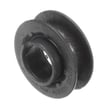
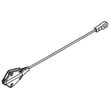
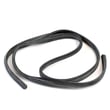
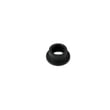
What is the most common problem with GE dishwashers?
For the GE GDF450PSR3SS dishwasher, the most common issues we see customers troubleshoot are draining problems (water left in the tub), wash performance problems (not cleaning well), and “won’t start” symptoms. These often trace back to a clogged filter/sump area, a restricted drain path, or a door latch or control issue.
- Won’t drain / standing water: clogged filter area, kinked drain hose, or a failing drain pump
- Not cleaning well: clogged spray arm holes, dirty filter, or low water fill
- Won’t start: door not latching, blown control fuse, or control board problem
- Leaks: worn tub gasket, sump seal leak, or door not sealing evenly
- No heat / poor drying: heating circuit issue (element or related components)
If you’re seeing an error code, start with our GE dishwasher error codes reference to match the code to the most likely system involved.
- Cancel the cycle and confirm the unit actually attempts to drain.
- Remove debris from the bottom of the tub and filter area.
- Check the drain hose routing for kinks and make sure it has a proper high loop.
- Confirm the door closes firmly and the latch engages.
- Run hot water at the sink for 30 to 60 seconds before starting a cycle.
When troubleshooting points to a failed component, these model-compatible parts are common fixes:
| Symptom | Part to inspect/replace | What it does |
|---|---|---|
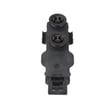
| Won’t drain | Dishwasher drain pump WD19X25461 | Pumps water out through the drain hose |
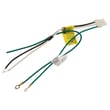
| Won’t start / dead control | Dishwasher control board fuse WD21X25696 | Protects the control circuit from overload |
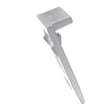
| Door won’t latch | Dishwasher door latch lock WD01X29878 | Signals the control that the door is safely closed |
Drain and latch related problems can look like “the dishwasher is broken,” but they often start as a simple restriction or a door that is not fully latched. Catching those early helps prevent repeat clogs, poor cleaning, and mid-cycle stoppages.
Last updated: January 2026
What is the average lifespan of a GE dishwasher?
A GE dishwasher typically lasts 10 to 12 years. For your GE GDF450PSR3SS, real-world lifespan depends most on water quality, how often you run cycles, and routine cleaning of the filter and spray arms; good maintenance can push service life closer to 15 years.
- Hard water scale buildup on internal parts and the heating system
- Food debris left in the sump and filter area
- Overloading racks or blocking spray arm rotation
- Using too much detergent or the wrong detergent type
- Skipping periodic cleaning cycles and gasket wipe-downs
- Clean the filter area regularly; remove trapped debris
- Rinse and clear spray arm holes so wash pressure stays strong
- Run hot water at the sink before starting a cycle (improves fill temperature)
- Keep the door seal clean and check for nicks or flattening
- Use a dishwasher cleaner monthly if you have hard water
If you are chasing poor wash performance that can shorten lifespan, start with the filtration and spray system. The dishwasher fine filter assembly WD12X25995 is a common wear and clog point on many GE designs.
| Situation | Usually worth repairing? | Why |
|---|---|---|
| Unit is under ~7 years old | Yes | Repairs often restore full performance |
| 8 to 12 years old | Depends | Compare repair cost vs. overall condition |
| 13+ years old | Often no | Multiple components may be near end-of-life |
A dishwasher that is struggling to drain, heat, or spray correctly runs longer and works harder. That extra strain can accelerate wear on key components like the drain pump, wash pump, and control system. For troubleshooting help, we use the GE electronic dishwasher error codes guide to match symptoms to likely causes.
Last updated: January 2026
Which dishwasher to stay away from?
If you’re shopping broadly, we don’t recommend “avoiding” a brand name by itself; reliability varies a lot by model and features. For your GE GDF450PSR3SS dishwasher, the practical approach is to judge condition and supportability: if a unit shows repeated leak, drain, or control problems, it’s a better candidate to pass on than one with a clean service history.
- Evidence of chronic leaking (rusted toe kick area, swollen flooring, recurring puddles)
- Intermittent power or dead keypad symptoms (often tied to wiring or controls)
- Poor wash performance even after cleaning filters and spray arms
- Frequent “won’t drain” events or standing water after cycles
- Strong burning smell, tripped breaker, or melted wiring (stop using and have it checked)
On the GE GDF450PSR3SS, these components are often involved when shoppers report the issues above:
- Drain problems: dishwasher drain pump WD19X25461
- Fill problems: water valve assembly WD15X27703
- Heating and drying complaints: dishwasher heating element WD05X35098
- Random stopping or no-start symptoms: dishwasher electronic control board WD21X32938 and dishwasher control board fuse WD21X25696
- Leaks at the tub perimeter: dishwasher tub gasket WD08X23476
| What you see during a test run | What it usually means | Buy/avoid guidance |
|---|---|---|
| Fills, washes, drains consistently | Core systems are functioning | Usually worth considering |
| Won’t drain or drains slowly | Drain path restriction or pump issue | Avoid unless you plan a repair |
| Dead controls or intermittent response | UI/control or power issue | Avoid unless priced for repair |
| Water on floor during/after cycle | Seal, gasket, or installation issue | Avoid until cause is confirmed |
Dishwashers are repairable, but the “stay away from it” decision is usually about risk: repeated leaks can damage cabinets and flooring, and intermittent control issues can be time-consuming to diagnose. Checking symptoms first helps you avoid the most expensive surprises.
If you’re evaluating a GE unit that’s showing an error, use GE dishwasher error codes to interpret what the dishwasher is reporting before you decide.
Last updated: January 2026





