 Installation guide
 Owner’s manual

Is a 3.5 cubic foot washer big?
A 3.5 cubic foot washer is a medium, standard-size capacity; it is big enough for most households and can handle everyday loads plus bulkier items like a queen comforter (depending on fill level and fabric). For best results on the Amana NAV2335AWW, load so items can circulate freely.
What “3.5 cu. ft.” means in real laundry terms
Washer capacity is the tub volume, not a guaranteed weight limit. In day-to-day use, 3.5 cu. ft. typically works well for:
- Regular mixed loads (shirts, jeans, towels)
- A set of sheets and pillowcases
- Medium towel loads
- Some bulky items (comforters, jackets) if you avoid overpacking
How to tell if the load is too big
Overloading is the main reason a “big enough” washer still struggles (poor cleaning, out-of-balance spin, extra wear).
- Clothes are packed tight with little movement
- Detergent does not rinse out well
- The washer bangs or vibrates heavily during spin
- Items come out with dry spots or detergent streaks
- Cycles take longer because the load keeps rebalancing
Quick fit check (works for most top-load washers)
| What you see in the tub | What it usually means | What to do |
|---|---|---|
| Items move freely during agitation | Load size is good | Wash as normal |
| Items barely shift or “mound” above the basket | Overloaded | Remove a few items |
| One heavy item dominates (blanket, rug) | Unbalanced risk | Add 2-3 similar items or wash alone |
Best practice for the NAV2335AWW water level and performance
Your NAV2335AWW manual emphasizes choosing a water level that lets clothes circulate freely, and adjusting the level if bulky fabrics need more water after agitation begins. Use the owner's manual to match water level and temperature to the load.
Why it matters
Choosing the right load size helps your washer clean better, spin smoother, and reduces strain on key drive and suspension components.
Last updated: February 2026
What is the most common problem with a washing machine top loader?
The most common top-load washer problem is an unevenly distributed (unbalanced) load that causes banging, vibration, and a wet load at the end of spin. On your Amana NAV2335AWW, the fix is usually redistributing the load, confirming the washer is level, and restarting the final spin (see the owner's manual).
Quick fixes to try first
- Pause the cycle, open the lid, and redistribute items evenly around the basket.
- Mix large and small items; avoid wrapping sheets around the agitator.
- Select an appropriate water level for the load size.
- Confirm the washer sits level and all feet are firmly on the floor.
- If the load finishes too wet, reset the control for the final spin period.
Other common top-load issues (and what they look like)
Even though unbalanced loads are most common, these problems also show up often on top-load washers:
| Symptom | Common cause | What to check next |
|---|---|---|
| Won’t spin or agitate | Lid not fully closed or lid switch issue | Close lid firmly; if it still won’t run, inspect the lid switch actuator area |
| Won’t drain or drains slowly | Kinked/clogged drain hose or pump restriction | Straighten the drain hose; check for clogs; inspect the drain path |
| Stops mid-cycle | Overload protector tripped from heavy load or repeated lid openings | Reduce load size; let motor cool, then restart |
| Excess suds, poor spin | Suds lock from too much detergent | Rewash without detergent; use the correct detergent amount |
Parts that commonly relate to these symptoms
If troubleshooting points to a fill or drain issue, these model-matched parts are often involved:
- Washer water inlet valve WP21001932 (filling problems, slow fill)
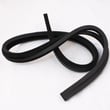
- Washer drain hose WP21001872 (leaks, kinks, poor draining)
- Washer screen WP22002960 (restricted water flow at the inlet)
Why it matters
Running repeated unbalanced loads can leave clothes overly wet and can increase wear on the drive system over time. Correct loading habits (and keeping hoses unkinked) helps your NAV2335AWW finish cycles consistently and reduces noise and vibration.
Last updated: February 2026
Is it good to drain your washing machine?
Yes. Draining your Amana NAV2335AWW washer periodically is a good habit because it helps clear leftover water and residue that can contribute to odor, mildew, and poor performance. For this model, you can drain it by running a Spin Only or Rinse & Spin cycle as shown in the owner's manual.
How to drain the NAV2335AWW washer (normal maintenance)
Use this method when you want to empty the tub after a cycle, after a long pause, or before basic cleaning.
- Make sure the tub is empty of clothes.
- Close the lid fully (this washer will not spin with the lid open).
- Select Rinse & Spin or Spin Only.
- Press the cycle selector dial to start.
- Let the cycle finish so the washer pumps out the water.
When draining is especially important
Draining is most helpful when you are preventing odor issues or preparing the washer for downtime.
| Situation | What we recommend | Why |
|---|---|---|
| Washer will sit unused for a while | Drain using Spin Only or Rinse & Spin | Reduces stagnant water and odor risk |
| You are winterizing a home | Have the washer drained and disconnect hoses | Helps prevent freeze damage |
| You notice musty smells | Drain, then run an interior-clean routine | Removes residue that feeds odor |
Related checks if you are draining because of a problem
If you are draining because the washer will not drain or spin normally, these quick checks often pinpoint the cause.
- Confirm the drain hose is not kinked and is secured at the standpipe.
- Check for a household drain restriction.
- Reduce detergent if you have a suds lock (rewash without detergent).
- Make sure both water faucets are fully open (some cycles may pause if fill is incorrect).
- If you suspect a clogged inlet screen, inspect/clean the screen; the washer screen WP22002960 is the replaceable part used on this model.
Why it matters
Standing water and detergent residue can lead to odor, mildew, and staining over time. Draining and periodic interior cleaning keeps wash results consistent and helps your washer run more reliably.
Last updated: February 2026


