Installation guide
 Owner’s manual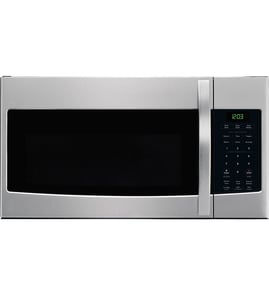


How can I tell what size my microwave is?
For your GE JVM1740DM1BB microwave/hood combo, “size” usually means two things: the outside dimensions (to confirm it fits your cabinet space) and the inside capacity in cubic feet (to confirm how much cooking room you have). We recommend confirming both in the JVM1740DM1BB installation guide.
What to measure (and what it tells you)
- Outside width, height, depth: confirms fit between cabinets and over the range.
- Cutout and mounting clearances: confirms safe spacing to the cooktop and cabinet bottom.
- Inside capacity (cu. ft.): indicates usable cooking space for dishes.
- Turntable diameter: helps you choose cookware that rotates freely.
Model-specific fit clues from the installation requirements
The installation instructions for this style of over-the-range microwave call out common “fit” checkpoints you can use to confirm you have the right size unit and the right space:
- Space between cabinets is typically 30 inches wide.
- Bottom of cabinet needs to be 30 inches or more above the cooking surface.
- Mounting height guidance commonly targets 66 inches or more from the floor to the top of the microwave.
- This microwave style is designed for installation over ranges up to 36 inches wide.
Quick reference: outside size vs. inside size
| What you are checking | How to check it | Why you check it |
|---|---|---|
| Outside dimensions | Measure the cabinet opening and the microwave exterior | Prevents install and clearance problems |
| Inside capacity (cu. ft.) | Look up capacity in the JVM1740DM1BB owner’s manual | Helps you compare cooking space |
| Venting and mounting space | Follow the install templates and mounting plate steps | Ensures proper airflow and safe mounting |
Why it matters
Getting the “size” right prevents common headaches like a microwave that will not sit level, blocked vent airflow, or a unit that does not align with the mounting plate and cabinet templates.
Last updated: January 2026
What are common problems with GE profile microwaves?
Common problems we see with GE Profile over-the-range microwaves like model JVM1740DM1BB include no heat, intermittent operation, a door that will not start the cook cycle, and vent fan or light issues. Many of these trace back to door interlock parts, thermal protection, or the control board.
Most common symptoms and likely causes
- Microwave runs but does not heat: high-voltage components (magnetron, capacitor, diode) or a safety cutout
- Dead display or no power: blown fuse, wiring issue, or control board problem
- Starts then stops, or will not start: door interlock switch or latch alignment problem
- Fan runs loud or weak: vent fan motor or fan blade issue
- Cooktop light out: bulb or socket problem
Parts that commonly fail on JVM1740DM1BB
These are frequent repair areas for this model family:
| Symptom | Common part area | Example part for this model |
|---|---|---|
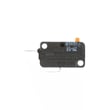
| Will not start when door closes | Door interlock switch system | Micro-switch WB24X830 |
| Runs but no heat | High-voltage system | Microwave magnetron WB27X10939 |
| Dead or erratic operation | Electronic control | Power board WB27X10868 |
| No cooktop light | Lighting | Microwave light bulb WB36X10003 |
Quick checks we recommend before replacing parts
- Confirm the outlet is working and properly grounded (over-the-range units require a 3-prong grounded outlet).
- Make sure the door closes firmly and the latch is not loose or binding.
- If the unit is installed above a range, verify it is mounted level and not twisted; cabinet trim or mounting issues can affect fit and door alignment.
- If the microwave is set up for recirculation, confirm the blower wiring is not pinched and the blower is secured correctly.
For model-specific installation and mounting details (clearances, wall plate positioning, and venting configurations), use the JVM1740DM1BB installation guide.
Why it matters
Microwaves use multiple safety interlocks and thermal cutoffs; when one is out of adjustment or failing, the unit may refuse to run or may run without heating. Correct diagnosis helps avoid replacing expensive parts like a magnetron when the real issue is a door switch.
Last updated: January 2026
What is the average lifespan of a GE microwave?
A GE microwave typically lasts 7 to 8 years with normal household use and basic care; lighter use can push lifespan to around 10 years. For a GE over-the-range model like JVM1740DM1BB, keeping airflow clear and using the correct installation clearances helps it run cooler and last longer (see the JVM1740DM1BB installation guide).
Typical lifespan ranges (what to expect)
Most microwaves fall into these practical ranges:
- 7 to 8 years: average family use (multiple cooks per day)
- 9 to 10 years: lighter use (single person or couple)
- Shorter lifespan: frequent high-power cooking, poor ventilation, repeated door slams
- Longer lifespan: clean vents, stable power, gentle door use
| Usage pattern | Typical lifespan | What usually wears first |
|---|---|---|
| Light (1 to 2 uses/day) | ~10 years | Door switches, light, fan components |
| Average (3 to 6 uses/day) | 7 to 8 years | Door interlock parts, control board, fan |
| Heavy (many cycles/day) | 5 to 7 years | High-voltage heating circuit, door system |
What extends the life of an over-the-range microwave/hood combo
Heat and grease are the big enemies on a microwave/hood combo. We recommend:
- Keep the vent grille and filters clean so the blower can move air
- Do not block airflow with cabinetry or stored items near the vent path
- Use the hood fan when cooking on the range to reduce heat soak into the microwave
- Close the door gently to protect the latch and interlock system
- Avoid running the microwave empty (it stresses the magnetron)
Why it matters
A microwave can still “run” even when key safety or heating components are wearing out. Knowing the typical lifespan helps you decide whether a symptom is worth repairing (door/interlock parts, light, vent fan) or whether replacement makes more sense.
If your JVM1740DM1BB runs but does not heat, start with our troubleshooting steps in why is my microwave not heating.
Last updated: January 2026