Owner’s manual
 View engine


What size belt is a Craftsman 247374860?
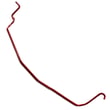
For the Craftsman 247374860 walk-behind mower, the ground drive belt listed for this model is 3/8-inch wide by 31-1/4 inches long. Use your owner's manual to confirm routing and tensioning so the self-propel drive engages smoothly.
Which belt are we talking about?
Walk-behind mowers can have more than one belt type; this model’s parts list calls out a ground drive belt (self-propel belt), not a 42-inch deck belt used on riding mowers.
- Ground drive belt: drives the transmission/wheels for self-propel
- Deck belt: common on riding mowers; not the same application
- Correct fit matters: width and length affect speed, traction, and belt life
The belt size and the matching replacement
Here is the belt specification from the model’s available parts:
| Belt type | Size | Sears PartsDirect part number | Common symptom when worn |
|---|---|---|---|
| Ground drive belt | 3/8 in x 31-1/4 in | 954-04282 | Mower will not move or slips under load |
If you’re replacing the belt because the mower will not self-propel, we also recommend inspecting the drive system for binding and checking the transmission input pulley area for debris.
Quick checks before and after belt replacement
- Disconnect the spark plug wire before working near the blade or belt path
- Verify the belt is seated in all pulleys and guides (no twists)
- Check for worn belt guides, bent brackets, or loose fasteners
- Confirm the drive control cable moves freely and returns fully
- Test on flat ground first; then test under light load
Why it matters
A belt that is even slightly off-size can cause constant slipping (premature wear) or over-tension (hard engagement and extra load on the transmission). Using the correct 954-04282 size helps restore normal self-propel performance.
Last updated: February 2026
What type of gas should I use in my lawn mower?
For your Craftsman 247374860 gas walk-behind mower, we recommend using fresh, regular unleaded gasoline (87 octane). Higher-octane “premium” fuel does not improve performance in typical small mower engines; using clean, fresh fuel matters most for easy starting and smooth running.
What to use (and what to avoid)
- Use regular unleaded 87 octane from a busy station (fresher fuel).
- Use fresh fuel; most mower fuel is best used within about 30 days.
- If fuel will sit, mix in a fuel stabilizer before storage.
- Avoid old gas (stale fuel is a top cause of hard starting).
- Avoid spills on hot parts; let the engine cool before refueling.
Quick fuel guide
| Situation | Best choice | Why |
|---|---|---|
| Weekly mowing | Fresh 87 octane | Reliable starts, normal power |
| Storage longer than 30 days | 87 octane + stabilizer | Helps prevent varnish and clogged carburetor passages |
| Hard starting after storage | Drain/replace old fuel | Restores proper combustion and fuel flow |
Why it matters
Fuel quality affects the carburetor, starting, and idle stability. Fresh 87 octane helps prevent gum and varnish buildup that can lead to no-start symptoms and rough running.
Helpful next steps
- Follow the fueling and storage instructions in the owner's manual.
- If the mower struggles to move after it has been sitting, inspect the drive system and belt condition; the lawn mower ground drive belt, 3/8 x 31-1/4-in 954-04282 is a common wear item.
- For seasonal storage, use our guide: how to winterize a lawn mower.
Last updated: February 2026
What is the max 10 ethanol for a lawn mower?
Most gas walk-behind mowers, including Craftsman model 247374860, are designed to run on gasoline blended with up to 10% ethanol (E10). Using fuel with more than 10% ethanol (such as E15 or E85) commonly causes hard starting, rough running, and fuel-system damage.
What “max 10 ethanol” means
Ethanol percentage is the amount of alcohol blended into gasoline:
| Fuel label | Ethanol content | Typical mower guidance |
|---|---|---|
| E0 | 0% | Best for storage and seasonal equipment |
| E10 | 10% | OK for most walk-behind mowers |
| E15 | 15% | Not recommended for most small engines |
| E85 | 51% to 83% | Not for small engines |
How to choose the right fuel for model 247374860
We recommend these practical rules for day-to-day mowing:
- Use fresh gasoline (older fuel is a top cause of no-start issues).
- Choose E10 or lower; avoid E15 and higher blends.
- If the mower will sit more than a few weeks, buy smaller amounts of fuel more often.
- Keep the fuel container sealed and stored in a cool, dry place.
- If you suspect bad fuel, drain the tank and refill with fresh gas before troubleshooting ignition or compression.
For any model-specific fuel notes (and any storage or maintenance steps), follow the 247374860 owner's manual.
Why it matters
Higher-ethanol fuel attracts moisture and can separate during storage; that leads to varnish in the carburetor, swollen fuel lines, and poor performance. Sticking with E10 or lower helps protect the fuel system and keeps starting and power consistent.
Last updated: February 2026
What are the common problems with Craftsman lawn mowers?
Common problems on the Craftsman 247374860 gas walk-behind mower usually fall into a few buckets: starting issues (fuel, spark, air), poor cutting (blade and deck condition), and self-propel problems (belt, cable, transmission). We use the owner's manual to match symptoms to the correct checks and adjustments.
Most common symptoms and what to check first
- Won’t start or starts then dies: old fuel, dirty carburetor, fouled spark plug, clogged air filter
- Runs rough or surges: stale fuel, partially clogged carburetor, restricted airflow
- Hard to pull the starter rope: blade obstruction, bent blade, engine hydro-lock from overfilled oil
- Poor cut quality or uneven cut: dull/bent blade, grass buildup under deck, incorrect cutting height
- Self-propel won’t move or slips: worn drive belt, stretched/misadjusted drive cable, transmission wear
- Excessive vibration: loose blade hardware, damaged blade adapter, bent crankshaft (after impact)
Quick troubleshooting steps (in order)
- Safety first: disconnect the spark plug wire before working near the blade.
- Fuel: drain old gas and refill with fresh fuel; check for water or varnish smell.
- Air and spark: clean/replace the air filter; inspect and replace the spark plug if fouled.
- Oil level: verify the oil is at the correct mark (too much oil can cause hard starting and smoke).
- Deck and blade: clean packed grass from the underside; sharpen/replace the blade.
- Drive system: if it won’t move, inspect the belt and linkage; a worn belt is a top cause.
Parts that commonly solve these problems
If your symptom points to a worn or broken component, these model-matched parts are commonly involved:
| Problem area | What fails most often | Example part for model 247374860 |
|---|---|---|
| Self-propel drive | Belt worn, stretched, glazed | Lawn mower ground drive belt 954-04282 |
| Cutting system | Adapter wear after impacts | Lawn mower blade adapter 687-02220 |
| Discharge/mulch | Door/deflector damage | Mtd lawn mower side chute deflector 731-07486 |
Why it matters
Catching the simple issues early (fresh fuel, clean airflow, correct oil level, sharp blade) prevents hard starting, reduces engine strain, and protects the transmission and drive components from premature wear.
Last updated: February 2026
Is it cheaper to repair or replace a lawn mower?
For a Craftsman 247374860 walk-behind mower, it’s cheaper to repair when the problem is routine wear (blade issues, belts, cables, fasteners). Replacement makes more sense when a major assembly (engine or transmission) fails or when the repair total approaches about half the cost of a comparable new mower.
Quick rule of thumb
Use this simple decision check before you buy parts:
- Repair if the mower starts reliably and you’re fixing a single wear item (belt, cable, wheel, chute, handle hardware).
- Repair if the deck and handle structure are solid (no major cracks, severe rust-through, or bent mounting points).
- Replace if the engine has low compression, heavy smoking, or repeated no-start issues after basic tune-up steps.
- Replace if the drive system needs multiple big-ticket parts (transmission plus wheels plus cables).
- Replace if you need a shop to do the work and labor pushes the total near 50% of a new mower.
Common repairs that are usually worth it on model 247374860
These are typical, cost-effective fixes that restore performance quickly:
- Replace a worn self-propel belt like the ground drive belt 954-04282.
- Replace a stretched or sticking control cable like the throttle control cable 946-04850.
- Fix bagging and discharge issues with the side chute deflector 731-07486 or grass bag 964-05024.
- Restore drive and cut quality by replacing damaged wheels (for example, wheel assemblies).
Typical “repair vs replace” cost comparison
| Situation | Usually best choice | Why |
|---|---|---|
| Belt/cable/wheel problem | Repair | Parts are straightforward and restore function fast |
| Discharge/bagging parts broken | Repair | Low-to-moderate cost, improves safety and cleanup |
| Transmission failure | Replace (often) | High part cost and time; may cascade into other repairs |
| Engine internal problem | Replace (often) | Major cost; reliability may still be uncertain afterward |
Why it matters
A walk-behind mower like the Craftsman 247374860 is designed around replaceable wear parts. Keeping up with small repairs (belt tension, cable operation, discharge components) prevents bigger failures and keeps cut quality consistent.
What we recommend next
- Confirm the correct procedure and adjustments in the owner's manual.
- Price out the parts you need and add estimated labor time (even for DIY).
- If self-propel is the issue, start with the belt and cable before considering a transmission.
Last updated: February 2026