Owner’s manual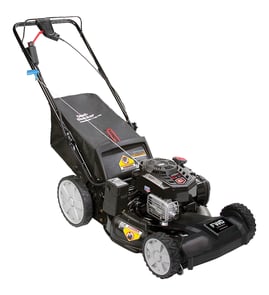



How long can gas sit in a gas can for a lawn mower?
For your Poulan 96142002600 walk-behind mower, we recommend using fresh gasoline and avoiding long storage; regular unleaded gas can start going stale in about 30 days, and ethanol-blended fuel can cause moisture-related fuel system damage during storage. For storage periods of 30 days or more, drain the tank and run the engine until the carburetor is empty (see the Poulan 96142002600 owner's manual).
Best practice storage timelines
Gasoline quality drops over time, especially with ethanol blends.
- 0 to 30 days: Use as-is if stored in a sealed, approved gas can.
- 30+ days: Treat as “storage”; plan to drain the mower fuel system before storage.
- Up to ~8 months (with stabilizer): Many owners store fuel longer only when a quality fuel stabilizer is mixed in and the can is kept tightly sealed in a cool place.
What to do if fuel is older than 30 days
If the mower is hard to start, surges, or stalls, stale fuel is a top cause.
- Drain old fuel from the can and mower tank safely.
- Refill with fresh, clean, unleaded gasoline (do not use premium).
- Start the engine and let it run; if it still runs poorly, check the air filter and spark plug.
- For seasonal storage, run the engine until the fuel lines and carburetor are empty.
Quick decision table
| Fuel situation | What we recommend | Why |
|---|---|---|
| Fresh fuel (under ~30 days) | Use it | Best starting and power |
| Older fuel (over ~30 days) | Replace with fresh fuel | Reduces no-start and surging |
| Ethanol-blended fuel stored long-term | Drain mower fuel system before storage | Helps prevent moisture separation and acids |
Why it matters
Stale or moisture-contaminated gasoline can leave deposits and cause starting problems; ethanol blends can attract moisture and separate during storage, which can damage the carburetor and fuel system.
Last updated: January 2026
Is it okay to pull a self-propelled mower backwards?
Yes, you can pull a self-propelled Poulan mower model 96142002600 backward, but we recommend doing it only when necessary. Before backing up, release the drive control so the drive wheels disengage; if it resists, roll the mower forward slightly to fully disengage.
Safe way to pull it backward
- Release the drive control lever/bar so forward drive stops.
- Keep the operator presence control bar held only if you need the engine running; the mower should not be self-propelling while backing.
- If the mower will not roll backward after releasing drive control, push it forward slightly to disengage the drive wheels.
- Look down and behind before and while moving backward.
- Back up slowly; keep feet clear of the deck and discharge area.
What to do if it will not roll backward
A self-propelled mower can feel “locked” when the drive system is still engaged or binding.
| Symptom | Most likely cause | What we recommend |
|---|---|---|
| Won’t roll backward after releasing drive control | Drive wheels not fully disengaged | Push forward slightly, then pull back |
| Rolls backward but feels rough or noisy | Debris or wear in wheel/drive area | Inspect wheels and drive components; clean buildup |
| Drive feels inconsistent forward and backward | Drive control cable tension or wear | Check adjustment procedure in the manual |
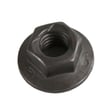
If you find a loose wheel fastener while inspecting, replace missing hardware with the correct size; for example, a damaged fastener may require a replacement like the lock nut 532409149 if it matches your wheel/axle location.
Why it matters
Pulling backward with the drive still engaged can scuff turf, strain the drive mechanism, and make the mower harder to maneuver. Disengaging the drive first protects the self-propel system and keeps handling predictable.
Helpful reference
For the exact control layout and drive disengagement notes for this mower, follow the operating instructions in the 96142002600 owner's manual.
Last updated: January 2026
Are gas lawn mowers being phased out?
Gas walk-behind mowers like the Poulan 96142002600 are not being phased out everywhere at once; the shift is happening market by market as some states and cities restrict new sales of certain gas-powered outdoor equipment, while many areas still allow gas mowers and support parts and service.
What “phased out” usually means
Most changes focus on new equipment sales and where you can use it, not on immediately banning ownership.
- Some locations restrict the sale of new gas-powered lawn equipment to reduce emissions and noise.
- Existing gas mowers are typically still allowed to operate where you live, as long as you follow local rules.
- Parts support continues because owners still need blades, wheels, cables, and hardware for maintenance.
- Commercial and heavy-duty use often transitions more slowly than typical residential mowing.
What to do if you already own a Poulan 96142002600
If you plan to keep your mower running for years, routine maintenance matters more than policy changes.
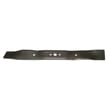
- Keep the blade sharp and replace it if bent or damaged.
- Disconnect the spark plug wire before servicing the blade or underside of the deck.
- Clean grass buildup from the mower housing after each use (scrape; avoid soaking sensitive engine components).
- Replace wear items as needed (cables, wheels, springs, fasteners).
- Store the mower safely at season end; avoid storing with fuel indoors near ignition sources.
For model-specific operating and maintenance steps, use the Poulan 96142002600 operator’s manual.
Common parts that help extend mower life
These are examples of small parts that often get lost, loosen, or wear during normal service:
| Part | What it’s used for | When to replace |
|---|---|---|
| Lock nut 532409149 | Secures assemblies against vibration | Threads stripped, won’t stay tight |
| Return spring 532406558 | Helps controls return properly | Stretched, broken, weak return |
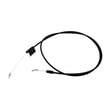
| Lawn mower zone control cable 532191221 | Operator presence control function | Frayed, sticking, won’t hold tension |
Why it matters
Even if your area starts favoring electric mowers, a well-maintained gas mower can stay reliable and safe. Following the manual’s safety guidance (especially around sharp blades and fuel storage) also reduces downtime and prevents avoidable damage.
Last updated: January 2026