Owner’s manual
 Error Codes
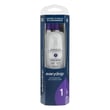


Can I use a generic filter in my Whirlpool?
Yes, you can use a generic water filter in your Whirlpool WRS588FIHB04 refrigerator as long as it is made to match the same fit and sealing surfaces as the original filter and it maintains normal water flow; if flow drops, replace the filter sooner and reset the filter status per the WRS588FIHB04 owner's manual.
What to check before you buy a generic filter
- Match the filter style and location used in your refrigerator (top-right compartment or base grille).
- Confirm the filter has intact O-rings and the same “arrow” orientation markings.
- Avoid filters that feel loose in the housing or require forcing beyond normal “snap in” pressure.
- Watch for new leaks at the filter door or housing after installation.
- If water flow to the dispenser or ice maker decreases noticeably, change the filter sooner.
How to install and flush the filter (quick steps)
We follow the same basic process the manual outlines:
- Remove the old filter (expect a small spill; use a towel).
- Install the new filter with the arrow aligned correctly; close the cover door fully to snap it in.
- Flush the water system after replacement.
- Reset the filter status light using the control method your model has (Options, Filter button, or Light + Ice Type).
Reset methods at a glance
| Control style on the display | What we do | What you should see |
|---|---|---|
| Filter button | Press and hold Filter for 3 seconds | Status light turns off |
| Options button | Options, then Lock to start reset, then Measured Fill to confirm | “Order” and “Replace” icons disappear |
| Light + Ice Type buttons | Press and hold both for 3 seconds | Status light turns off |
Why it matters
A filter that does not seal correctly can cause leaks, and a filter that restricts flow can reduce water dispensing and ice production. The manual also notes replacing the water filter at least every 6 months (sooner if flow drops), which helps protect the water system and ice maker performance.
Related help: how to replace the water filter in a Whirlpool refrigerator
Last updated: February 2026
What is the WRS588FIHB04 used for?
The Whirlpool WRS588FIHB04 is a side-by-side household refrigerator used to store and preserve fresh and frozen food; on equipped setups, it also dispenses filtered water and makes ice when connected to a potable water supply (per the WRS588FIHB04 owner's manual).
What this refrigerator is designed to do
- Keep fresh-food temperatures stable for everyday groceries
- Keep freezer temperatures low for long-term frozen storage
- Provide ice production (allow up to 72 hours to fully fill the ice container after startup)
- Support a filtered water system with a change indicator on the control panel
- Reduce odors on some versions when an air filter is installed
Water, ice, and filtration basics (common on this model)
The manual calls out these typical features and requirements:
| Feature | What it does | What you need |
|---|---|---|
| Ice maker | Produces ice for the dispenser/bin | Potable water connection; door closed tightly |
| Water filtration system | Improves taste and reduces certain contaminants | Replace filter about every 6 months (sooner with low flow) |
| Water filter status light | Tells you when to order/replace | Follow the control panel indicator |
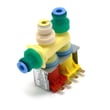
If you are troubleshooting ice production or no-water issues, the refrigerator water inlet valve WPW10341320 is one of the key components that controls water flow to the ice maker and dispenser.
Why it matters
Using the WRS588FIHB04 as intended (food storage plus properly connected water supply) helps it cool efficiently, prevents off-taste/odor in ice and water, and reduces common problems like slow dispensing or weak ice production.
Good to know for safe, correct use
- Connect to a potable water supply only
- Do not use an extension cord
- Keep ventilation openings clear
- Do not use unapproved replacement parts (including homemade parts)
Last updated: February 2026
What is the average lifespan of a Whirlpool side-by-side refrigerator?
A Whirlpool side-by-side refrigerator typically lasts about 12 years. With your Whirlpool WRS588FIHB04, good airflow, correct room temperature, and routine cleaning help the sealed system and fans run less, which helps the refrigerator reach its full expected service life.
What affects lifespan the most
- Room temperature: Keep the refrigerator in a space that stays 55°F to 110°F (best performance is typically 60°F to 90°F).
- Ventilation clearance: Allow about 1/2 inch on each side and at the top, plus about 2 inches behind the cabinet (more if you have an ice maker water line).
- Door seal condition: Worn gaskets cause longer run times and moisture issues.
- Condenser and airflow cleanliness: Dust buildup makes the compressor work harder.
- Water and ice system health: Leaks, low water flow, or air in the line can create nuisance problems that shorten component life.
Quick care checklist for WRS588FIHB04
Use these habits to reduce wear on the compressor, evaporator fan, and defrost system:
- Keep vents inside the refrigerator and freezer unblocked.
- Set stable temps (common targets are 37°F fresh food and 0°F freezer).
- Clean spills and odors regularly; avoid harsh cleaners.
- Confirm doors close fully every time; avoid overloading door bins.
- Replace worn door gaskets if you feel air leaks or see heavy frost.
Typical lifespan expectations (what to plan for)
| Item | Typical expectation | What you may notice first |
|---|---|---|
| Whole refrigerator | ~12 years | More noise, longer run times, temp swings |
| Ice maker system | 5 to 10 years | No ice, small cubes, leaking |
| Door gaskets | 5 to 10 years | Frost, sweating, warm spots at the edge |
Why it matters
Most “end of life” refrigerator failures start as efficiency problems: poor ventilation, warm room conditions, or air leaks force longer run times. Keeping clearances and seals in good shape helps your WRS588FIHB04 cool faster, waste less energy, and reduce strain on major components.
For model-specific care and cleaning guidance, follow the WRS588FIHB04 owner's manual.
Last updated: February 2026
What is the most common problem with a Whirlpool refrigerator?
The most common Whirlpool refrigerator problem is a cooling complaint (warm fridge, warm freezer, or temperature swings). On the Whirlpool WRS588FIHB04 side-by-side, the most frequent root causes are airflow restrictions (dirty condenser coils, blocked vents), a frost-clogged evaporator area, or an evaporator fan issue; ice maker and water leaks are also common.
Quick checks we recommend first
- Confirm the controls are set correctly and the doors close fully (no food packages holding them open).
- Make sure interior air vents are not blocked by containers.
- Clean condenser coils and the area around the base grille.
- Listen for the evaporator fan; a failed fan often causes warm temps and weak airflow.
- Check for frost buildup on the freezer back wall (a clue of a defrost problem).
- Look for water under the refrigerator (often a defrost drain or water supply issue).
Common symptoms and the most likely causes
| Symptom | Most likely cause | What to do next |
|---|---|---|
| Refrigerator warm, freezer OK | Airflow blocked, damper/vent issue | Clear vents, avoid overpacking, recheck temps after 24 hours |
| Freezer warm, fridge warm | Dirty coils, fan problem, sealed system issue | Clean coils; if fan is not running, troubleshoot fan circuit |
| Loud buzzing or clicking near ice maker | Ice maker cycling or jam | Inspect ice bin, clear clumps, verify fill and harvest |
| Water leaking | Clogged defrost drain or inlet valve seep | Inspect drain path; check valve and tubing connections |
Parts that commonly fix these problems on WRS588FIHB04
If basic checks do not restore normal cooling, these model-matched parts are frequent solutions:
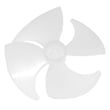
- Refrigerator evaporator fan blade WP2169142 (damaged blade can cause noise and poor airflow)
- Refrigerator water inlet valve WPW10341320 (can cause no ice, slow fill, or leaks)
- Refrigerator ice maker W10873791 (for no ice or inconsistent ice production)
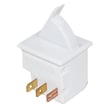
- Refrigerator door switch W11396033 (can affect lights and sometimes fan operation depending on mode)
Why it matters
Cooling problems usually get worse quickly; warm temperatures can lead to food spoilage and extra compressor run time. Fixing airflow and fan issues early is one of the fastest ways to restore stable refrigerator and freezer temperatures.
Model-specific reference
For control settings, door closing and leveling guidance, and general operating checks, follow the WRS588FIHB04 owner's manual.
Last updated: February 2026