Error Codes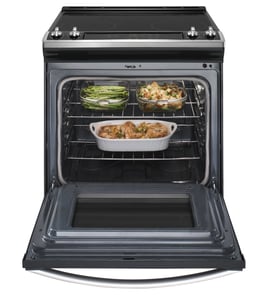




How long do GE PB900YV1FS ovens last?
A GE PB900YV1FS free standing electric range oven typically lasts 12 to 15 years. With normal household use, keeping the oven clean, avoiding heavy slamming of the door, and replacing wear parts promptly helps you reach the full lifespan.
Most electric range ovens fall into a 12 to 15 year service life. The biggest factors are heat exposure, how often you run high-temperature modes, and whether key components (like the bake element or temperature sensor) are kept in good working order.
What shortens lifespan most often:
- Frequent self-clean cycles (very high heat stresses wiring and controls)
- Running the oven at max temperature for long periods
- Ignoring temperature accuracy problems (overheating strains components)
- Using foil in ways that block airflow or trap heat
- Letting spills carbonize repeatedly on the oven floor
These symptoms often point to a repairable issue, but they also show the oven is working harder than it should.
- Oven takes much longer to preheat than it used to
- Food bakes unevenly or the temperature swings widely
- Burning smell that persists after cleaning and a few heat cycles
- Convection fan noise increases or airflow seems weak
- Repeated control glitches or random shutoffs
| Symptom | Common cause | Example part on this model page |
|---|---|---|
| Oven not heating or weak baking | Failed lower heating element | Bake element WB44X47929 |
| Oven temperature inaccurate | Faulty temperature sensor | Sensor WB23X5340 |
| Convection not circulating well | Worn fan blade or fan assembly issue | Fan blade WB2X8351 |
When the oven runs too hot, too cool, or too long to reach temperature, it increases stress on the control, wiring, and heating circuits. Fixing the root cause early often extends the usable life of your GE range and improves cooking results.
Last updated: February 2026
What does PB900YV1FS mean?
PB900YV1FS is the GE model number that identifies your exact free standing electric range configuration (series, features, and finish). We use it to match the correct replacement parts and diagrams for your specific range so you get parts that fit and work correctly.
Your model number is the key to getting the right GE range parts, especially for electrical and heating components.
- Ensures the correct surface element or control switch is selected
- Helps match the right oven heating circuit parts (bake, convection, sensor)
- Prevents ordering look-alike parts that mount differently or use different wiring
- Speeds up troubleshooting by narrowing to the correct design
On most GE free standing electric ranges, the model/serial tag is typically found in one of these spots:
- Along the oven door frame (visible when you open the oven door)
- On the lower drawer frame area (storage or warming drawer opening)
- Behind the control panel area (less common)
Here are examples of parts on this model page that depend on the exact PB900YV1FS configuration:
| Part type | What it affects | Example from this model page |
|---|---|---|
| Surface element | Cooktop heating | GE range dual radiant element WB30T10133 |
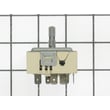
| Element switch | Burner heat control | Range dual surface element control switch WB24T10058 |
| Oven sensor | Oven temperature accuracy | Sensor WB23X5340 |
| Bake element | Baking heat | Bake element WB44X47929 |
GE model numbers are primarily an identifier, not a “code” customers need to translate. The practical takeaway is:
- PB900 points to the model family/series
- YV1 indicates a specific design revision or feature set
- FS typically indicates the finish (often stainless)
For ordering and fit, always use the full model number exactly as shown on the tag: PB900YV1FS.
Last updated: February 2026
What replacement parts are most commonly needed for the PB900YV1FS?
For the GE PB900YV1FS free standing electric range, the most commonly replaced parts are the cooktop heating elements and their control switches, plus key oven-heating and door-sealing parts. These items wear from high heat, frequent use, and normal aging.
These are the parts we see replaced most often on electric ranges like the PB900YV1FS:
- Surface heating elements (burners) that stop heating or heat unevenly
- Surface element control switches that cause no-heat, stuck-high heat, or cycling issues
- Oven bake element when the oven will not bake or takes too long to preheat
- Convection fan assembly when convection is noisy or not circulating air
- Oven door gasket when heat leaks, cooking is uneven, or the door does not seal well
Here are several high-need parts listed for PB900YV1FS, with what they typically fix:
| Symptom | Likely part | What it affects |
|---|---|---|
| One burner will not heat | GE range halogen surface element WB30T10130 | Single surface element heat output |
| Dual burner not working right | GE range dual radiant element WB30T10133 | Inner and outer element heating |
| Burner stuck on high or won’t turn on | Range surface element control switch WB24T10153 | Power cycling to the element |
| Oven not baking evenly or at all | Bake element WB44X47929 | Primary oven heat for bake |
| Oven runs hot/cold | Sensor WB23X5340 | Temperature feedback to control |
Because multiple burners and switch styles can be used on the same range platform, we recommend matching by symptom and location.
- Identify which burner (front/rear, left/right) is failing
- Note whether it is a single, dual, or halogen element
- If the element looks normal, suspect the control switch next
- For oven issues, check bake performance first, then temperature sensing
- Use the model number PB900YV1FS when confirming fit before ordering
Replacing the correct GE range part restores safe, predictable heating and helps prevent repeat failures (for example, replacing a weak element when the real issue is a failing control switch).
Last updated: March 2026