Owner’s manual
 Error Codes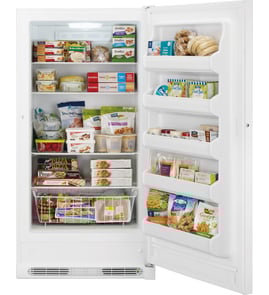



How to tell cubic feet of Kenmore refrigerator by model number?
For Kenmore model 25327702411, the most accurate way to confirm cubic feet is to use the model and serial information from the serial plate and cross-check it in the 25327702411 owner's manual. Model numbers can hint at size, but the published specs tied to your exact model are what matter.
Fast ways to find capacity (most reliable first)
- Check the serial plate inside the cabinet (usually inside the freezer compartment) and record the full model number and serial number.
- Look up the specifications section in the 25327702411 owner's manual.
- If you are comparing units, measure interior dimensions and estimate volume (good for a rough check, not an official spec).
- Use the model number to match the correct product listing and spec sheet (avoid using “close” model numbers).
How to estimate cubic feet by measuring (rough check)
If you need a quick estimate, measure the usable interior space:
- Measure width x depth x height (in inches) of the main storage cavity.
- Subtract obvious non-usable areas (large compressor hump, thick shelving zones) as needed.
- Convert to cubic feet.
| What you have | Calculation | Result |
|---|---|---|
| Interior inches | width x depth x height | cubic inches |
| Convert | cubic inches ÷ 1,728 | cubic feet |
Why it matters
Cubic feet affects how much food you can safely freeze at one time and how you organize airflow around shelves and baskets. The manual also gives loading guidance such as freezing only a limited amount of fresh food per cubic foot at once.
Quick model-number tips (Kenmore 253-prefix)
Kenmore 253-prefix models are commonly built on Frigidaire/Electrolux platforms; capacity varies widely across similar-looking models. For accuracy, always match the entire model number (all digits) to the published specifications.
Last updated: February 2026
Is there a reset button on a Kenmore upright freezer?
Kenmore upright freezers such as model 25327702411 typically do not have a single dedicated “reset” button. Most alarm and display conditions are cleared by correcting the cause (like closing the door) and using the alarm control described in the 25327702411 owner's manual.
What you can reset from the control panel
On this Kenmore Elite upright freezer, the manual shows you can silence and clear certain indicators using the alarm control.
- Door Ajar: close the door fully, then press ALARM OFF to stop the beeping and clear the indicator
- Power Fail: after power is restored, press ALARM OFF to stop the beeping and clear the indicator
- Operational error codes (examples shown: “SY CE”, “SY CF”): treat as a fault condition and follow the manual guidance to contact service
- If the freezer is warm after an outage, allow time for temperatures to recover after clearing the alarm
Quick “reset” steps we recommend (safe, no tools)
Use these steps when the freezer is beeping, showing an alarm, or acting glitchy.
- Make sure the door is fully closed and nothing is blocking the gasket.
- Press ALARM OFF to silence the audible alarm.
- If the display indicates Power Fail, press ALARM OFF again to clear the indicator.
- If the issue continues, unplug the freezer for 5 minutes, then plug it back in.
- If an operational error remains on the display, schedule service.
What the display message usually means
| Display/condition | What it indicates | What to do next |
|---|---|---|
| Door Ajar | Door not sealing/closed | Close door; press ALARM OFF |
| Power Fail | Power interruption occurred | Press ALARM OFF; monitor temps |
| SY CE / SY CF | Operational error | Contact service technician |
Why it matters
A “reset” only clears alarms and restores normal operation when the underlying issue is fixed. If the door is ajar or power was interrupted, clearing the alarm is appropriate. If the freezer reports an operational error, continued resetting can delay the real repair.
Last updated: February 2026
What are the common problems with Kenmore Elite refrigerators?
Many “Kenmore Elite refrigerator” complaints are actually cooling and frost issues that also show up on the Kenmore Elite upright freezer model 25327702411: long run times, warm temperatures, frost buildup, and door sealing problems. We start by checking airflow, cleaning, and the defrost system using the steps in the 25327702411 owner’s manual.
Most common symptoms and what usually causes them
- Not cold enough or temperature swings: blocked vents, dirty condenser area, weak evaporator fan
- Runs too much/too long: frequent door openings, warm room, control set too cold, door slightly open
- Heavy frost or ice on the back wall: defrost heater or defrost control problem
- Water/ice around the door or cabinet edge: door gasket not sealing, door left ajar
- No operation at all: control set to OFF, loose plug, tripped breaker, outlet issue (avoid GFCI circuits for this appliance)
Quick checks we recommend first (no parts needed)
- Confirm power and settings: make sure the control is not set to OFF and the plug is fully seated.
- Give it time after a move or outage: many units need about 24 hours to cool completely.
- Reduce warm air entry: open the door less often and verify it closes tightly.
- Inspect the door seal: look for gaps, rips, or hardened sections; clean the gasket and mating surface.
- Listen for the evaporator fan: a failed fan often causes warm temps and uneven cooling.
Parts that commonly fix these problems on model 25327702411
| Symptom | Likely area | Example part for this model |
|---|---|---|
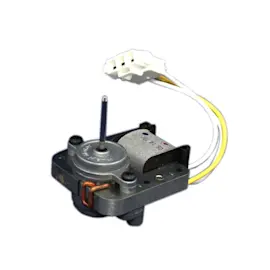
| Warm temps, weak airflow | Evaporator fan | Freezer evaporator fan motor 297309000 |
| Frost buildup, poor cooling | Defrost system | Freezer defrost heater 5304496284 |
| Door not sealing, runs too long | Door gasket | Freezer door gasket 5304505529 |
Why it matters
When airflow is restricted or the door gasket leaks, the freezer runs longer to maintain temperature. That increases energy use and can lead to frost buildup that further reduces cooling performance.
Last updated: February 2026
What is the average lifespan of a Kenmore Elite refrigerator?
Most Kenmore Elite refrigerators typically last 10 to 15 years. For Kenmore Elite model 25327702411, steady temperatures, clean airflow, and a tight door seal are the biggest factors that help you reach the upper end of that range; see the 25327702411 use and care guide for model-specific care and operating tips.
Typical lifespan and what affects it
A refrigerator or freezer’s life is mostly determined by compressor run time, heat removal, and how often warm air gets inside.
- Door seal condition: worn or leaking gaskets make the unit run longer
- Door habits: frequent openings add warm air and moisture
- Load and food temperature: hot or warm items increase run time
- Airflow and cleanliness: blocked vents or dirty condenser areas raise operating stress
- Stable power: consistent voltage helps protect the compressor and controls
Quick maintenance checklist (best ROI)
Use this short list to extend service life and reduce temperature swings.
- Keep the door closed as much as possible; avoid long “standing open” time
- Let hot foods cool before loading
- Confirm the door closes squarely and does not bounce back
- Inspect the gasket for gaps, cracks, or hard spots; replace if it does not seal
- If you see heavy frost or warm temps, check airflow at the evaporator area
Common parts that impact cooling performance
If the unit runs constantly, warms up, or frosts heavily, these parts are often involved.
| Symptom | Often-related part | Example for this model |
|---|---|---|
| Warm temps, weak airflow | Evaporator fan system | Freezer evaporator fan motor 297309000 |
| Heavy frost, warm temps | Defrost system | White-westinghouse freezer defrost heater 5304496284 |
| Door not sealing, sweating | Door seal | Freezer door gasket 5304505529 |
Why it matters
A Kenmore Elite unit that runs longer than normal uses more energy and puts extra wear on the sealed system. The manual notes that warm air entering the appliance and worn gaskets can make it run more; keeping the seal tight and openings brief directly supports longer life.
Last updated: February 2026
Why is my Kenmore Elite freezer not freezing?
If your Kenmore Elite freezer model 25327702411 is running but not freezing, the most common causes are an incorrect temperature control setting, poor airflow from frost buildup, or a cooling-system problem such as a failed evaporator fan motor or a defrost issue. Use the checks in the 25327702411 owner's manual to narrow it down quickly.
Quick checks we recommend first
- Make sure the temperature control is not set to OFF and is set colder.
- Confirm the power cord is firmly plugged into a dedicated outlet (avoid outlets controlled by a wall switch).
- Keep the door closed as much as possible for 4 to 6 hours after any adjustment.
- Look for heavy frost (about 1/4 to 1/2 inch) on interior walls or around the evaporator cover.
- Listen for the evaporator fan; if it is silent while the compressor runs, airflow is likely the issue.
What the symptoms usually mean
| What you notice | Most likely cause | What to do next |
|---|---|---|
| Freezer is warm and seems completely off | Power, breaker, control set to OFF | Check outlet, breaker, and control setting |
| Compressor runs but little to no cold air movement | Evaporator fan not running | Inspect/test freezer evaporator fan motor 297309000 |
| Frost blankets the back wall or coils | Defrost system problem | Inspect/test white-westinghouse freezer defrost heater 5304496284 and defrost manually |
| Runs constantly, weak freezing, warm cabinet edges | Door not sealing | Inspect the door seal; consider freezer door gasket 5304505529 |
Defrost and airflow: the fastest way to restore cooling
If you see significant frost, we recommend a full manual defrost to restore airflow:
- Unplug the freezer (the manual calls this out to avoid electrical hazard).
- Move food to a cooler; keep the door open.
- Let frost melt naturally; never chip ice with metal tools.
- After defrosting, restart and allow 12 to 24 hours to stabilize temperatures.
Why it matters
A freezer can run but not freeze when cold air cannot circulate (fan issue or frost blockage) or when warm, moist air leaks in (gasket issue). Fixing airflow and sealing problems early helps prevent longer run times and food spoilage.
Last updated: February 2026
Why is my upright freezer leaking water on the floor?
Water on the floor from a Kenmore Elite upright freezer model 25327702411 usually comes from defrost water not draining correctly (drain plug left out, drain tube blocked, or the catch pan overflowing). Using the steps in the 25327702411 owner's manual, you can safely route defrost water to a pan or floor drain and stop repeat leaks.
Most common causes (and what to check first)
- Drain plug left open after defrosting: warm air enters, creates excess moisture, and water can end up outside the unit.
- External drain tube not positioned over a pan: defrost water runs straight to the floor.
- Pan overflow during defrost: the manual notes to check the pan occasionally so it does not overflow.
- Ice or debris blocking the drain path: water backs up and finds the easiest exit.
- Door not sealing well: humid air enters, causing heavy frost and extra meltwater.
Fix it: defrost drain and drain tube steps
Follow this sequence (power off first):
- Unplug the freezer.
- Pull the drain plug from the inside floor (straight out).
- Remove the base panel (if equipped) to access the external drain tube under the freezer.
- Place a shallow pan under the drain tube and monitor it during defrost.
- Reinstall the inside drain plug when finished so warm air does not enter.
Helpful option
If you want to drain directly to a floor drain, many upright freezers accept a 1/2-inch garden hose adapter for the drain outlet (a common hardware-store item).
Quick symptom-to-cause guide
| What you see | Most likely cause | Best next step |
|---|---|---|
| Water appears during/after manual defrost | Pan overflow or drain tube not aimed into pan | Reposition pan, monitor level |
| Water appears days later with heavy frost | Drain plug left open or door not sealing | Reinstall plug, inspect gasket contact |
| Water appears intermittently | Partial drain blockage | Clear ice/debris, confirm free flow |
Why it matters
Defrost water on the floor can damage flooring and also signals excess moisture entering the freezer, which increases frost buildup and can reduce cooling efficiency.
Last updated: February 2026