Installation guide
 Owner’s manual




How big a house will a 60,000 BTU furnace heat?
A 60,000 BTU furnace typically heats about 1,500 to 2,500 sq. ft. in an average U.S. home, depending on climate zone, insulation, air leakage, ceiling height, and duct losses. For your Payne PG8MAA036070 gas furnace, use the sizing guidance in the installation guide and match it to your home’s heat-loss needs.
We size furnaces by heat loss, not just square footage. These factors move the number up or down:
- Climate: colder regions need more BTUs per sq. ft.
- Insulation and windows: older windows and low attic insulation increase demand
- Air leakage (infiltration): drafty homes need more capacity
- Ceiling height: tall ceilings increase heated volume
- Duct condition: leaky or uninsulated ducts reduce delivered heat
- Sun exposure and layout: open plans and shaded homes often need more heat
Use this as a starting point, then confirm with a proper load calculation.
| Home condition | Typical BTU per sq. ft. | 60,000 BTU estimated coverage |
|---|---|---|
| Mild climate, tight/updated home | 25 to 30 | 2,000 to 2,400 sq. ft. |
| Average climate, average insulation | 30 to 40 | 1,500 to 2,000 sq. ft. |
| Cold climate or drafty/older home | 40 to 50 | 1,200 to 1,500 sq. ft. |
An oversized furnace can short-cycle (more noise, uneven temperatures, higher wear). An undersized furnace can run constantly and still struggle on the coldest days. Also, the installation instructions for the PG8MAA036070 emphasize providing proper combustion air and ventilation; correct sizing and correct setup work together for reliable operation.
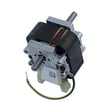
If your furnace is not heating consistently, common repair paths include ignition and control issues. For this model, parts we often see involved in heat/no-heat symptoms include the control board HK42FZ034 and the furnace inducer vent motor HC21ZE121. You can order replacement parts for the PG8MAA036070 from the parts list for this model, or search by model number on Sears PartsDirect.
Last updated: February 2026
What is the average lifespan of a propane furnace?
A propane gas furnace typically lasts 15 to 20 years with normal use and regular maintenance (filter changes, proper airflow, and correct gas setup). For your Payne PG8MAA036070, following the clearances, venting, and propane conversion requirements in the installation guide helps protect the heat exchanger and controls.
Most residential propane furnaces fall into these ranges:
- 15 to 20 years: typical service life for a propane (or natural gas) forced-air furnace
- 10 to 15 years: common when airflow is restricted (dirty filter, blocked returns) or the furnace short-cycles
- 20+ years: achievable with consistent maintenance and correct installation details (duct sealing, venting, combustion air)
These are the most common life-reducers we see on gas furnaces like the PG8MAA036070:
- Overheating from low airflow (dirty filter, closed registers, undersized ductwork)
- Blocked or incorrect venting that trips safety limits
- Incorrect propane setup (wrong conversion, manifold pressure issues, orifice problems)
- Frequent cycling from thermostat or sizing issues
- Corrosion and condensation issues from installation or venting problems
Use this as a practical decision tool.
| Furnace age | Typical situation | Common next step |
|---|---|---|
| Under 10 years | Usually worth repairing | Diagnose and replace the failed part |
| 10 to 15 years | Depends on repair cost and condition | Repair if the system is otherwise solid |
| 15 to 20 years | End-of-life range | Plan for replacement if major parts fail |
| Over 20 years | Past typical lifespan | Replacement is usually the best value |
Propane furnaces rely on correct combustion, venting, and airflow to prevent overheating. Your installation instructions specifically warn against bypassing limit switches and call out proper vent clearances and propane conversion requirements; those details directly impact heat exchanger life and overall reliability.
If you are troubleshooting an older PG8MAA036070, these parts are often involved:
- Control board HK42FZ034 (ignition sequence, blower control, safety logic)
- Furnace inducer vent motor HC21ZE121 (draft and vent proving)
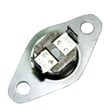
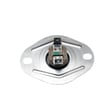
- Furnace temperature limit switch HH18HA495 (opens if the furnace overheats)
For ordering, use the parts list for model PG8MAA036070 or search by model number on Sears PartsDirect.
Last updated: February 2026
What is the most common part to fail on a furnace?
On a Payne gas furnace like model PG8MAA036070, the most common “failure” we see is actually a maintenance-related issue: restricted airflow from a dirty filter that overheats the furnace and trips safety limit switches. After that, ignition and control components are frequent culprits.
- Air filter and airflow problems: dirty filter, blocked returns, closed registers
- Safety limit switches opening from overheating or rollout (the furnace shuts down to protect itself)
- Ignition problems: igniter wear, poor flame proving, or burner issues
- Control and wiring issues: loose connections, polarity/grounding problems, damaged wires
- Venting and combustion-air issues: improper vent sizing, contaminated combustion air, or condensation-related problems
Start with the simple, high-impact checks that commonly cause a no-heat call:
- Replace the filter and confirm strong airflow at supply registers
- Make sure the blower door is fully installed (many furnaces will not run with the door off)
- Verify correct thermostat wiring at the furnace control terminals
- Check for a tripped breaker and confirm proper 115 V power, polarity, and ground
- If the furnace has tripped a manual-reset limit/rollout switch, correct the airflow or combustion-air problem before resetting
These are model-relevant parts customers often end up needing when troubleshooting points to a component failure:
| Symptom | Common suspect | Example part on this model page |
|---|---|---|
| Furnace starts then shuts off, overheating signs | Temperature limit switch | Furnace temperature limit switch HH18HA495 or furnace temperature limit switch HH18HA493 |
| No ignition sequence, erratic operation | Electronic control board | Control board HK42FZ034 |
| Draft/venting step fails, pressure switch never proves | Inducer vent motor | Furnace inducer vent motor HC21ZE121 |
Most “failed furnace parts” are triggered by conditions the furnace is designed to detect, especially overheating from restricted airflow. Fixing the root cause prevents repeat shutdowns and helps protect major components like the heat exchanger.
For model-specific safety checks, wiring notes, and start-up steps, use the installation guide. To order replacement parts listed for PG8MAA036070, use the parts list for this model or search by model number on Sears PartsDirect.
Last updated: February 2026
Should a 25 year old furnace be replaced?
Yes. A 25-year-old Payne gas furnace like model PG8MAA036070 is past its typical service life, so replacement is the right plan even if it still runs; efficiency is usually lower, repairs become more frequent, and safety-critical components (venting, controls, heat exchanger) deserve closer evaluation. Use the installation guide to review venting and maintenance requirements while you decide.
Most gas furnaces last 15 to 20 years. At 25 years, you should expect:
- Higher fuel use compared with newer equipment
- More nuisance shutdowns (ignition, flame-sensing, limit trips)
- Harder-to-source parts and higher repair labor time
- Greater risk of repeated breakdowns during cold weather
We use these checkpoints to decide whether repair still makes sense.
- Repair frequency: more than one significant repair in a season points to replacement
- Comfort issues: long run times, uneven heat, or frequent cycling
- Venting condition: rusted or improperly sized venting needs correction (often during replacement)
- Control problems: repeated lockouts or blown low-voltage fuse events
- Heat exchanger condition: heavy soot or carbon buildup signals a combustion problem that must be corrected
| Situation | Usually makes sense to do | Why |
|---|---|---|
| Minor, one-time fix and system is otherwise stable | Repair | Lowest immediate cost |
| Multiple failures, poor comfort, or rising bills | Replace | Better reliability and efficiency |
| Venting needs resizing after equipment changes | Replace (plan venting work) | Proper draft and safer operation |
| Suspected combustion or heat exchanger concerns | Replace (with professional evaluation) | Safety-critical components |
A furnace is a combustion appliance. The PG8MAA036070 installation guidance emphasizes proper venting and routine inspection (filter, blower cleanliness, electrical connections, burner compartment, vent system). As equipment ages, small issues like airflow restriction or vent deterioration can trigger limit switch trips, poor combustion, and repeated shutdowns.
If you need time before replacement, focus on basics that reduce breakdowns:
- Replace or clean the air filter monthly
- Keep the blower compartment doors installed and secured
- Inspect the vent pipe for rust/corrosion before the heating season
- If the control shows a blown fuse code, replace only with the specified 3-amp fuse
- Have a qualified technician check combustion and temperature rise
If you do end up repairing, you can order model-specific parts from the list for PG8MAA036070 or search by model on Sears PartsDirect.
Last updated: February 2026
What are the common problems with Payne furnaces?
Common problems on a Payne gas furnace like model PG8MAA036070 are usually airflow restrictions (dirty filter, blocked return or supply), ignition failures (igniter or flame-sensing issues), and safety shutdowns from overheating or venting problems. These show up as no heat, short cycling, or the blower running without heat.
- No heat, inducer runs but no ignition: ignition circuit issue, pressure switch/venting issue, or a control problem
- Ignites then shuts off quickly: flame-sensing problem, poor combustion air, or burner/grounding issue
- Short cycling: overheating from low airflow, incorrect temperature rise, or a limit switch opening
- Blower runs but burners do not: thermostat/control signal issue or a safety switch open
- Unusual noise: inducer motor or blower motor wear, loose panels, or airflow turbulence
- Set thermostat to HEAT and raise the setpoint 3 to 5 degrees.
- Replace the furnace filter and make sure all supply registers are open.
- Confirm the return air path is not blocked; the installation guidance calls out the importance of a properly sealed return to prevent negative pressure conditions.
- Make sure combustion air is clean; the installation instructions warn that common household chemicals (bleach, aerosols, solvents, glue, paint) can contaminate combustion air and contribute to corrosion.
- If the furnace is flashing a diagnostic code, match it to the chart in the installation guide.
If troubleshooting points to a failed component, these are common replacement categories we see for PG8MAA036070:
| Symptom | Common suspect | Example part on this page |
|---|---|---|
| Random shutdowns, no response, odd cycling | Control board | Control board HK42FZ034 |
| Ignition failure | Igniter | (Match your exact igniter style before ordering) |
| Overheating or short cycling | Limit switch opening | Furnace temperature limit switch HH18HA495 |
| Loud pre-purge, venting start issues | Inducer motor | Furnace inducer vent motor HC21ZE121 |
Airflow and venting problems do more than reduce comfort; they can trigger safety switches and repeated limit trips. The installation instructions also note that low temperature rise can contribute to condensation risk in venting, so keeping airflow correct helps the furnace run cleaner and more consistently.
You can order replacement parts for your Payne PG8MAA036070 from the parts list for this model, or search by model number on Sears PartsDirect.
Last updated: February 2026