Owner’s manual

What are the 4 types of compressors?
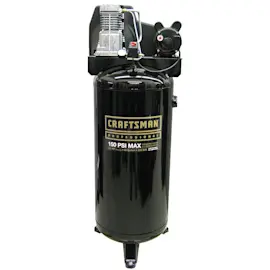
The four main compressor types are reciprocating (piston), rotary screw, centrifugal, and axial. Your Craftsman air compressor model 919165221 is a small reciprocating-style unit (a one-cylinder, single-stage pump and tank), which is the most common design for powering air tools at home. See the 919165221 owner's manual for your compressor’s operating description and safety guidelines.
The 4 compressor types (what they are best for)
- Reciprocating (piston): Uses a piston and cylinder to compress air; common for portable and shop compressors.
- Rotary screw: Uses two meshing screws; designed for steady, continuous-duty air supply.
- Centrifugal: Uses a high-speed impeller; common in large industrial plants needing high airflow.
- Axial: Uses multiple rotating and stationary blade stages; used in specialized high-flow applications.
Quick comparison
| Type | How it compresses air | Typical use case | Strength | Tradeoff |
|---|---|---|---|---|
| Reciprocating (piston) | Piston in a cylinder | Home/shop tools, intermittent use | Simple, widely used | Louder, more pulsing airflow |
| Rotary screw | Twin screws | Continuous shop/industrial air | Smooth, continuous output | Higher cost, more complex |
| Centrifugal | Spinning impeller | Large facilities | High airflow | Not ideal for small intermittent loads |
| Axial | Blade stages | Specialized systems | Very high flow potential | Highly specialized, complex |
Why it matters for your 919165221
Knowing the compressor type helps you set realistic expectations for duty cycle, noise, and power needs.
- Portable piston compressors like the 919165221 are built for intermittent tool use.
- Proper airflow and cooling matter; we recommend placing the unit in a clean, dry, well-ventilated area with about 12 inches of clearance for cooling.
- For power, use extra air hose instead of an extension cord when possible; if you must use an extension cord, follow the gauge and length guidance in the manual.
Related DIY help (common next questions)
Last updated: February 2026
Is it worth it to repair a compressor?
Yes, repairing your Craftsman air compressor model 919165221 is worth it when the issue is a replaceable control or air-delivery part (leaks at fittings, pressure switch problems, check valve issues); it is not worth repairing when the air tank or tank welds leak, because tank integrity is the core safety component.
Quick decision checklist
- Repair it if it runs but leaks at fittings or the pressure switch release valve.
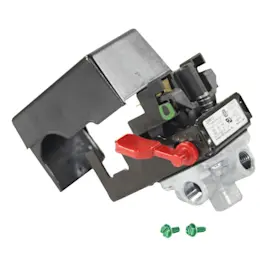
- Repair it if it will not shut off at cut-out pressure; replacing the pressure switch restores safe cycling.
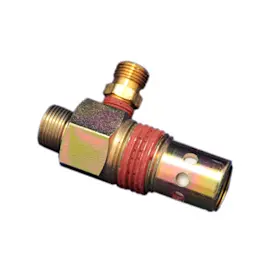
- Repair it if it will not build pressure due to a check valve or manifold flapper valve issue.
- Replace the unit if air leaks are coming from the tank or tank welds.
- Stop using it until fixed if the safety valve pops or the unit will not shut off.
What the 919165221 manual points to
The troubleshooting guide for this model calls out repairable causes like a pressure switch that does not shut off at cut-out, a defective pressure switch release valve, a defective flapper valve in the manifold, or a damaged check valve seat. It also lists a defective air tank as the cause of leaks in the tank or at tank welds. Use the 919165221 owner's manual to match your symptom to the troubleshooting chart and follow the safety steps.
Practical comparison
| Symptom | Best choice | Why it matters |
|---|---|---|
| Leaks at fittings or release valve | Repair | Restores pressure and reduces run time |
| Will not shut off at cut-out | Repair (pressure switch) | Prevents overpressure and nuisance safety valve popping |
| Leak in tank or at tank welds | Replace unit | Tank failure risk outweighs repair value |
Why it matters
This compressor cycles automatically in ON/AUTO; repairs can expose you to voltage, moving parts, hot metal, and compressed air. Tank leaks and overpressure control problems are always high priority.
Safety steps we follow before service
- Switch to OFF, unplug, and bleed all tank and hose pressure.
- Let the compressor head and outlet tube cool before touching.
- Keep guards and protective covers installed during operation.
For symptom-based help, use air compressor air leaks or air compressor won't build tank pressure.
Last updated: February 2026
Is a 150 PSI air compressor good for car tires?
Yes. A 150 PSI air compressor is more than enough for inflating car tires because most passenger tires are typically set in the 30 to 40 PSI range; you use the compressor’s regulator to dial the outlet pressure down to the tire’s required PSI. For your Craftsman 919165221, follow the operating steps in the 919165221 owner's manual and never exceed the tire or accessory pressure rating.
How to use a 150 PSI compressor safely on tires
- Set the OFF/AUTO lever to OFF before connecting the air hose or tire chuck.
- Connect the hose and a tire air chuck; then switch the compressor to AUTO.
- Use the air pressure regulator to set the outlet pressure to your target tire PSI.
- Inflate in short bursts and re-check with a tire gauge for accuracy.
- When finished, set the lever to OFF, turn the regulator down to 0 PSI, and bleed air from the tank.
- Drain condensation from the tank after use to reduce internal corrosion.
What “150 PSI” really means (and what matters more)
150 PSI is the maximum tank pressure capability, not the pressure you should put into a tire. For tire inflation, the most important factors are regulated outlet pressure and airflow (CFM), plus using the right accessories.
| Task | Typical needed PSI | 150 PSI compressor OK? | Notes |
|---|---|---|---|
| Passenger car tires | 30 to 40 | Yes | Regulate outlet pressure to spec |
| Light truck/SUV tires | 35 to 55 | Yes | May take longer if tire volume is large |
| Bike tires/sports balls | 5 to 120 (varies) | Yes | Use the correct adapter and gauge |
| Air tools (impact, sander) | 90 (common) | Sometimes | CFM demand can exceed small compressors |
Why it matters
Over-pressurizing is the real risk. The manual warns that too much air pressure creates a bursting hazard; always match the outlet pressure to the tire sidewall limit and the vehicle placard recommendation, and keep the regulator outlet below the accessory’s maximum rating.
Related troubleshooting and how-to help
If your compressor struggles during tire inflation, these guides match common symptoms:
Last updated: February 2026
What is the most common cause of air compressor failure?
For the Craftsman 919165221 air compressor, the most common cause of failure is poor maintenance that leads to overheating and accelerated wear. In practice, that usually means restricted ventilation openings, a dirty or restricted air intake filter, and running the compressor beyond its duty cycle until components (motor, valves, pressure controls) start failing.
The top failure causes we see most often
- Overheating from restricted airflow (blocked ventilation openings or poor placement)
- Restricted air intake filter that makes the pump work harder and reduces output
- Prolonged excessive use (compressor is undersized for the air demand)
- Air leaks at fittings, hoses, or valves that force longer run times
- Pressure switch or check valve problems that prevent proper start/stop operation
Quick checks that prevent repeat failures
Before troubleshooting or servicing, follow the safety steps in the 919165221 owner's manual.
- Unplug the compressor and bleed off tank pressure before any inspection
- Confirm the unit shuts off at cut-out; if it does not, move the lever to OFF immediately
- Inspect for air leaks (fittings, pressure switch release valve, safety valve)
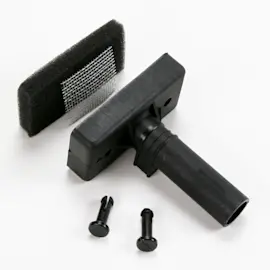
- Check the air intake filter and clean or replace if restricted
- Verify you are not using an undersized extension cord (wrong gauge or too long can cause hard starts)
Symptom-to-cause cheat sheet
| What you notice | Most common cause | Why it leads to failure |
|---|---|---|
| Motor will not run or restart | Overload tripped, wrong extension cord, loose electrical connections | Heat and voltage drop damage motor/capacitor over time |
| Safety valve pops or tank pressure too high | Pressure switch not shutting off | Overpressure stresses components and is unsafe |
| Low air output | Restricted intake filter, leaks, demand too high | Longer run time causes overheating and wear |
| Constant leaking sound | Leaks at fittings/valves, check valve issues | Compressor cycles more and runs hotter |
Why it matters
Most “failures” start as a small issue (restricted airflow, minor leak, dirty filter) that forces longer run times. Longer run times create heat, and heat shortens the life of the motor, valves, and pressure controls.
Related DIY help
Last updated: February 2026