Owner’s manual
 View engine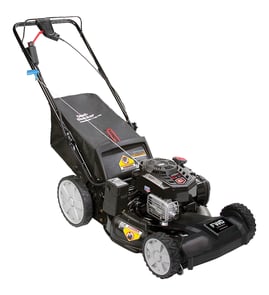



What are the most common issues with 917388112?
The most common problems we see on the Craftsman 917388112 walk-behind mower are starting or stalling issues, poor cut quality, and bagging or discharge problems. Many fixes are basic maintenance or replacing worn deck and control parts; use the 917388112 owner's manual for model-specific adjustments and safety steps.
- Hard to start or won’t stay running: stale fuel, dirty air filter, fouled spark plug, or carburetor varnish
- Uneven cut or scalping: mismatched wheel height settings, worn blade, or bent blade adapter
- Vibration: damaged blade, loose fasteners, or a worn blade adapter
- Clumping or poor bagging: wet grass, clogged deck, baffle issues, or bagger frame fit problems
- Side discharge not working right: chute door not closing, weak spring, or damaged discharge guard
- Shut the mower off, disconnect the spark plug wire, and let the muffler cool.
- Confirm all four wheels are set to the same cutting height; a missing or stripped adjuster can cause uneven cutting.
- Inspect the blade and adapter for damage; replace if bent, cracked, or excessively worn.
- Clean packed grass from under the deck (a common cause of clumping and stalling).
- Check the operator control cable for smooth movement; binding can prevent full engagement.
| Problem area | What you may replace | Example part on this model |
|---|---|---|
| Cut quality / vibration | Blade, blade adapter | Lawn mower blade 532406712, blade adapter 532418373 |
| Discharge control | Discharge guard, chute door springs | Discharge guard 589482402, lawn mower discharge chute door spring, left 532405421 |
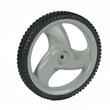
| Height and rolling | Wheels, height adjuster knob | Husqvarna lawn mower height adjuster knob 532701037, lawn mower wheel 532433099 |
Addressing these issues early protects the mower deck and crankshaft from impact damage, improves mulching and bagging performance, and helps the engine run cooler and more reliably.
Last updated: March 2026
What model number is the Craftsman 917388112?
The model number for this Craftsman walk-behind gas lawn mower is 917.388112 (often written without the dot as 917388112). You’ll see it printed on the mower’s model label and on the cover of the 917388112 owner's manual.
We recommend checking these common spots on Craftsman walk-behind mowers:
- On the rear of the mower deck near the discharge opening
- On the top of the deck near the engine mounting area
- On the handle support area (near the lower handle brackets)
- On a sticker or metal tag that also lists the serial number
Craftsman model numbers are sometimes shown with a dot (917.388112) and sometimes without it (917388112). Both refer to the same mower, but using the exact model number helps match the correct parts list and diagrams.
| You might see it as | Use it for |
|---|---|
| 917.388112 | Reading the owner’s manual and some labels |
| 917388112 | Searching parts diagrams and ordering parts |
Once you confirm the model number, we recommend these steps before ordering parts like a blade, wheel, or control cable:
- Match the model number exactly (including all digits)
- Compare the part description to your mower’s diagram
- If replacing hardware, match size and thread type
- For handle and control issues, inspect the cable routing and clamps
- Keep the serial number handy in case there were production changes
Using the correct model number prevents ordering the wrong Craftsman parts, especially for fit-critical items like the blade, rear door, and engine zone control cable.
Last updated: January 2026
What's the average lifespan of a lawn mower?
A typical gas walk-behind lawn mower lasts 8 to 10 years with normal residential use and routine maintenance. For your Craftsman 917388112, keeping the engine clean, changing oil on schedule, and replacing wear items like the blade on time are the biggest factors in reaching that lifespan.
- Maintenance frequency: annual tune-ups (spark plug, air filter) and regular oil changes extend engine life.
- Cleaning habits: built-up grass and debris make the engine run hotter and shorten engine life.
- Operating conditions: dusty yards, sandy soil, and heavy loads wear parts faster.
- Storage practices: proper off-season storage prevents fuel and corrosion problems.
- Wear parts replacement: blades, belts (if equipped), air cleaners, and spark plugs are designed to wear out.
Use the maintenance chart and procedures in the Craftsman 917388112 owner's manual. A practical baseline looks like this:
| Task | Typical interval | Why it helps |
|---|---|---|
| Clean underside of deck | After each use | Prevents buildup that hurts cutting and airflow |
| Change engine oil | Every season or about 25 hours | Reduces internal engine wear |
| Replace spark plug | Once a year | Improves starting and combustion |
| Clean or replace air filter | Once a year (more in dust) | Protects engine from dirt ingestion |
| Inspect blade for wear/bends | Frequently | Reduces vibration and protects crankshaft |
These are normal “wear items” that do not last the life of the mower:
- Blade: replace if bent, cracked, or badly worn; a sharp blade also reduces engine strain.
- Discharge and mulching components: damaged doors, guards, or springs can affect safety and cut quality.
- Wheels and height adjusters: worn wheels or knobs can make cutting height inconsistent.
For example, if you need a replacement blade for this model, match it to the correct OEM part such as the lawn mower blade 532406712.
A mower that is maintained and kept clean runs cooler, cuts more efficiently, and avoids vibration-related damage. Those basics are what separate a mower that lasts a few seasons from one that reaches the typical 8 to 10 year lifespan.
Last updated: January 2026