Owner’s manual
 View engine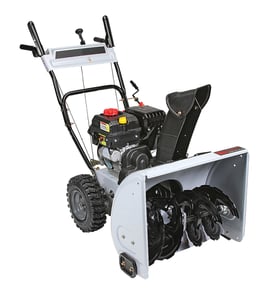



How long does a gas-powered snow blower last?
A gas-powered snowblower typically lasts 10 to 15 years with normal residential use and routine maintenance. For your Poulan PR241, lifespan depends most on off-season storage, oil changes, and keeping wear items like belts and bearings in good condition (or replacing them when they start slipping or squealing).
Typical lifespan and what changes it
Most gas snow throwers reach the 10 to 15 year range; heavy use, wet storage, and skipped maintenance shorten that.
- Longer life: clean fuel practices, annual oil changes, dry storage
- Shorter life: old fuel left in the carburetor, running low on oil, frequent impacts with ice chunks
- Biggest wear areas: auger/drive system, friction drive components, chute controls, engine fuel system
Maintenance that adds the most years
Use the schedule and specs in the PR241 owner's manual. In general, these habits make the biggest difference:
- Change engine oil at least once per season (more often with heavy use)
- Use fresh fuel and stabilize fuel before storage
- Keep the auger and drive systems adjusted so belts do not slip
- Lubricate moving points and shafts as recommended
- Replace worn belts before they start burning or glazing
Common “wear item” replacements on PR241-STYLE machines
| Symptom | Most common cause | Typical fix |
|---|---|---|
| Drive slips or unit will not move | Worn or stretched drive belt | Replace the snowblower drive belt, 38.2-in 584216102 |
| Auger stops under load | Worn auger belt or misadjustment | Inspect/replace the snowblower auger drive belt 501818201 |
| Grinding or wobble at auger shaft | Worn bearing | Replace the snowblower auger shaft bearing 532420478 |
Why it matters
A snowblower can “still run” but lose performance as belts stretch, bearings wear, and controls go out of adjustment. Staying ahead of those wear items keeps your Poulan PR241 throwing snow farther and reduces strain on the engine and gearbox.
Last updated: February 2026
Should you put premium gas in a snowblower?
Premium gas is not required for the Poulan PR241 snow thrower; use fresh unleaded gasoline that meets the minimum octane listed in the PR241 owner's manual. In most cases, regular 87-octane fuel runs best, as long as it is clean, properly stored, and not stale.
What fuel to use (and what to avoid)
For reliable starting and smooth power, we recommend:
- Regular unleaded gasoline (typically 87 octane)
- Fuel that is fresh (ideally used within 30 days)
- Gas with 10% ethanol or less (E10); ethanol-free is often a good choice for seasonal equipment
- A clean fuel can and a clean filler area to keep dirt and water out of the tank
- The correct fuel stabilizer routine if the snowblower sits between storms
Avoid these common problems:
- Old gas left from last season
- Higher-ethanol blends (such as E15 or E85)
- Mixing oil into the gas (most PR241 units are 4-cycle; oil goes in the crankcase, not the fuel)
Quick comparison: regular vs premium for snowblowers
| Fuel type | When it helps | What it does for most PR241 engines |
|---|---|---|
| Regular (87 octane) | Normal use | Correct octane for typical small engines; best value |
| Premium (91-93 octane) | Only if the manual requires it or you have persistent knock after fixing fuel issues | Usually no performance gain; can cost more without benefit |
| Ethanol-free (87-90 octane) | Seasonal storage, cold starts, fewer fuel-system issues | Often improves storage stability and reduces carburetor varnish risk |
Why it matters
Most snowblower driveability complaints (hard starting, surging, stalling under load) trace back to fuel quality and storage, not octane. Using the right gas helps protect the carburetor and keeps the engine running consistently in cold weather.
If it still runs rough after fresh fuel
These checks solve many PR241 running issues:
- Drain the tank and refill with fresh gas
- Inspect the spark plug condition and gap (see how to check a snowblower spark plug video)
- Change the engine oil on schedule (see how to change snowblower oil video)
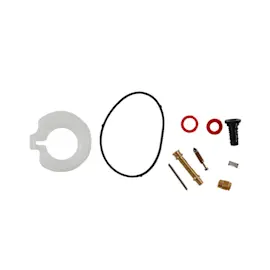
- If surging continues, the carburetor may need cleaning or replacement (example part: carb.assy.ge 585020402)
Last updated: February 2026
What is the best gas-powered snowblower?
The “best” gas-powered snowblower depends on your snowfall depth, driveway size, and how much packed snow you need to cut through. For most homeowners, a reliable two-stage machine in the 24 to 28-inch class is the best all-around choice; your Poulan PR241 is in that practical, do-it-most category. For model-specific operation and setup details, use the PR241 owner's manual.
How to choose the best gas snowblower for your needs
- Single-stage: Best for lighter snow and smaller areas; faster to maneuver but struggles more with heavy, wet snow.
- Two-stage: Best for deeper snow, plow berms, and larger driveways; uses an auger plus an impeller for stronger throwing.
- Clearing width: Most homeowners do well with 24 to 28 inches; wider units clear faster but can feel heavier.
- Traction: Look for strong tires and easy steering; this matters most on slopes and uneven pavement.
- Serviceability: Belts, shear pins, and cables are normal wear items; easy access saves time each season.
Quick comparison: what “best” usually means
| If you need this… | Look for this type | Why it fits |
|---|---|---|
| Small driveway, light snow | Single-stage | Lighter, simpler, quick cleanup |
| Mixed storms, plow pile at end of drive | Two-stage (24 to 28 in.) | Better bite and throwing power |
| Long driveway, frequent deep snow | Heavy-duty two-stage | More capacity and durability |
What to maintain so any gas snowblower stays “best”
- Replace worn belts before they slip; for PR241, the snowblower drive belt, 38.2-in 584216102 is a common wear item.
- Keep the auger drive working smoothly; inspect the snowblower auger drive belt 501818201 for cracking or glazing.
- Check chute movement and deflection; a weak spring can reduce control (see husqvarna snowblower chute deflector tension spring 532184505).
- Do preseason basics: fresh fuel, correct oil level, and a clean spark plug.
Why it matters
A snowblower that matches your snow conditions clears faster, clogs less, and puts less strain on the engine, belts, and gearbox. That means fewer mid-storm breakdowns and lower repair costs over time.
Last updated: February 2026
How many HP is a 243cc snow blower?
A 243cc 4-cycle snowblower engine typically delivers about 7 to 9 HP in real-world output. For your Poulan PR241, the most accurate way to compare power is to use the engine displacement (cc) and the specifications listed in the PR241 owner's manual.
Quick cc-to-HP guidance
Engine displacement does not convert perfectly to horsepower, but these ranges match what most 2-stage snow throwers produce at governed RPM:
- 208cc: about 6 to 7.5 HP
- 243cc: about 7 to 9 HP
- 250cc to 270cc: about 8 to 10 HP
- Torque and throwing performance also depend on impeller design, belt grip, and auger load
Why advertised numbers can be confusing
Some brands use “max/peak” ratings or model class names that look like horsepower. For snowblowers, cc is the most consistent comparison across brands.
| Spec you see | What it tells you | Best way to use it |
|---|---|---|
| Engine size (cc) | Displacement and power potential | Compare models apples-to-apples |
| Rated/governed RPM | How the engine is limited under load | Explains power feel in deep snow |
| Clearing width | Intake size | Match to driveway size |
| Two-stage design | Auger feeds impeller | Better for deeper, heavier snow |
If your PR241 feels underpowered
We recommend checking these common power-loss causes before assuming the engine is “small”:
- Replace worn or glazed belts; a slipping belt cuts throwing distance
- Confirm the auger and drive controls fully engage and are adjusted correctly
- Use fresh fuel (stabilized) and drain old fuel from the tank and carburetor bowl
- Check spark plug condition and gap
- If it surges or will not hold RPM, service the carburetor (see carb.assy.ge 585020402)
Why it matters
A healthy 243cc engine sits in a strong mid-range class for a 2-stage snowblower; when belts, friction drive, and chute/auger components are in good shape, you get full throwing performance and better clearing speed.
Last updated: February 2026