Owner’s manual
 Error Codes


What is the most common problem with LG refrigerators?
For LG refrigerators like model LRMDC2306D, the most common customer-reported issue is a cooling failure (refrigerator not cooling or temperature swings). In many cases, the root cause is in the sealed cooling system or airflow control, so we start troubleshooting with power, control settings, and basic airflow checks from the owner's manual.
What we see most often (and what to check first)
Cooling complaints usually fall into a few repeat categories:
- No power or intermittent power: tripped breaker, GFCI outlet tripped, or blown fuse
- Controls set incorrectly: temperature settings too warm or control set to OFF (some models)
- Demo/Display mode enabled: unit appears to run but does not cool normally
- Airflow problems: blocked vents, overpacked compartments, doors not sealing
- Sealed-system or compressor-related cooling loss: unit runs but does not cool
Quick troubleshooting steps for LRMDC2306D
Use these steps before replacing parts:
- Confirm the outlet has power; reset the breaker or GFCI if needed.
- Verify the refrigerator is not set to OFF and temperatures are set correctly.
- Check for Demo/Display mode; the owner's manual shows how to toggle it.
- Make sure doors close fully and gaskets seal all the way around.
- Keep vents clear inside the fresh food and freezer sections.
- If the unit runs but will not cool, sealed-system diagnosis is typically needed.
Common symptoms and likely areas
| Symptom | Most likely area to check | What it can point to |
|---|---|---|
| No cooling and no lights | Power supply, breaker/GFCI | Electrical supply issue |
| Lights on, weak or no cooling | Control settings, Demo/Display mode | Not actually in cooling mode |
| Runs constantly, still warm | Airflow or sealed system | Fan/air restriction or compressor system |
| Clicking/buzzing with poor cooling | Sealed system components | Compressor start or sealed-system issue |
Parts that can be involved in cooling failures
If troubleshooting points to a component failure, these are examples of parts on this model that may be involved:
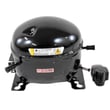
- Compressor TCA36811409 (sealed-system cooling)
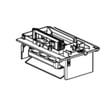
- LG refrigerator electronic control board EBR88309753 (cooling control and operation)
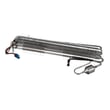
- Condenser assembly,wire ACG76164401 (heat rejection side of the cooling system)
Why it matters
Cooling problems can quickly lead to food spoilage and ice maker performance issues. Starting with power and control-mode checks prevents unnecessary part replacement and helps you pinpoint whether the issue is a settings problem, airflow restriction, or a sealed-system repair.
Last updated: February 2026
Why is my LG refrigerator leaking from the bottom?
On an LG LRMDC2306D refrigerator, a leak from the bottom is usually caused by water that is not draining correctly (defrost drain issue) or a problem in the ice maker or water supply connections. Start by checking for ice buildup, a blocked drain path, and any dripping at the inlet valve or tubing.
Quick checks we recommend first
- Unplug the refrigerator before inspecting behind panels or near wiring.
- Pull the unit forward and look for water tracks under the cabinet and at the back.
- Check the freezer floor for a sheet of ice (often points to a defrost drain problem).
- Inspect the water line connection and fittings for slow drips.
- If the leak happens only when dispensing water or making ice, focus on the water system.
Most common causes (and what to look for)
| What you see | Most likely cause | What to do next |
|---|---|---|
| Water pooling under the freezer area | Clogged or frozen defrost drain | Thaw ice, clear the drain path, then monitor for 24 hours |
| Drips behind the refrigerator | Loose or leaking water line connection | Tighten fittings and recheck for leaks |
| Leak only during ice making | Water inlet valve or ice maker fill issue | Inspect valve, tubing, and ice maker fill area |
| Intermittent puddles near front | Door not sealing, warm air causing excess frost and melt | Check gasket seal and door alignment |
Water supply and valve checks (model-relevant)
Your LRMDC2306D uses a cold, potable water supply; the owner's manual calls out checking for leaks at connections after turning the water on. If you find dripping at the valve or fittings, these parts are common leak points:
- Refrigerator water inlet valve AJU75632502 (valve body or fittings can seep)
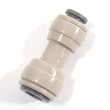
- Refrigerator water tube fitting 4932JA3002C (connection point can drip if not seated)
Why it matters
Bottom leaks can lead to floor damage and can also signal airflow or defrost problems that create ice buildup. Fixing the root cause helps your LG refrigerator maintain stable temperatures and normal ice maker performance.
For step-by-step model-specific guidance on water line connection, leveling, and leak checks, use the owner's manual. If you need to order parts for LRMDC2306D, use the parts list for this model or search by model number on Sears PartsDirect.
Last updated: February 2026
Why does ice build up in the bottom of my LG freezer?
Ice building up on the bottom of the freezer in your LG LRMDC2306D is caused by a defrost drain problem: meltwater cannot flow to the drain pan, so it refreezes into a sheet of ice. Clearing the drain and fully defrosting the freezer stops the repeat freeze-up.
What to check first (fast, common fixes)
- Unplug the refrigerator before working inside the freezer.
- Remove the freezer drawer/bins so you can see the floor of the compartment.
- If you see a solid ice sheet, do a full manual defrost (doors open, towels down) until the ice is gone.
- After defrosting, look for standing water returning after the next defrost cycle; that points back to the drain.
- Make sure the freezer door closes tightly and seals evenly; warm air can add extra frost and water.
How we recommend clearing a blocked defrost drain
- Defrost the ice on the freezer floor so you can access the drain area.
- Locate the drain opening (typically under the evaporator cover area or at the rear floor channel, depending on design).
- Flush the drain with hot water using a turkey baster or squeeze bottle until it flows freely.
- Clear the drain tube with a flexible plastic line (never a sharp tool) to remove sludge or ice.
- Reassemble and monitor for 24 to 48 hours.
Helpful parts to consider if water keeps returning
If the drain is clear but water still pools and refreezes, a water supply leak can mimic a drain issue. These parts are commonly involved:
- Refrigerator water inlet valve AJU75632502 (can seep and create intermittent water in the freezer area)
- Refrigerator water tube fitting 4932JA3002C (can leak at a connection)
Quick symptom guide
| What you see | Most likely cause | What to do |
|---|---|---|
| Thick ice sheet on freezer floor | Defrost drain blocked/frozen | Defrost and flush the drain |
| Puddle that returns without heavy frost | Slow water leak | Inspect valve and fittings |
| Frost plus door hard to close | Door not sealing/closing | Check gasket contact and alignment |
Why it matters
When meltwater cannot drain, it refreezes and can block drawers, reduce airflow, and lead to warmer freezer temperatures. Fixing the drain restores normal defrost water flow and helps prevent repeat ice buildup.
For diagrams and model-specific access steps, follow the LRMDC2306D manual. You can also find replacement parts for this model on the parts list for LRMDC2306D, or search by model on Sears PartsDirect.
Last updated: February 2026