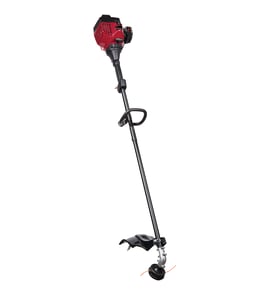



Can I use .095 trimmer line in a .080 trimmer?
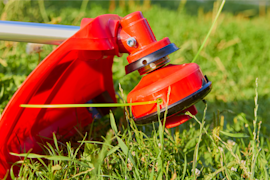
Yes, you can usually run .095-inch trimmer line in a trimmer set up for .080-inch line, but on a Homelite ST-155 it increases load on the engine and cutting head; that can reduce RPM, make bump-feed less reliable, and increase vibration. Use it only if the head and eyelets accept it and performance stays stable.
- Confirm the cutting head is rated to accept .095 line; many heads are limited to .080.
- Make sure the line passes smoothly through the eyelets without forcing.
- Wind the spool evenly and do not overfill it; overfilling causes binding.
- If the head uses bump-feed, verify it can advance thicker line without sticking.
- Stop if you notice bogging, excessive vibration, or the clutch slipping.
Thicker line cuts heavier weeds and lasts longer, but it also takes more power to spin.
| Line size | Best for | Typical tradeoff |
|---|---|---|
| .080 in | Grass, light trimming | Faster RPM, easier feed |
| .095 in | Heavier weeds, edging in tough growth | More drag, harder feed, more fuel use |
- Start with a short length of .095 and trim for 1 to 2 minutes.
- If the head will not feed, switch back to .080 rather than forcing the bump mechanism.
- If the engine bogs, return to .080; running overloaded accelerates wear.
- While you are there, replace worn hardware that can worsen vibration, such as a washer 84065 or a screw 82540 if your originals are stripped.
Line diameter affects engine load, clutch engagement, and cutting head feed. Using the thickest line the head is designed for gives you better cut quality without sacrificing reliability.
You can order replacement parts for your Homelite ST-155 from the parts list for this model, or search by model number on Sears PartsDirect.
Last updated: February 2026
What is the best string trimmer line to use?
For the Homelite ST-155 gas line trimmer, the best trimmer line is the thickest diameter your trimmer head is designed to handle; thicker line lasts longer in heavy weeds, while thinner line cuts cleanly with less engine load for routine trimming.
Use this quick guide based on what you cut most often:
- Light grass and edging: 0.065 in to 0.080 in line for smooth cutting and easy feed
- Mixed grass and moderate weeds: 0.080 in to 0.095 in line for better durability
- Thick weeds and tough growth: 0.095 in line (only if your head supports it)
- Square or twisted line: better bite on weeds, often a little noisier
- Round line: quieter and smoother, best for regular lawn maintenance
If the line is too thick, it can jam the spool, stop feeding, and make the engine bog down. If it is too thin, it wears quickly and breaks more often.
| What you want | Best choice | Tradeoff |
|---|---|---|
| Long life in weeds | Thicker line (0.080 in to 0.095 in) | More load on the engine |
| Clean edging | Thinner line (0.065 in to 0.080 in) | Shorter wear life |
| Aggressive cutting | Square or twisted profile | Can be louder |
- Keep the line dry and clean; dirt and grit accelerate wear
- Avoid “sawing” into fences, rocks, and concrete; that instantly shortens line life
- Replace worn trimmer head hardware so the spool stays aligned; a missing fastener can cause poor feed (for example, a correct-fit screw 82540)
- If the engine struggles, step down one line size before chasing carburetor or ignition issues
Using the correct line diameter helps your ST-155 maintain RPM, reduces stalling, improves cut quality, and prevents premature wear on the trimmer head and drive components.
If you are stocking up on maintenance items for this model, you can order parts from the list for your ST-155, or search by model number on Sears PartsDirect.
Last updated: February 2026
What is the fuel mixture for a Homelite trimmer?
For the Homelite ST-155 gas line trimmer, we run a 50:1 gasoline-to-2-cycle oil fuel mix (50 parts fresh unleaded gas to 1 part 2-cycle oil). This ratio helps protect the 2-cycle engine from overheating, scoring, and premature wear.
Use this as a fast reference when mixing fuel for your ST-155.
| Gasoline amount | 2-cycle oil needed (50:1) |
|---|---|
| 1 gallon | 2.6 fl oz |
| 2 gallons | 5.1 fl oz |
| 2.5 gallons | 6.4 fl oz |
| 5 gallons | 12.8 fl oz |
- Use a clean, approved fuel can (not the trimmer tank) for mixing.
- Add about half the gasoline first.
- Measure and add the correct amount of 2-cycle oil.
- Add the remaining gasoline, then cap and shake to blend.
- Mix only what you will use in about 30 days for best starting and performance.
A correct mix ratio is step one; if it still bogs, surges, or won’t stay running, these checks usually fix it:
- Replace a dirty or restricted fuel/air filter (a clogged filter leans the mix and hurts power).
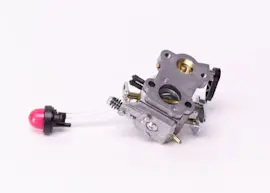
- Inspect the primer bulb for cracks or stiffness and replace if it won’t prime.
- Drain old fuel and refill with a fresh 50:1 mix.
- Check for loose fasteners that can cause air leaks or vibration issues.
| Symptom | Part to consider |
|---|---|
| Hard starting, won’t prime | Primer bulb UP04802 |
| Runs lean, lacks power | Filter 49422 or filter PS98913 |
A 2-cycle trimmer depends on oil in the fuel for lubrication. Too little oil increases friction and heat; too much oil can foul the spark plug and smoke excessively. Keeping a consistent 50:1 mix gives the ST-155 reliable starting and longer engine life.
If you need replacement parts for your Homelite ST-155 (like a primer bulb or filter), we list compatible options on this model’s parts list; you can also search by model number on Sears PartsDirect.
Last updated: February 2026