Owner’s manual
 View engine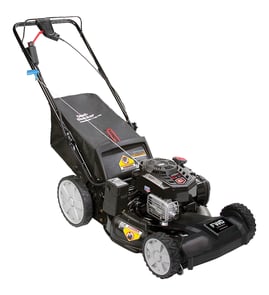

How much does it cost to repair a hydrostatic transmission on a lawn mower?
A hydrostatic transmission repair is typically a riding-mower cost; your Craftsman 917377301 walk-behind mower uses a belt-and-gear drive system instead of a hydrostatic transmission. For this model, repair costs usually center on drive parts like the belt, control cable, wheels, and gear components listed in the owner's manual.
Most walk-behind self-propelled mowers like model 917377301 move using a drive belt, control cable, and a gear case or drive gears. Costs are usually lower than hydrostatic repairs because you are replacing service parts rather than a sealed transmission.
Common cost drivers on this model include:
- Worn or broken drive belt
- Stretched or binding zone control cable
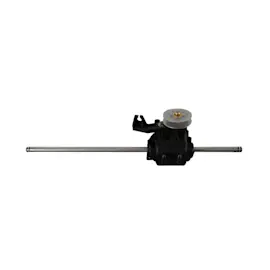
- Worn wheel drive parts (pinion gear, dust cover, wheel)
- Damaged gear case or drive gear components
- Labor time to access and reassemble the drive system
Actual totals depend on what failed and whether you do the work yourself.
| Repair scenario (walk-behind drive) | What’s usually involved | Typical cost range |
|---|---|---|
| Basic drive issue | Adjustments, cleaning, minor hardware | $0 to $30 |
| Common parts replacement | Belt and/or cable, small hardware | $25 to $120 |
| Drive component replacement | Wheel/gear parts, pulley, control assembly | $60 to $250 |
| Major drive overhaul | Multiple drive parts plus labor | $150 to $400 |
If your mower runs but will not self-propel, these model-matched parts are frequent fixes:
- Belt 532157769 (drive belt kit)
- Husqvarna poulan lawn mower zone control cable 532168552
- Lawn mower drive pinion gear 532137054
- Lawn mower wheel 532150341
Hydrostatic transmission pricing (often quoted for riding mowers) can sound alarming, but it does not apply to Craftsman 917377301. Focusing on the belt-and-gear drive parts helps you diagnose faster and avoid replacing the wrong components.
Last updated: February 2026
Is it cheaper to repair or replace a lawnmower?
If your Craftsman rotary lawn mower model 917377301 needs a major repair, replacing the mower is usually cheaper once the repair total reaches about 50% or more of the mower’s current value. For smaller issues (blade, belt, cable, wheels), repair is typically the better value.
Use this simple rule before you buy parts or schedule service:
- Add up parts, labor, and any pickup/delivery fees.
- Compare that total to what a similar new mower costs today.
- If the repair is under 50%, repair usually makes sense.
- If the repair is 50% or more, replacement usually makes sense.
- If the engine has low compression or the crankshaft is bent, replacement is usually the better investment.
These are common wear items on walk-behind mowers and are normally cost-effective to fix:
- Dull or damaged blade (replace the lawn mower blade 532406713)
- Worn drive belt (replace the belt 532157769)
- Drive system not pulling due to debris in the drive wheels (cleaning is often enough)
- Safety/zone control issues (inspect/replace the husqvarna poulan lawn mower zone control cable 532168552)
- Loose hardware or missing retainers (nuts, washers, E-rings)
These failures can be expensive or indicate the mower is near end-of-life:
- Major engine problems (hard starting plus smoking, knocking, or low power)
- Repeated drive gear/gearcase failures
- Severe deck damage or multiple major parts needed at once
Your owner's manual calls out routine maintenance and wear items (like blades, blade adapters, belts, air cleaners, spark plugs) as normal replacement parts. If your issue is in that category, repairing is usually the economical path.
| Situation | Typical best choice | Why |
|---|---|---|
| Blade is bent/dull, mower still runs strong | Repair | Low parts cost, immediate performance gain |
| Self-propel won’t move but wheels are packed with debris | Repair | Cleaning and a belt/cable fix is usually affordable |
| Engine failure or multiple major systems failing | Replace | Repair cost climbs fast relative to mower value |
Choosing repair vs. replace based on total cost prevents overspending on a mower that will still have reliability issues after a big repair. For model 917377301, many common problems are solved with routine maintenance and a few key parts.
Last updated: February 2026
Should I use 87 or 89 gas for lawn mower?
For the Craftsman 917377301 rotary lawn mower, we recommend using fresh, clean, regular unleaded gasoline with a minimum of 87 octane. Using 89 octane is fine, but it typically does not improve performance in this type of small engine.
The fuel guidance for this mower is straightforward:
- Use regular unleaded gasoline
- Use at least 87 octane
- Do not mix oil with gasoline
- Buy fuel in small quantities so it stays fresh
For the exact wording and operating notes, check the owner's manual.
In most walk-behind mower engines, octane is mainly about preventing knock, not adding power.
| Fuel choice | Works in this mower? | When it makes sense |
|---|---|---|
| 87 octane (regular) | Yes (recommended) | Normal mowing, everyday use |
| 89 octane (mid-grade) | Yes | Only if 87 is unavailable or you already have it |
Fuel issues are one of the most common reasons a mower will not start or runs rough. We use these best practices:
- Store gasoline in an approved container and keep it tightly sealed
- Avoid using old fuel (especially fuel that sat through the off-season)
- Fill the tank outdoors with the engine off and cool
- Wipe up any spilled gasoline before starting
- If the mower has been sitting, consider draining the tank and refilling with fresh fuel
If you are dealing with hard starting, our lawn mower wont start troubleshooting video fuel ignition and compression guide is a solid next step.
Using the correct octane (87 minimum) and keeping fuel fresh helps the engine start easier, run smoother under load, and reduces carburetor varnish and fuel-system deposits that can cause stalling.
Last updated: February 2026
What year is Craftsman Model 917377301?
Craftsman model 917377301 is documented in an owner’s manual with a print/revision date of April 1, 1997, which places this mower in the 1997 model-year era. For the most accurate date for your exact unit, use the serial number and date-of-purchase fields shown in the owner's manual.
We recommend using the identification information on the mower itself, then matching it to the documentation and parts list.
- Find the model/serial decal on the rear of the mower housing.
- Record the serial number and the date of purchase (the manual provides fields for both).
- Use the model number 917377301 to match the correct parts diagrams and repair parts list.
- If you are trying to decode a stamped date code, compare it against the decal information first.
- Keep the recorded info with your maintenance notes for future repairs.
The manual for model 917377301 shows a revision/print date that helps anchor the timeframe.
| Item in documentation | What it tells you | What to use it for |
|---|---|---|
| Manual revision/print date: 04.01.97 | The mower documentation was issued in 1997 | Confirms the mower is from the 1997 era |
| Model/serial decal location | Where to find your unit’s identifiers | Confirms you are reading the correct decal |
| “Date of purchase” field | When your unit was bought | Best real-world date reference |
Knowing the correct year (or at least the correct production era) helps you order the right Craftsman walk-behind mower parts and avoid mismatches in common wear items like the blade, drive belt, and control cable.
- Blade and blade adapter
- Drive belt and drive control components
- Wheels and height adjuster hardware
- Zone control cable
Last updated: February 2026