


Is a 7.3 cubic foot dryer big?
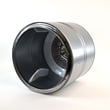
Yes. A 7.3 cubic foot dryer is a large-capacity size, and it is considered “big” for most households. For a GE dryer like model PTD90EBPT0DG, that capacity is designed to handle bulkier loads (bedding, towels, jeans) with fewer cycles.
A 7.3 cu. ft. drum typically fits larger, airier loads without packing the drum too tightly.
- Handles bulky items more comfortably than mid-size drums
- Lets you dry family-size mixed loads in fewer cycles
- Helps reduce overdrying when you can spread items out
- Works well for towels, hoodies, and heavier cotton loads
- Still benefits from not overfilling (best drying happens with room to tumble)
| Dryer capacity | Common label | Best for |
|---|---|---|
| 5.0 to 6.5 cu. ft. | Standard | Singles, couples, smaller loads |
| 6.6 to 7.2 cu. ft. | Large | Most families, regular weekly laundry |
| 7.3 cu. ft. and up | Extra-large | Bulky items, larger households |
Capacity affects drying performance and fabric care. When the drum is too full, clothes cannot tumble freely, airflow drops, and dry times increase. With a 7.3 cu. ft. dryer, you get better tumbling space, which usually means more even drying and fewer “still damp” items.
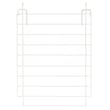
- Clean the lint screen every load; replace a damaged screen with GE dryer lint screen WE03X23881
- Avoid stuffing the drum; stop at about 3/4 full for mixed loads
- Use timed dry for very small loads to prevent overdrying
- If dry times are long, check venting and airflow (a common cause)
- If heat seems weak, the heating circuit parts (like dryer heating element WE11M10001) are common checks
Last updated: February 2026
What is the most common problem with a GE dryer?
The most common problem we see with GE dryers like model PTD90EBPT0DG is poor or no heat, which is usually tied to airflow restrictions (lint buildup or a clogged vent) or a failed heating component such as the heating element, thermistor, or high-limit thermostat.
- Runs but doesn’t dry: restricted venting, clogged lint path, or a heating failure
- Takes too long to dry: partial vent restriction, lint buildup in the duct, or weak heat output
- Stops early or cycles heat oddly: temperature sensing issue (thermistor) or overheating protection
- Squealing or scraping noise: worn drum glides or bearing surfaces
- Won’t start: door not latching, control issue, or a safety circuit opening
- Clean the lint screen and confirm strong airflow at the outside vent hood.
- Inspect the vent hose for kinks, crushing, or long runs with many elbows.
- Run a timed dry cycle; if heat is weak and airflow is weak, fix venting first.
- If airflow is strong but there’s still no heat, move to heating system checks.
| Problem area | What fails most often | Example part for this model |
|---|---|---|
| No heat / weak heat | Heating element or heater assembly | GE dryer heater assembly WE11X21156 |
| Overheating or heat cycling | High-limit thermostat | Thermostat hi limit WE04X30381 |
| Temperature sensing | Thermistor | Dryer thermistor WE4M448 |
| Long dry times from lint buildup | Lint path restriction | GE dryer lint screen WE03X23881 |
| Squeaks/scrapes | Drum glide wear | Dryer drum glide bearing WE03X37319 |
Heat complaints are often caused by airflow problems, and restricted venting can also overheat the dryer and shorten the life of heating parts. Fixing airflow first prevents repeat failures and improves drying performance.
Last updated: February 2026
What does PTD90EBPT0DG mean on a dryer?
PTD90EBPT0DG is the GE model number of your dryer, not an error code. We use that model number to match the correct parts, diagrams, and troubleshooting info for your exact machine so you do not order the wrong heater, belt, or control.
You will typically see a model number like PTD90EBPT0DG:
- On the rating label inside the door opening or on the cabinet frame
- On your receipt, registration paperwork, or service invoice
- When searching for replacement parts or repair help
- When a technician asks for the exact model to identify compatible parts
| What you see | What it means | What to do next |
|---|---|---|
| PTD90EBPT0DG | Your dryer’s model identifier | Use it to look up parts and repair info |
| A short code (letters/numbers) | A fault or status message | Look up the code and troubleshoot the symptom |
If your dryer is showing an actual code (not the model number), start with GE’s code lists and then troubleshoot the symptom:
- Check airflow first (lint screen, ducting, outside vent hood)
- Power-cycle the dryer (unplug for 2 minutes, then restart)
- Note when the code appears (start-up, heating, end of cycle)
- If drying is slow, inspect and clean the lint path and venting
For code lookups, use GE cleanspeak dryer error codes or GE gfd model series error codes.
Using the correct model number is the fastest way to get the right replacement part for a symptom. For example, if PTD90EBPT0DG is not heating, common repair paths involve the dryer heating element WE11M10001, the thermostat hi limit WE04X30381, or the dryer heating element control thermistor WE4M398.
Last updated: February 2026