


How long can gas sit in a gas can for a lawn mower?
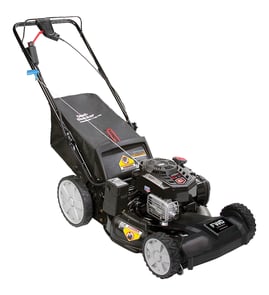
For a Poulan walk-behind mower like model 96146000201, regular unleaded gas typically starts going stale in about 30 days in a gas can; with a quality fuel stabilizer mixed in, most fuel stays usable for up to 6 to 12 months when stored correctly.
Best storage rules (what we recommend)
- Use an approved, tightly sealed gas can and keep it out of sun and heat.
- Store fuel in a cool, dry place; temperature swings speed up fuel breakdown.
- Add fuel stabilizer the same day you buy gas (not after it has already aged).
- Buy only what you will use in the next 30 days during mowing season.
- If you can get ethanol-free gas, it generally stores longer and causes fewer carburetor issues.
Quick guide: how long gas lasts
| Fuel in the can | Typical usable window | Notes |
|---|---|---|
| Regular unleaded (no stabilizer) | ~30 days | Most common cause of hard starting after storage |
| Regular unleaded + stabilizer | 6 to 12 months | Mix and shake can well before filling |
| Ethanol-free gas + stabilizer | Up to ~12 months | Best option for seasonal equipment |
Signs the gas is too old
- Sour or varnish-like smell
- Mower starts, then stalls or surges
- Hard starting even with a good spark plug
- Gum or residue in the tank or carburetor bowl
Why it matters
Old fuel can leave varnish deposits that clog small carburetor passages, leading to “won’t start,” “runs rough,” or “won’t stay running” symptoms. Preventing stale gas is one of the easiest ways to avoid no-start repairs on a rotary lawn mower.
Related DIY help
Last updated: January 2026
Is it okay to pull a self-propelled mower backwards?
Yes. On the Poulan 96146000201 self-propelled walk-behind mower, it’s normal to pull the mower backward for repositioning; the drive system typically freewheels or disengages when the wheels rotate backward, so you don’t damage the transmission during brief backward pulls.
Best practice when pulling it backward
To reduce wear and make it easier to maneuver, we recommend these habits:
- Release the drive control bar before pulling backward (so the drive is fully disengaged).
- Pull back slowly; avoid yanking the mower over curbs, roots, or thick turf.
- If the wheels resist, roll the mower forward an inch, then pull back again.
- Keep the drive wheels clean; packed grass can make the drive feel “locked.”
- If your mower has a bagger installed, lift slightly on the handle to reduce drag.
When pulling backward can cause problems
Pulling backward is fine, but these situations can lead to damage or symptoms that feel like damage:
- Drive engaged while forcing it backward: can stress the belt, pulleys, and wheel gears.
- Worn wheel drive parts: a slipping or clicking wheel can get worse over time.
- Debris in the drive wheels: grass and dirt can bind the wheel mechanism.
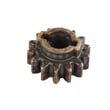
If the drive wheel clicks, slips, or won’t grab going forward, inspect common wear items like the drive pawl 532404845 and the wheel gear area.
Quick symptom guide
| What you notice | What it usually means | What to check first |
|---|---|---|
| Mower pulls backward easily | Normal operation | No repair needed |
| Hard to pull backward | Drive not fully disengaged or debris buildup | Drive control bar, wheel debris |
| Clicking/slipping forward drive | Worn wheel drive components | Drive pawl, wheel gear, belt |
| Won’t self-propel forward | Belt or transmission drive issue | Belt condition, cable adjustment |
Why it matters
Self-propelled systems rely on belts, pulleys, and wheel drive components to transfer power. Pulling backward briefly is part of normal mowing, but forcing it backward with the drive engaged can shorten the life of the drive system.
For forward-drive problems, use our lawn mower wont move troubleshooting video motion drive failure to pinpoint whether the issue is belt-related, wheel-related, or transmission-related.
Last updated: January 2026
How to find Poulan Pro model number?
Your Poulan Pro model number is printed on the mower’s model and serial tag; on the Poulan rotary lawn mower model 96146000201, it’s typically on the deck housing near the rear discharge area, on the handle support, or close to the engine mounting area where it stays away from moving parts.
Where to look on a walk-behind mower
Check these common tag locations first:
- Rear of the mower deck (top side, near the handle brackets)
- Side of the deck near the height adjuster or wheel area
- Handle support tube or handle mounting plate
- Near the engine base (not on the muffler or rotating shaft)
- Under the grass bag flap area (if equipped)
What the label usually shows
Most Poulan and Poulan Pro walk-behind mowers list multiple identifiers. Use the model number for parts lookup.
| Label item | What it’s used for | Example format |
|---|---|---|
| Model number | Finding diagrams and correct parts | 96146000201 |
| Product number | Manufacturer build identifier | Often similar to model |
| Serial number | Production run tracking | Letters and numbers |
Tips to read and use the number correctly
- Write the model number exactly as shown, including leading zeros.
- If the tag is dirty, wipe it with a damp rag; avoid scraping off printed ink.
- If the tag is missing, match parts by comparing diagrams and existing hardware sizes.
Helpful part reference while you inspect the tag
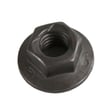
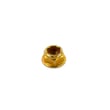
If you’re removing a wheel or handle hardware to access the label area, keep track of fasteners so reassembly is straightforward (for example, the lock nut 532409149 is a common retaining nut used on mower assemblies).
Why it matters
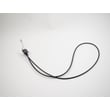
Poulan and Poulan Pro mowers can look nearly identical across years, but small differences in the drive system, wheels, and control cables change which parts fit. Using the exact model number prevents ordering the wrong blade adapter, drive belt, or control cable.
Last updated: January 2026