 Installation guide
 Owner’s manual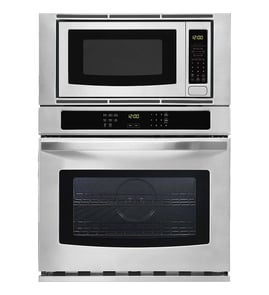



What voltage is a wall oven?
Most Kenmore Elite wall oven installations, including model 79048909001, use a dedicated 240-volt (nominal) electrical supply on an individual, properly grounded branch circuit. In some homes, the same oven can be supplied by 208V or 220V service; performance can vary slightly at lower voltage.
What to check for your installation
Use these quick checks before you plan wiring, breakers, or a new circuit:
- Confirm the supply type at the electrical panel (typically 240V or 208V in some buildings)
- Verify the oven’s electrical rating on the serial plate (wattage and required circuit protection)
- Make sure the oven is on an individual, properly grounded branch circuit
- Shut off power at the breaker before making any line connections
- Follow the grounding and connection instructions in the 79048909001 installation guide
Typical voltage options and what they mean
Most electric wall ovens are designed around a 240V nominal supply, but they often operate on other common residential voltages.
| Supply you have | What you can expect | Common symptom if voltage is lower |
|---|---|---|
| 240V (nominal) | Normal heat-up and cooking performance | None |
| 220V | Slightly longer preheat times | Slower preheat |
| 208V | Noticeably longer preheat and recovery | Longer bake times, slower broil |
Why it matters
Voltage affects heating element output. If your supply is 208V instead of 240V, the oven can still work, but it may take longer to preheat and recover temperature after you open the door. Correct circuit sizing and grounding also help protect the electronic controls and reduce nuisance breaker trips.
When to involve a pro
If you are unsure about your home’s supply voltage, breaker sizing, or grounding, we recommend using a qualified installer or electrician. The installation instructions for this combination unit also note important mounting and safety requirements.
Last updated: January 2026
What is the disadvantage of a wall oven?
A wall oven like the Kenmore Elite 79048909001 costs more than a freestanding range because you pay for the built-in appliance plus cabinet cutout work and electrical hookup. Repairs can also take longer because the unit is installed in a cabinet opening and may need to be pulled out for service.
Common disadvantages to plan for
- Higher total cost: wall oven plus a separate cooktop, plus installation.
- More complex installation: the cabinet base must support heavy weight and the cutout depth must be correct for proper fit.
- Harder access for repairs: built-in units often require partial removal to reach wiring, controls, or fans.
- Safety and handling concerns: installation is a 2-person job; doors may be removed to reduce weight during install.
- Space and layout constraints: you are committed to a specific cutout size and trim fit.
Installation realities (what makes wall ovens “harder”)
For the Kenmore Elite 79048909001 wall oven/microwave combo, the installation guidance highlights a few built-in drawbacks that do not apply to a freestanding range:
| Topic | What you deal with on a wall oven | Why it can be a disadvantage |
|---|---|---|
| Cabinet support | Base must support heavy load | May require carpentry reinforcement |
| Clearance | Clearance needed in front for door depth | Can limit aisle space in tight kitchens |
| Fit and noise | Cutout depth is critical | Incorrect cutout can cause trim gaps or noise |
| Tip prevention | Anti-tip mounting screws required | Adds steps and precision to install |
For exact cutout and clearance requirements for your kitchen, use the 79048909001 installation guide.
Why it matters
Wall ovens look built-in and can be more ergonomic when mounted at a comfortable height, but the tradeoff is commitment to cabinetry, electrical requirements, and service access. Planning the cutout, support, and clearance up front prevents heat issues, trim fit problems, and avoidable reinstall work.
Last updated: January 2026
How much does a 27 inch wall oven weigh?
A typical 27-inch built-in wall oven weighs about 150 to 220 lb. For the Kenmore Elite 79048909001 wall oven/microwave combo, plan for a heavy lift and follow the handling steps in the 79048909001 installation guide so the cabinet base and helpers are sized for safe installation.
What we can use for planning (safe, practical numbers)
Most 27-inch wall ovens and 27-inch combo units fall into these ranges:
- Typical appliance weight: 150 to 220 lb
- Common “two-person lift” expectation: yes (often required)
- Cabinet base capacity to plan for: at least 350 lb (base support requirement in the installation instructions)
- Clearance to plan in front of the unit: at least 21 in for the door depth when open
Quick reference table
| Item | Practical planning value | Why it matters |
|---|---|---|
| 27-inch wall oven weight (typical) | 150 to 220 lb | Helps you plan moving, lifting, and cabinet support |
| Base support capacity | 350 lb | Prevents cabinet sagging and installation issues |
| Front clearance | 21 in minimum | Ensures the door can open fully during use and service |
How to estimate your unit’s weight more accurately
We recommend using these steps to narrow it down before moving the oven:
- Check the model and serial plate location described in the 79048909001 installation guide.
- If you are removing the unit, follow the guide’s steps for removing the oven door to reduce handling weight.
- Measure your cutout and confirm the 27-inch product dimensions so you know you are working with the correct size class.
- Use 2 or more people to move the unit; do not lift by the door handle.
Why it matters
Weight affects safety and installation quality. A wall oven/microwave combo is awkward to handle; planning for a 150 to 220 lb appliance and a 350 lb-rated base helps prevent injuries, cabinet damage, and alignment problems.
Last updated: January 2026
