Owner’s manual
 Error Codes



Where is the model number on a Kenmore upright freezer?
On Kenmore upright freezer model 25329201000, the model and serial number plate is typically on the upper left wall inside the freezer compartment. Check that spot first, then confirm the exact label location in the 25329201000 owner's manual.
Quick places to check (in order)
- Upper left interior wall (most common on upright models)
- Side wall inside the cabinet near the front opening
- Ceiling area inside the freezer (some upright designs)
- Behind the lower kick plate or toe grille (if your unit has one)
- Rear exterior panel area near the cord entry
How to find it fast
- Open the door and look at eye level on the upper left interior wall.
- Use a flashlight and look for a silver or white rating label.
- If shelves block your view, remove the front items and look along the wall edges.
- Write down both numbers; you will usually see Model and Serial.
What you should record (and why it matters)
Having the full model and serial helps us match the correct Kenmore parts, diagrams, and troubleshooting steps for your exact freezer.
| Label item | What it’s used for |
|---|---|
| Model number (25329201000) | Ensures the right parts fit your freezer |
| Serial number | Helps identify production details when ordering certain parts |
| Purchase date (if known) | Useful for maintenance history and service records |
If the label is hard to read
- Take a close-up photo and zoom in
- Wipe gently with a damp cloth; do not use abrasive cleaners
- Copy characters carefully; a single digit changes the parts list
Last updated: February 2026
Is there a reset button on a Kenmore upright freezer?
Kenmore upright freezers like model 25329201000 typically do not have a single dedicated “reset” button. Most issues are cleared by restoring power (unplugging briefly) and then confirming the temperature control and any alarm features are set correctly per the 25329201000 owner's manual.
What to try first (safe reset steps)
- Unplug the freezer (or switch the breaker off) for 2 to 5 minutes.
- Restore power and keep the door closed.
- Allow a full 4 hours for the freezer to cool down completely after power is restored.
- Verify the temperature control is set near the factory setting (commonly #4 on many upright models).
- If the temperature alarm is sounding, press the TEMP ALARM OFF button to silence it.
What “reset” usually means on this model
On the Kenmore 25329201000, “resetting” is usually one of these actions:
| What you’re trying to reset | What to do | What to expect |
|---|---|---|
| Temperature control response | Power cycle, then set control and wait | Temps stabilize over several hours |
| Temperature alarm buzzer | Press TEMP ALARM OFF | Buzzer stops; light may keep blinking if still warm |
| Warm cabinet after restart | Keep door closed and wait | Cabinet can feel warm while compressor runs |
If it still will not cool after a power reset
These checks narrow down whether you have an airflow, door-seal, or sealed-system issue:
- Make sure the door closes and seals fully; a leak causes frost and poor cooling.
- Confirm the freezer is level so the door aligns and seals properly.
- Avoid overloading; freezing too much at once forces long run times.
- Do not line shelves with foil or paper; it blocks cold-air circulation.
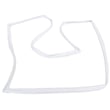
- If the door gasket is torn, hardened, or loose, replace the freezer door gasket 5304507202.
Why it matters
A “no reset button” design is normal for upright freezers; cooling performance depends on stable power, correct temperature control settings, good airflow, and a tight door seal. Resetting power and correcting these basics solves most “not cooling” and alarm complaints.
Last updated: February 2026
How to clean coils on Kenmore upright freezer?
For Kenmore upright freezer model 25329201000, cleaning the condenser coils means safely removing dust and lint so the freezer can release heat efficiently. Unplug the freezer, access the coil area, brush and vacuum the buildup, then restore power and confirm normal cooling.
Before you start (safety and access)
- Unplug the power cord before cleaning.
- Move the freezer out far enough to work comfortably.
- Protect the floor with cardboard or a towel.
- Use a soft coil brush and a vacuum with a crevice tool.
- Avoid bending tubing or scraping with sharp tools.
For model-specific cabinet and panel details, follow the 25329201000 owner's manual.
Step-by-step: how we clean the coils
- Unplug the freezer.
- Locate the condenser coil area (commonly behind a lower base panel or at the back, depending on configuration).
- Brush first: loosen dust and pet hair from the coil fins and surrounding surfaces.
- Vacuum second: capture the loosened debris from the coils, floor area, and any nearby vents.
- Reinstall any panel you removed and return the freezer to position.
- Plug back in and let temperatures stabilize.
Quick tool and technique guide
| Item | Best for | Tip |
|---|---|---|
| Coil brush | Loosening packed lint | Brush with light pressure to protect fins |
| Vacuum + crevice tool | Removing debris | Vacuum after brushing to prevent blowback |
| Flashlight | Seeing coil surfaces | Check corners and under the cabinet |
Why it matters
A dusty condenser makes the compressor work harder to move heat out of the freezer. That can lead to longer run times, warmer cabinet surfaces, and reduced cooling efficiency, especially when room temperatures are high and airflow space is limited.
When to clean and what to watch for
- Clean coils every 6 to 12 months (more often with pets or heavy dust).
- After cleaning, watch for:
- steadier temperatures
- shorter run times
- less heat buildup around the cabinet
If you suspect restricted airflow or heat transfer issues beyond cleaning, inspecting the sealed-system components such as the freezer condenser coil 5300123788 is a next step.
Last updated: February 2026
Why does my upright freezer ice up at the bottom?
Ice at the bottom of your Kenmore upright freezer model 25329201000 usually happens when warm, humid air leaks in (door not sealing or misaligned) or when defrost water cannot drain out correctly. Fixing the door seal and keeping the drain clear stops repeat ice buildup.
Most common causes
- Door gasket not sealing along the bottom edge
- Freezer not level, so the door does not close tightly
- Door hinge loose or shifted, causing misalignment
- Frequent door openings or long “door open” time
- Frost buildup that melts during defrost and refreezes at the bottom
- Drain plug or drain tube blocked (on models equipped with a defrost drain)
What to check and do first
- Check the door seal: Close the door on a sheet of paper and gently pull. If it slides out easily at the bottom, the seal is leaking.
- Level the freezer: Adjust the front leveling feet so the door closes easily when left halfway open (this is a key setup step in the 25329201000 owner's manual).
- Inspect hinges: Tighten the top hinge screws and confirm the door sits square on the lower hinge pin.
- Clear the defrost drain (if equipped): During a manual defrost, remove the internal drain plug and make sure water flows freely to the external drain tube.
Quick symptom-to-fix guide
| What you notice | Likely cause | Best next step |
|---|---|---|
| Ice ridge only at the front bottom | Door not sealing | Inspect gasket, clean sealing surfaces |
| Door looks slightly tilted | Not level or hinge shift | Level unit, tighten hinge screws |
| Water/ice returns soon after defrost | Drain restriction | Clear drain plug/tube during defrost |
| Heavy frost higher up too | Humid air entering | Reduce door-open time, improve seal |
Parts that commonly solve the problem
If the gasket is torn, stiff, or won’t seal after cleaning and warming it into shape, replacement is the lasting fix: freezer door gasket 5304507202.
Why it matters
Bottom ice can hold the door slightly open, which increases frost, forces longer compressor run time, and can lead to temperature swings that affect food quality.
Last updated: February 2026
Why is my upright freezer leaking water on the floor?
Water on the floor around your Kenmore 25329201000 upright freezer almost always comes from defrost water not draining correctly (a frozen or clogged defrost drain) or from warm, moist air leaking past the door seal and creating excess frost that later melts. Use the drain plug and drain tube procedure in the 25329201000 owner's manual to route water into a pan instead of onto the floor.
Most common causes (and what to check first)
- Defrost drain left open or drain plug missing: warm air enters, creates frost, then meltwater overflows.
- Frozen or clogged defrost drain: meltwater backs up and spills out.
- Door not sealing (gasket leak, door misalignment): moisture enters, frost builds up, then melts.
- Freezer not level: the door may not close or seal properly, causing moisture problems.
- Drain pan overflow during manual defrost: pan not checked often enough.
Quick fix steps we recommend
- Unplug the freezer and protect the floor with towels.
- Inspect the internal drain plug on the freezer floor; reseat it fully after defrosting.
- If you recently defrosted, remove the base panel (if equipped) and confirm the external drain tube is positioned over a shallow pan.
- Melt any ice in the drain area using warm water (not boiling) and clear debris with a plastic tool.
- Level the freezer so the door closes easily when left halfway open.
When the door seal is the problem
If you see frost around the door opening or the door feels easy to pull open, the gasket may be leaking.
| Symptom | Likely issue | What to do |
|---|---|---|
| Frost near door, sweating outside cabinet | Door not sealing | Clean gasket and mating surface; check for gaps |
| Door pops open or won’t stay shut | Freezer not level or door misaligned | Relevel; confirm hinges and door alignment |
| Torn, hardened, or warped seal | Worn gasket | Replace the freezer door gasket 5304507202 |
Why it matters
A working defrost drain and a tight door seal prevent water leaks, reduce frost buildup, and help the compressor run normally. A door that does not seal also wastes energy and can cause ongoing moisture problems.
Last updated: February 2026
Why is my Kenmore upright freezer not freezing?
If your Kenmore upright freezer model 25329201000 is running but not freezing, the most common causes are incorrect temperature control settings, poor airflow or a door that is not sealing, heavy frost buildup, or a cooling-system start problem (compressor start device). Start with the checks in the 25329201000 owner's manual.
Quick checks we recommend first
- Confirm the temperature control is not set to OFF and is near the factory setting (typically 4); adjust one number at a time.
- Allow a full 4 hours for cool-down after plugging in or after a power interruption.
- Make sure the door closes and seals fully; a slightly open door can stop proper freezing.
- Reduce door openings and do not overload with warm food (freeze in smaller batches).
- Check for heavy frost (about 1/4 to 1/2 inch); defrost and clean if needed.
- Verify there is enough space around the cabinet for air circulation, especially in hot rooms.
Parts that commonly fix “not freezing” symptoms
If the basic checks do not restore freezing, these parts are frequent culprits on upright freezers:
| Symptom you notice | Likely area | What to do next |
|---|---|---|
| Compressor hums, clicks, then stops | Compressor start circuit | Test/replace the start device such as the ptc starter 5304493950 |
| Frost and moisture around the door | Door seal | Inspect/replace the freezer door gasket 5304507202 |
| Runs a lot but temperature stays warm | Airflow, dirty condenser area, warm room | Improve ventilation, clean, recheck settings |
Why it matters
A freezer that is not sealing, not level, or set incorrectly can run continuously without reaching safe food-storage temperatures. Fixing airflow and door-seal issues first prevents unnecessary part replacement and helps the compressor avoid overheating.
Tips specific to this model’s setup
- Leveling matters: if the freezer is not level, the door can misalign and leak air. Set the front leveling feet so the door closes easily when left halfway open (as described in the 25329201000 owner's manual).
- Do not turn the control colder while loading food; load gradually and keep the door closed as much as possible.
Last updated: February 2026
How many cubic feet is a Kenmore freezer model 25329201000?
The exact cubic-foot capacity for Kenmore upright freezer model 25329201000 is not listed in the documentation excerpt we have for this model; we use the freezer’s rated capacity to set safe loading limits (fresh food per cubic foot) and to compare storage space across upright freezers. For the most accurate capacity, check the model’s specifications in the 25329201000 owner's manual.
How to estimate capacity if you need a quick number
If you need a working estimate before you locate the spec label, we use this common upright-freezer method:
- Measure interior height, width, and depth (in inches)
- Multiply:
H x W x Dto get cubic inches - Divide by 1,728 to convert to cubic feet
- Subtract space taken by shelves, bins, and the evaporator cover (a small reduction is normal)
Quick conversion table
| Interior volume (cubic inches) | Approx. capacity (cu. ft.) |
|---|---|
| 24,192 | 14.0 |
| 27,648 | 16.0 |
| 31,104 | 18.0 |
Why capacity matters for this model
Your owner’s guide gives a freezing guideline based on capacity: when loading unfrozen food, freeze up to 3 pounds per cubic foot at one time and distribute packages evenly. Using the correct cubic-foot rating helps you avoid long run times and temperature swings.
Related tips we use for best performance
- Allow about 4 hours for the freezer to cool down before loading unfrozen food
- Keep door openings short to reduce warm air and frost buildup
- Set the temperature control gradually (one increment at a time)
- If you suspect warm temps from air leaks, inspect the door seal; a worn gasket can reduce usable performance (see freezer door gasket 5304507202)
Last updated: February 2026