


Can I put WD-40 on lawn mower blades?
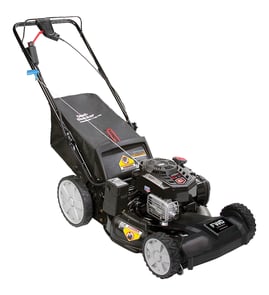
Yes. On a Poulan rotary lawn mower model 96144000201, a light coat of WD-40 on the blade and the underside of the deck can help reduce grass sticking and slow surface rust; apply it only after the mower is off, cooled, and made safe to service.
- Turn the engine off and let it cool completely.
- Disconnect the spark plug wire so the mower cannot start.
- Tip the mower with the air filter and carburetor facing up (to reduce fuel and oil leaks).
- Clean off packed grass first; WD-40 works best on clean metal.
- Spray a light coat on the metal blade and deck underside, then wipe off excess.
| Area | OK to use WD-40? | Notes |
|---|---|---|
| Blade metal surfaces | Yes | Light coat only; wipe excess so it does not attract dirt. |
| Underside of mower deck (bare metal) | Yes | Helps reduce wet grass buildup. |
| Belts, pulleys, traction parts | No | Can cause slipping and poor drive performance. |
| Rubber, plastic, tires, painted areas | Avoid | Overspray can soften some materials and make surfaces messy. |
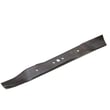
If the blade is bent, cracked, or badly worn, replace it instead of trying to “save” it with lubricant. For this model, the correct replacement is the lawn mower blade 532406712.
- Use a block of wood to keep the blade from turning.
- Remove the blade fastener(s), clean the mounting area, and reinstall correctly.
- Inspect the blade adapter and hardware; replace damaged fasteners as needed.
Grass buildup under the deck reduces airflow and cutting performance, and rust can shorten blade life. Keeping the deck clean and the blade in good condition helps your mower cut evenly and bag or discharge better.
For blade service tips and the right tools, see lawn mower blade removal tool.
Last updated: February 2026
How much does it cost to repair a hydrostatic transmission on a lawn mower?
Hydrostatic transmission repairs are typically a high-cost job because the transmission is a sealed, precision assembly; on many mowers, replacement is more common than internal repair. For a walk-behind mower like the Poulan 96144000201, a “won’t move” problem is often caused by the belt, drive parts, or cables instead of a hydrostatic unit.
Hydrostatic transmission costs vary most by mower type and whether you replace the whole transaxle.
- Hydrostatic riding mower transmission part: often $700 to $1,300
- Professional replacement (parts + labor): often $1,500 to $2,500
- Diagnostic labor: commonly $75 to $150 (varies by shop and region)
| Mower type | Most common “hydrostatic” fix | Typical cost driver |
|---|---|---|
| Riding mower (hydrostatic) | Replace transaxle assembly | High parts cost + labor time |
| Walk-behind mower | Fix belt, drive pawls, wheels, or cables | Wear parts and adjustments |
On the Poulan 96144000201, self-propel issues are often in the motion drive system, not a hydrostatic transmission.
- Worn or stretched drive belt (see lawn mower ground drive belt, 3/8 x 32-1/2-in 532175436)
- Worn drive pawls (see drive pawl 532404845)
- Damaged or binding control cable (see lawn mower engine zone control cable 532184588)
- Wheel or wheel hardware wear (see lawn mower wheel 532180769)
- Debris buildup under the deck or around the drive cover
If the mower “won’t move,” confirming whether you have a true hydrostatic transmission problem versus a belt, wheel, or cable issue prevents overspending. A $30 to $100 drive-system repair is common on walk-behind mowers, while hydrostatic replacements are typically a major investment.
For a step-by-step diagnostic approach, use our lawn mower wont move troubleshooting video motion drive failure.
Last updated: February 2026
Why is my self-propelled lawn mower pulling to one side?
If your Poulan 96144000201 self-propelled mower pulls to one side, the most common causes are uneven wheel traction (tire/wheel wear or debris), a drive system issue on one side (pawl, pinion, belt), or a handle/cable adjustment that is not even. Start with wheel checks, then inspect the drive parts.
- Clean packed grass and mud from the deck edge and around both rear wheels.
- Confirm both rear wheels spin freely with the drive disengaged.
- Compare wheel tread wear side-to-side; a worn wheel can steer the mower.
- Check that the height adjusters are set to the same notch on both sides.
- Look for a bent handle or loose handle hardware that twists the mower’s tracking.
On a self-propelled walk-behind mower, pulling usually happens when one side is driving harder than the other.
Common culprits to inspect:
- Drive pawl and gear wear: A sticking or worn pawl can make one wheel “grab.” Consider the drive pawl 532404845 if the pawl is damaged or not engaging smoothly.
- Pinion gear wear: Uneven wear can cause inconsistent drive on one side; inspect the pinion.14.te 532403849 for rounded teeth or binding.
- Drive belt slip or glazing: A belt that slips can cause surging or uneven pull; check the lawn mower ground drive belt, 3/8 x 32-1/2-in 532175436 for cracking, glazing, or stretching.
| Symptom | Most likely area | What you’ll see |
|---|---|---|
| Pulls only when drive is engaged | Pawl/pinion/belt | One wheel drives stronger or “catches” |
| Pulls even when pushing (drive off) | Wheel/axle/debris | Dragging wheel, packed debris, wobble |
| Pull changes with cutting height | Height adjusters/wheels | One side set higher or wheel worn |
If the drive control or zone control cable is routed wrong or partially binding, it can keep tension on the drive system.
- Inspect cable routing for kinks and rubbing.
- Make sure the control fully returns when released.
- If the cable is frayed, stretched, or sticking, replace it with the correct assembly such as the lawn mower engine zone control cable 532184588 (when it matches your control setup).
A mower that pulls to one side is harder to control and can accelerate wear on wheels, drive gears, and the ground drive belt. Fixing the root cause restores straight tracking and smoother self-propelled operation.
For step-by-step drive troubleshooting, we recommend lawn mower wont move troubleshooting video motion drive failure.
Last updated: February 2026
Can you still buy 2-stroke lawn mowers?
Yes, you can still buy 2-stroke (2-cycle) lawn mowers, but they are uncommon in walk-behind mowers today. For your Poulan rotary lawn mower model 96144000201, confirm the engine type on the engine label before buying fuel or parts because 2-stroke and 4-stroke fueling is different.
Check the engine itself (not the mower deck) before you fuel it:
- Look for an oil fill cap and dipstick; that indicates a 4-stroke engine.
- Look for wording like “2-cycle,” “2-stroke,” “premix,” or a mix ratio (such as 50:1); that indicates a 2-stroke engine.
- Check the fuel cap or engine shroud decal for fueling instructions.
- If there is no separate oil fill, it is typically a 2-stroke premix design.
| Item | 2-stroke mower | 4-stroke mower |
|---|---|---|
| Fueling | Gas mixed with oil (premix) | Straight gas in tank |
| Engine oil | Mixed into fuel | Separate crankcase oil |
| Common issue | Wrong mix ratio | Low or dirty oil |
| Walk-behind availability | Less common | Most common |
Using the wrong fuel type can cause hard starting, poor running, and rapid engine damage. Once fueling is correct, keeping the cutting system in good shape reduces load on the engine and improves cut quality.
If your mower is bogging down or cutting poorly, inspect the blade and drive system:
- Replace a bent or badly worn blade with the correct part for this model, such as the lawn mower blade 532406712.
- If the self-propel drive slips or the mower will not move, inspect the belt; this model’s parts list includes the lawn mower ground drive belt, 3/8 x 32-1/2-in 532175436.
- For safer blade service, use our guide on lawn mower blade removal tool.
Last updated: February 2026