Error Codes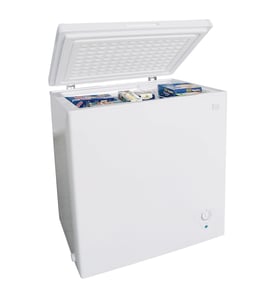



How many cubic feet is a Kenmore freezer model 25316502105?
For Kenmore chest freezer model 25316502105, the exact cubic-foot capacity varies by the specific production version and is typically confirmed on the model and serial tag or the EnergyGuide label. Most Kenmore chest freezers in this model family are commonly in the 5 to 15 cu. ft. range.
Where to find the exact capacity on your freezer
Check these spots first; they usually list capacity directly or provide the data needed to look it up:
- The model and serial tag (often on the cabinet wall near the lid opening)
- The EnergyGuide label (sometimes included with paperwork or attached to the unit)
- The rating plate information near the compressor compartment
- Your purchase receipt or retailer listing (if it references “cu. ft.”)
If you need a replacement label for reference, the energy guide 216793811 is the model-matched part listing we use for this freezer.
Why the pre-researched answer you found does not apply
The capacity you referenced (15.5 to 17.4 cu. ft.) is tied to a different Kenmore model number (an upright freezer, not 25316502105). Chest and upright freezers often share similar brand numbering patterns, so it is easy to mix them up.
Quick capacity check (practical estimate)
If the label is missing, you can estimate capacity from interior measurements (this is an approximation):
- Measure interior length x width x height in inches
- Multiply to get cubic inches
- Divide by 1,728 to convert to cubic feet
| What you have | What it tells you |
|---|---|
| EnergyGuide label | Most reliable capacity reference |
| Model/serial tag | Confirms exact model for correct specs |
| Interior measurements | Approximate capacity only |
Why it matters
Capacity affects food storage planning, energy use expectations, and parts selection (for example, lid and gasket-related parts must match the exact model).
Last updated: January 2026
What are the most common issues with 25316502105?
The most common issues we see with the Kenmore 25316502105 chest freezer are warm temperatures, heavy frost buildup, and lid seal or control problems that cause long run times. Many fixes start with airflow, cleaning the condenser area, and verifying the temperature control operation.
Common symptoms and what they usually point to
- Freezer not cold enough or thawing: dirty condenser coil, poor ventilation, failing compressor components, or a control issue
- Excessive frost or ice: lid not sealing, frequent lid openings, or moisture intrusion
- Runs constantly: warm room location, dirty condenser, lid gasket leak, or thermostat/control not cycling
- Temperature swings: thermostat/control sensing problem or intermittent wiring connection
- Hard-to-open lid or lock issues: lock mechanism binding or damaged key/lock parts
Quick checks we recommend first
- Confirm the control setting: make sure the knob is set to a normal mid-range position and not accidentally turned warmer.
- Check the lid seal: close the lid on a sheet of paper; it should drag when you pull it out. Easy pull-out usually means an air leak.
- Clean heat-rejection parts: vacuum dust from the condenser area and ensure several inches of clearance around the cabinet.
- Look for frost patterns: heavy frost near the lid edge often indicates a sealing issue.
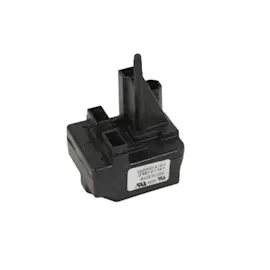
- Listen for compressor behavior: repeated clicking or short cycling often points to a start or control problem.
Parts that commonly relate to these problems
| Symptom | Likely area | Example part on this model |
|---|---|---|
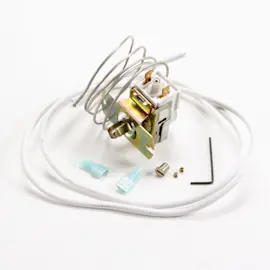
| Warm temps, long run time | Temperature control | Freezer temperature control thermostat 5304496559 |
| Lid not sealing, frost near rim | Lid gasket/liner sealing | Frigidaire freezer gasket and liner fastener kit 5304406520 |
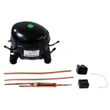
| No cooling at all | Sealed system/compressor | Compressor 5304507767 |
| Intermittent operation | Controls/electronics | White-westinghouse refrigerator electronic control board 216954208 |
Why it matters
A chest freezer like the Kenmore 25316502105 depends on a tight lid seal and good condenser heat transfer. Small air leaks or dust buildup can cause warmer temperatures, higher energy use, and faster frost accumulation.
When an error code is involved
If your freezer displays an error code (on models equipped with an electronic module), use the code to narrow the diagnosis before replacing parts; see Kenmore electronic control module freezer error codes.
Last updated: March 2026
What is the life expectancy of a chest freezer?
A chest freezer like Kenmore model 25316502105 typically lasts 10 to 15 years. Consistent temperatures, good airflow around the cabinet, and basic upkeep (cleaning and sealing) are what most often separate a 10-year freezer from a 15-year freezer.
What affects lifespan the most
- Ventilation and heat: Keep clearance around the freezer so the condenser can shed heat.
- Lid seal condition: A weak seal makes the compressor run longer and wear faster.
- Stable temperature setting: Frequent adjustments and warm-ups add stress.
- Defrost habits: Heavy frost buildup reduces efficiency and can shorten component life.
- Power quality: Surges and repeated outages can damage controls and the compressor.
Quick maintenance checklist (high impact)
- Vacuum dust from the exterior condenser area and vents.
- Keep the freezer about 2/3 full for stable temps (use water jugs if needed).
- Defrost when frost reaches about 1/4 inch.
- Confirm the lid closes squarely and does not rock.
- Use a freezer thermometer and aim for 0°F.
Common “wear-out” parts and what they do
| Part | What you’ll notice when it’s failing | Why it matters |
|---|---|---|
| Freezer temperature control thermostat 5304496559 | Temps swing, runs too warm or too cold | Controls compressor cycling |
| Compressor 5304507767 | Hums, struggles to start, poor cooling | Main cooling component |
| Freezer condenser coil 5300120779 | Runs hot, longer run times | Heat removal for the sealed system |
Why it matters
A freezer that runs longer than it should uses more electricity, builds frost faster, and puts extra wear on the compressor and controls. Simple airflow and sealing checks help protect the most expensive components.
Last updated: January 2026