Owner’s manual
 View engine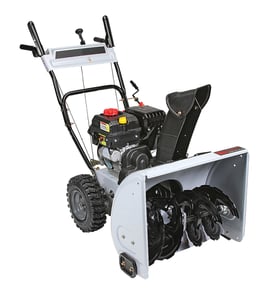



How to find snowblower model number?
Your Craftsman snow thrower model number is printed on the equipment ID label; on many units it’s located on the rear of the snowblower near the axle area between the wheels. Use that exact model number to match parts and diagrams in the 247116830 manual.
Where to look on a snowblower
Check these common label locations first (wipe off snow, salt, and grime so the print is readable):
- Rear of the unit between the wheels (near the axle)
- Back of the frame or housing behind the engine
- Side of the auger housing (near the front bucket)
- Under the handle panel or near the control console
- On the engine shroud (engine model may be separate from the snowblower model)
What to write down (and why)
Record the full model number exactly as shown, plus any serial number. For Craftsman model 247116830, the model number is the key identifier we use to pull the correct parts list for items like the auger, chute, belts, and hardware.
| Label item | What it’s used for | Example |
|---|---|---|
| Model number | Finds the correct parts diagrams and part compatibility | 247116830 |
| Serial number | Helps identify production run changes | Varies |
| Engine model | Helps match engine-specific parts (carburetor, ignition) | Varies |
Why it matters
Snowblowers often have multiple versions that look similar. Using the exact model number prevents ordering the wrong auger kit, chute parts, or fasteners and saves time during repair.
Last updated: January 2026
What is the most common problem with snow blowers?
The most common problem we see on snow blowers like the Craftsman 247116830 is a no-start or hard-start condition, usually caused by stale fuel, a dirty carburetor, or a fouled spark plug. The next most common issues are chute clogs and drive or auger problems from wear or impact.
Quick checks that fix the most “won’t start” complaints
- Drain old fuel and refill with fresh, stabilized gasoline.
- Verify the fuel shutoff (if equipped) is ON and the choke is set correctly for cold starts.
- Inspect the spark plug; clean or replace if it is wet, black, or damaged.
- Check for ice or packed snow around the auger and impeller area.
- Make sure controls fully engage; loose linkages can prevent drive or auger operation.
For model-specific starting steps and control positions, use the 247116830 owner’s manual.
Other common snowblower problems (and what they usually point to)
| Symptom | Most common cause | What to do first |
|---|---|---|
| Starts then dies | Dirty carburetor or water in fuel | Fresh fuel; clean fuel system |
| Snow won’t discharge | Chute or impeller packed | Shut off engine; clear blockage |
| Auger won’t turn | Shear pin damage or belt issue | Inspect auger drive components |
| Poor traction | Drive system out of adjustment | Check drive engagement and friction |
When a part is likely involved
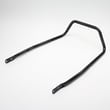
If the chute won’t stay positioned or feels loose, a worn spring or linkage is a frequent culprit. On this model, the mtd snowblower chute adjustment spring 932-04111 is one example of a chute-control part that can affect how the chute holds and responds.
Why it matters
Most “common problems” are maintenance-related. Fixing fuel quality, ignition, and basic adjustments prevents repeat no-start issues, reduces belt and auger wear, and helps your Craftsman snow thrower perform consistently in heavy snow.
Last updated: January 2026
How do you tell how old a snowblower is?
You can tell how old your Craftsman snow thrower by decoding the serial number; the production date is typically embedded near the beginning of that serial. For model 247116830, the fastest path is to locate the ID label, record the serial exactly, then match the date code using the 247116830 manual.
Where to find the serial number
On most Craftsman snowblowers, the model and serial label is on the rear of the frame or near the engine area. Before you decode anything, make sure you copy the serial number exactly as printed.
- Look on the rear frame panel behind the engine
- Check the side of the auger housing near the belt cover area
- Look near the handle support/frame junction
- Wipe off snow, salt, and grime so every character is readable
- Write down both the model number (247116830) and the full serial number
How to decode the age from the serial number
Craftsman snowblowers commonly use a serial format where the early characters represent the build date (often year and week, or year and month depending on the production run). Once you have the serial, compare the first several characters to the date-code chart in the documentation.
| What you have | What it tells you | What to do next |
|---|---|---|
| Model number | Which parts diagrams and specs apply | Confirm it matches 247116830 |
| Serial number | Production date code is embedded early | Decode the first characters |
| Date code | Approximate build date | Use it to estimate age |
Why it matters
Knowing the build date helps us choose the right replacement parts and avoid mismatches when a model has mid-production changes (common with belts, chute hardware, and auger components).
If you are already ordering parts, confirm the model and serial before replacing wear items like the auger components; for example, the snowblower auger kit 753-06469 is a common repair category on this platform.
Last updated: January 2026
Is sae 30 the same as 5W30 for snowblower?
SAE 30 and 5W-30 are not the same oil for a snowblower. For a Craftsman snow thrower model 247116830, 5W-30 flows better in cold starts, while SAE 30 is thicker in cold weather and can make starting and lubrication harder.
What the numbers mean
- SAE 30 is a single-viscosity oil; it behaves like a “30 weight” oil across temperatures.
- 5W-30 is a multi-viscosity oil; it behaves like a 5 weight when cold (easier cranking) and like a 30 weight when hot (protection at operating temperature).
- In winter conditions, 5W-30 is typically the better choice for snowblower use.
What we recommend for model 247116830
Use the oil grade and capacity listed in the 247116830 owner’s manual. If you are choosing between these two oils for typical snow season temperatures, 5W-30 is the practical pick for easier starting and faster oil flow.
Quick comparison
| Oil type | Cold starting | Cold lubrication | Best use case |
|---|---|---|---|
| SAE 30 | Poor | Slower | Warmer temperatures |
| 5W-30 | Good | Faster | Cold weather snow removal |
When SAE 30 can cause problems
- Hard starting or slow cranking
- Engine surging right after startup (oil drag can contribute)
- Increased wear during the first minute of running (oil takes longer to circulate)
Why it matters
Snowblower engines spend a lot of time starting and running in freezing air. Using an oil that flows quickly at low temperatures helps protect internal engine parts and reduces strain on the starter system.
Last updated: January 2026