


How do I find the specs on my Briggs & Stratton engine?
To find specs for your Briggs 123P02-0010-F1 lawn and garden engine, we use the engine identification numbers (Model, Type, and Code) stamped on the engine. Once you match those numbers to your engine, you can confirm the correct parts and service specs for tune-ups and repairs.
On most Briggs lawn and garden engines, the numbers are stamped into the metal (not on a paper label). Common locations include:
- On the blower housing (recoil starter shroud)
- On the valve cover area
- Near the spark plug
- Near the muffler or heat shield
- On the engine shroud above the carburetor
After you locate the stamping, write the numbers down exactly as shown. Then use them to confirm specs such as spark plug type, ignition settings, and fuel system configuration.
- Record Model, Type, and Code (all three matter)
- Clean the stamping area first so characters are readable
- Take a photo before you start ordering parts
- Match the numbers to the parts list for your engine family
- Use the confirmed specs to choose tune-up parts (spark plug, fuel line, carburetor)
These are the most common “specs” customers need when maintaining a small engine:
| Spec you need | What it affects | What you might replace |
|---|---|---|
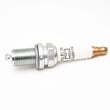
| Spark plug specification | Starting, misfires, power | Engine spark plug 591039 |
| Fuel line size and routing | Fuel delivery, leaks | Engine fuel line, red 791766 |
| Carburetor configuration | Surging, no-start, flooding | Engine carburetor 597269 |
| Ignition system type | No-spark diagnosis | Engine ignition coil 595554 |
Briggs engines often share similar-looking parts across different Types and Codes. Using the exact Model, Type, and Code prevents ordering the wrong ignition coil, carburetor, or fuel system parts for your 123P02-0010-F1.
Last updated: February 2026
How to identify Briggs and Stratton engines by serial number?
You can identify a Briggs engine by finding the engine’s identification stamp and reading the model, type, and code shown there. On Briggs 123P02-0010-F1 lawn and garden engines, that ID is typically stamped into the blower housing, valve cover area, or a metal shroud.
Look for a stamped or printed ID on the engine itself (not the mower deck). Common locations include:
- Blower housing (recoil starter shroud)
- Valve cover area
- Muffler heat shield area
- Side of the metal shroud or engine tin
- Near the spark plug
Briggs engines are usually identified by three fields. Here is how to use them:
- Model: The engine family and basic configuration (this is the main identifier)
- Type: The exact build variation (carburetor, governor, crankshaft details, etc.)
- Code: The production date code (used to match parts revisions)
| Field | What it tells you | Why you use it |
|---|---|---|
| Model | Engine series and specs | To pull the correct parts breakdown |
| Type | Exact configuration | To match the correct carburetor, ignition, linkage, etc. |
| Code | Build date | To confirm the right version when parts changed |
Once you have the ID information, match parts by the full engine identification (model and type first, then code if needed).
- If you are replacing ignition parts, match by model and type, then confirm by code when options exist
- If the engine won’t start after a sudden stop or impact, check the flywheel key first: Briggs & stratton lawn & garden equipment engine flywheel key 222698S
- For tune-up items, confirm the exact plug style for your build: Briggs & stratton lawn & garden equipment engine spark plug 591039
- If the engine runs briefly then dies, inspect fuel delivery and the fuel line condition: Briggs & stratton lawn & garden equipment engine fuel line, red 791766
Briggs engines often share similar-looking housings across multiple model and type variants. Using the correct model, type, and code prevents ordering a carburetor, ignition coil, or gasket set that fits a different configuration.
Last updated: February 2026
How to tell what HP a Briggs and Stratton engine is?
To tell the horsepower (HP) of your Briggs 123P02-0010-F1 lawn and garden engine, we check the engine’s model/type/code label and then match that information to the engine’s published power rating; many engines do not show a simple “HP” number on the shroud.
Most Briggs and Stratton small engines identify power by the model, type, and code stamped or printed on the blower housing, valve cover area, or near the starter.
- Find the model number (for this page, it’s 123P02-0010-F1)
- Record the type and code numbers if they’re present
- Look for any decal that lists gross torque or HP (not all engines include it)
- If the label is dirty, wipe it clean so the stamped characters are readable
Briggs commonly publishes power as gross torque (lb-ft) or as an engine family rating rather than a single “HP” marking. Use the model/type/code to identify the correct rating for your exact build.
| What you find on the engine | What it means | What to do next |
|---|---|---|
| “HP” printed on a decal | Direct horsepower claim | Use that number as the engine’s advertised HP |
| “Gross torque” value | Torque-based rating | Use torque to compare engines; HP varies by RPM |
| Only model/type/code | Identification only | Match model/type/code to the published rating |
Using the correct HP or torque rating helps us choose compatible parts and tune-up items for your exact engine build, especially when you are troubleshooting hard starting, misfiring, or fuel delivery issues.
If you are checking HP because the engine feels weak, these parts are common starting points for diagnosis and maintenance:
- Fuel delivery: Briggs & stratton lawn & garden equipment engine fuel line, red 791766
- Ignition: Briggs & stratton lawn & garden equipment engine spark plug 591039
- Spark delivery: Briggs & statton lawn & garden equipment engine spark plug boot 692076
- Timing after a sudden stop: Briggs & stratton lawn & garden equipment engine flywheel key 222698S
Last updated: February 2026
What are common B&S engine problems?
Common Briggs lawn and garden engine problems on model 123P02-0010-F1 come from fuel delivery, ignition, and airflow issues; these typically show up as hard starting, surging, stalling, or loss of power. We start diagnosis with the simple service parts that fail most often.
- Won’t start or starts then dies: stale fuel, restricted fuel line, dirty carburetor, weak spark
- Runs rough or surges: partially clogged carburetor, air leak, choke not returning
- No power under load: dirty air intake, fouled spark plug, internal wear
- Backfires or kicks back on pull start: sheared flywheel key, ignition timing shifted
- Fuel smell or leaking: cracked fuel line, loose or damaged fuel cap
- Drain old fuel and refill with fresh fuel.
- Inspect the fuel hose for cracks, soft spots, or kinks; replace if questionable.
- Pull and inspect the spark plug; replace if fouled, fuel-soaked, or worn.
- Confirm the choke linkage moves freely and returns fully.
- Check for debris packed around cooling fins and the blower housing.
| Problem you see | Part that often resolves it | What it does |
|---|---|---|
| Fuel starvation, cracking hose | Briggs & stratton lawn & garden equipment engine fuel line, red 791766 | Restores consistent fuel flow |
| No-start after sudden stop, kickback | Briggs & stratton lawn & garden equipment engine flywheel key 222698S | Maintains correct flywheel timing |
| Misfire, hard starting | Briggs & stratton lawn & garden equipment engine spark plug 591039 | Restores strong ignition spark |
| Choke won’t open/close correctly | Briggs & statton lawn & garden equipment engine choke return spring 590740 | Returns choke to proper position |
| No spark | Briggs & statton lawn & garden equipment engine ignition coil 595554 | Generates spark for ignition |
Fuel and ignition problems can mimic bigger failures. Fixing a restricted fuel path or weak spark early helps prevent repeated no-starts, plug fouling, and hard pull-starting that can damage the recoil starter over time.
Last updated: February 2026