Installation guide
 Owner’s manual
 Error Codes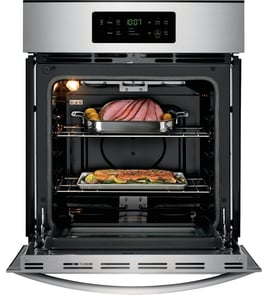


How long do GE wall ovens last?
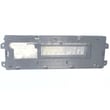
GE wall ovens typically last about 12 years with normal household use. With consistent cleaning, correct installation, and prompt repair of wear items, many units reach 15 years of service; use the PT916BM1BB owner's manual to follow GE care and cleaning guidance.
Typical lifespan for a GE wall oven
Most wall ovens fall into a predictable range based on heat exposure and how often the self-clean cycle is used.
- Average service life: ~12 years
- Common extended life with good care: 15 years
- Biggest life reducers: overheating, poor airflow around the cabinet, heavy self-clean use, and delayed repairs
| Usage pattern | What we typically see | Practical expectation |
|---|---|---|
| Light (few times/week) | Less thermal stress | Closer to 15 years |
| Moderate (daily cooking) | Normal wear | Around 12 years |
| Heavy (high heat, frequent self-clean) | Faster wear on electronics and sensors | Under 12 years |
What helps your PT916BM1BB last longer
Good maintenance is mostly about keeping temperatures stable and preventing heat damage to controls.
- Keep the control panel clean using mild soap and water (avoid abrasive cleaners).
- Clean oven racks and keep them sliding smoothly (a light coat of vegetable oil on rack edges after cleaning helps).
- Avoid storing accessories like a temperature probe in the oven cavity.
- Make sure the oven is installed with proper clearances and is hard-wired as specified in the PT916BM1BB installation guide.
- Address heating problems early; a drifting sensor can cause overheating and extra stress on components.
Parts that commonly affect longevity
These parts do not set the oven’s “life,” but replacing them at the right time prevents bigger failures.
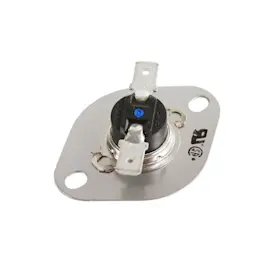
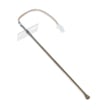
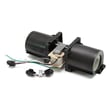
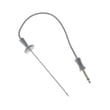
- Wall oven temperature sensor WB23T10015 (helps regulate accurate oven temperature)
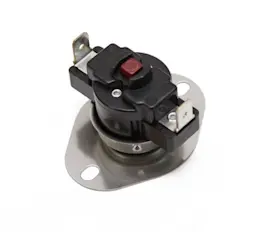
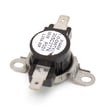
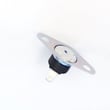
- Wall oven safety thermostat WB24T10060 (helps protect against overheating)
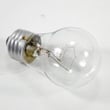
- Oven lamp 40A15 (simple wear item; replace if it fails)
Why it matters
A wall oven that runs too hot, heats unevenly, or struggles to preheat puts extra strain on the control board, wiring, and safety devices. Keeping temperatures accurate and airflow correct is the most reliable way to extend service life.
Last updated: January 2026
How to reset a GE wall oven?
To reset your GE PT916BM1BB electric wall oven, reset power to the oven at your home’s breaker (or fuse) panel. Leave power off for about 1 minute, then restore power; this reboots the electronic control and clears many temporary glitches.
Quick reset steps (power cycle)
- Turn the oven OFF at the control panel.
- Switch the oven’s circuit breaker OFF (or remove the fuse).
- Wait 1 minute.
- Switch the breaker ON (or reinstall the fuse).
- Set the clock if it’s flashing after the outage.
If the display is flashing or you see an error code
The PT916BM1BB control can show a function error code (often shown as a “T-” plus a number/letter). When that happens:
- Press Clear/Off.
- Let the oven cool for 1 hour.
- Put the oven back into operation.
- If the code returns, disconnect power at the breaker and have the oven serviced.
For the exact button names and display behavior, use the PT916BM1BB owner’s manual.
What a reset does (and does not) fix
| Situation | Reset usually helps? | What to check next |
|---|---|---|
| Control is frozen or unresponsive | Yes | Power cycle, then set clock |
| Clock flashing after outage | Yes | Reprogram timed settings |
| Oven will not heat at all | Sometimes | Breaker, settings, service diagnostics |
| Repeating function error code | No | Cooling period, then service |
Why it matters
A breaker reset clears minor control glitches and restores normal operation after a power outage. It also helps you confirm whether the issue is a temporary control problem or a condition that needs troubleshooting (like a tripped breaker, incorrect settings, or a failing component).
Last updated: January 2026
What size breaker and wire for 20 amp wall oven?
For the GE PT916BM1BB electric wall oven, use a dedicated 20-amp branch circuit when the oven’s rating plate shows it falls under 4.8 kW at 240V (or under 4.1 kW at 208V). Match the conductor size to the breaker and local electrical code; 12 AWG copper is the standard for 20 amps.
Confirm the breaker size from the rating plate
GE’s installation requirements size the breaker by the oven’s kW rating and supply voltage. Use the rating plate on the oven frame, then follow the chart in the PT916BM1BB installation guide.
Dedicated circuit protection (from the installation chart)
| Oven rating (kW) | Supply | Minimum dedicated circuit protection |
|---|---|---|
| < 4.8 kW | 240V | 20 amp |
| < 4.1 kW | 208V | 20 amp |
| 4.9 to 7.2 kW | 240V | 30 amp |
| 7.3 to 9.6 kW | 240V | 40 amp |
| 9.7 to 12.0 kW | 240V | 50 amp |
Wire size and connection basics
For a 20-amp circuit, 12 AWG copper conductors are used in residential installations. The oven must be hard-wired to an approved junction box, not plugged in.
Use these checkpoints:
- Use a dedicated circuit (no other loads on the breaker).
- Confirm whether your home supply is 240V or 208V.
- Hard-wire (direct-wire) into an approved junction box.
- Install a strain relief clamp where the conduit enters the junction box.
- Ensure the oven is properly grounded.
Why it matters
Correct breaker and wire sizing prevents nuisance tripping and protects wiring and connections from overheating. The rating plate plus the installation chart ensures the electrical hookup matches the oven’s actual load.
Last updated: January 2026