Installation guide
 Owner’s manual
 Error Codes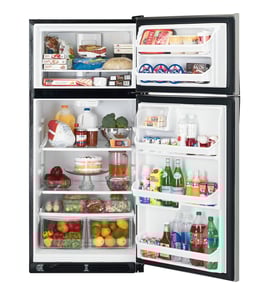



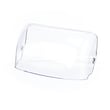
What is the top part of a fridge called?
On a Kenmore top-mount refrigerator like model 25378892016, the top compartment is the freezer. It’s designed to keep foods frozen, support proper cold-air circulation, and (on some setups) supply ice through an ice maker.
What the freezer does (and what it includes)
The freezer is the coldest compartment and is built for long-term frozen storage.
- Freezes and stores food at a stable low temperature
- Helps drive overall cooling by circulating cold air
- Often includes door shelves and interior shelves/bins
- May support an optional or installed ice maker
- Works best when air vents are not blocked by packages
Freezer vs. refrigerator compartment
| Compartment | Typical use | Best practice |
|---|---|---|
| Freezer (top) | Frozen foods, ice | Leave space between packages for airflow |
| Refrigerator (bottom) | Fresh foods, drinks | Avoid blocking upper rear air vents |
Tips for better freezer performance
These habits help a top-mount freezer cool evenly and protect frozen food quality.
- Avoid loading a lot of warm food at once; it slows freezing
- Leave gaps between items so cold air can circulate
- Keep hard-to-freeze items (like ice cream) in the interior, not the door
- Level the refrigerator so doors close tightly
- Follow the temperature control guidance in the 25378892016 owner’s manual
Why it matters
Knowing the top section is the freezer helps when troubleshooting cooling complaints (freezer cold but fridge warm, frost buildup, or poor airflow). It also helps you store food correctly so the refrigerator runs efficiently.
Last updated: January 2026
Is there a way to reset a Kenmore Elite refrigerator?
Yes. For a Kenmore refrigerator like model 25378892016, the most reliable “reset” is a power reset: unplug the refrigerator (or switch off the breaker) for about 5 minutes, then restore power and allow the control to reboot and resume normal cooling.
Recommended reset steps (safe and effective)
- Unplug the refrigerator or turn the circuit breaker off.
- Wait 5 minutes (this lets the control board fully power down).
- Restore power.
- Set temperatures back to your normal settings.
- Give cooling time to stabilize (typically 12 to 24 hours for full recovery after a reset).
For model-specific operating details and control settings, follow the 25378892016 owner's manual.
What a reset can and cannot fix
A reset helps when the control is “stuck” after a power flicker, the unit is acting erratically, or you want to restart normal operation. It will not fix a failed component.
| Symptom after reset | Most common cause | What we recommend next |
|---|---|---|
| Lights work but not cooling | Airflow issue, dirty condenser area, or a failed start device | Check vents and listen for the compressor; service if it will not start |
| Clicking near compressor | Start relay/capacitor issue | Consider testing/replacing the electrolux refrigerator compressor start relay 241941005 |
| Warm freezer and fridge, fan noise changes | Evaporator fan issue or frost buildup | Inspect for frost on the back wall; check the evaporator fan |
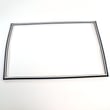
| Door not sealing, temps drift | Cabinet not level or gasket not sealing | Level the cabinet and inspect the door seal |
Quick checks we do right after a reset
- Confirm the refrigerator is level so doors close and seal properly; the manual guidance is to slope the cabinet 1/4 inch to 1/2 inch front-to-back so doors close freely.
- Make sure the toe grille is not blocked (airflow matters for proper operation).
- Verify the room temperature is in a normal range; many top-mount refrigerators perform best around 70°F to 80°F.
Why it matters
A reset is a fast way to clear minor control glitches, but temperature problems usually come back if the root cause is airflow, leveling, a door seal leak, or a failing compressor start system.
Last updated: January 2026
What water filter fits my Kenmore fridge?
For Kenmore refrigerator model 25378892016, the correct water filter depends on how your unit is set up (internal cartridge vs. an inline filter on the water supply line). We recommend matching the filter by your exact model number and the filter location shown in the 25378892016 owner's manual.
How to identify the right filter style
Start by checking whether your refrigerator has a built-in filter housing or if filtration is handled on the supply line.
- Look inside the fresh food compartment for a filter head or twist-in cartridge location
- Check the grille area or upper corners for a filter cover or cap
- If you do not see an internal filter, look behind the refrigerator for an inline filter on the 1/4-inch water line
- Confirm your water supply meets typical refrigerator requirements (30 to 100 psi)
- If you recently installed an ice maker, confirm whether the kit added an inline filter
Quick fit checklist (what to match)
Use this checklist to avoid ordering the wrong refrigerator water filter.
| What to match | Where to find it | What it tells you |
|---|---|---|
| Model number: 25378892016 | Rating label inside the refrigerator | Ensures parts and filters cross correctly |
| Filter location | Inside cabinet or on rear water line | Cartridge vs. inline filter type |
| Connection type | Filter head or tubing fittings | Twist-in, push-in, or compression fittings |
| Water line size | Behind refrigerator | Most setups use 1/4-inch OD tubing |
If your refrigerator uses an inline filter
Many installations use copper tubing and a shut-off valve; inline filters are added to the water supply line when needed. When you install or replace an inline filter, we follow the same best practices used for water line connections.
- Turn off the household shut-off valve
- Flush the supply line until water runs clear before reconnecting
- Avoid self-piercing shut-off valves
- Use the correct compression nut and ferrule (sleeve) for the connection
For step-by-step water line guidance, use the 25378892016 installation guide.
Why it matters
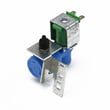
The wrong filter can restrict water flow to the ice maker, cause slow filling, or create leaks at the fittings. Matching by model number and filter location helps protect the water inlet valve and keeps ice production consistent.
Last updated: January 2026