Installation guide
 Owner’s manual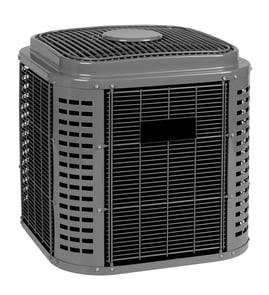



How many amps does a 48000 BTU air conditioner use?
A 48,000 BTU (about 4-ton) central air conditioner like the Carrier 38TRA048 typically runs on a 240V, double-pole circuit and commonly falls in the 30 to 50 amp range, depending on the unit’s rated load. Use the unit rating plate and the wiring guidance in the installation guide to size the breaker and wire correctly.
Use these model-specific items in this order:
- Unit rating plate: look for MCA (minimum circuit amps) and MOCP (max overcurrent protection)
- Disconnect and wiring requirements: follow NEC and local codes (the install instructions call this out)
- Existing circuit condition: verify wire gauge, breaker type, and tight/clean connections
- Indoor unit requirements: the outdoor condensing unit and indoor air handler/furnace must be powered correctly as a system
These are common ranges for 48,000 BTU condensing units; your 38TRA048 rating plate is the final authority.
| Item | Typical for 48,000 BTU | What it affects |
|---|---|---|
| Running current | ~18 to 30 amps | Normal operation draw |
| Breaker size | 30A to 50A (2-pole) | Circuit protection (must not exceed MOCP) |
| Supply voltage | 208/230V | Must match nameplate |
Amp draw is driven by the exact compressor and fan motor combination, plus installation conditions.
- Compressor model and efficiency
- Outdoor ambient temperature and head pressure
- Line voltage (low voltage increases current)
- Dirty condenser coil or restricted airflow
- Weak start components (hard starting, nuisance trips)
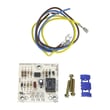
If your unit struggles to start or trips the breaker, a failing condenser fan motor or start components can be involved. For this model, a common repair part is the central air conditioner compressor hard start kit KSAHS1501AAA.
Correct breaker and wire sizing prevents nuisance trips, overheating at connections, and compressor damage. It also keeps the disconnect and contactor wiring consistent with code and the installation instructions.
Last updated: February 2026
What tonnage is 38TRA048?
The Carrier 38TRA048 condensing unit is a 4-ton central air conditioner. In Carrier model sizing, “048” indicates a nominal capacity of 48,000 BTU/hr, and 48,000 BTU/hr divided by 12,000 BTU/hr per ton equals 4 tons.
- 1 ton of cooling = 12,000 BTU/hr
- “048” = 48,000 BTU/hr nominal capacity
- 48,000 ÷ 12,000 = 4 tons
- This is the outdoor unit’s nominal rating; actual delivered cooling depends on the matched indoor coil, airflow, and refrigerant charge
| Model size code | Nominal BTU/hr | Nominal tons |
|---|---|---|
| 030 | 30,000 | 2.5 |
| 036 | 36,000 | 3.0 |
| 042 | 42,000 | 3.5 |
| 048 | 48,000 | 4.0 |
| 060 | 60,000 | 5.0 |
Correct tonnage helps us match the right evaporator coil, refrigerant line sizes, and service parts so your Carrier system cools efficiently and avoids issues like poor dehumidification, short cycling, or compressor strain.
For the 042 and 048 sizes, the installation instructions list these typical refrigerant connection and tubing sizes:
- Liquid line: 3/8-in. O.D. (maximum liquid-line size noted as 3/8-in. O.D. for residential applications)
- Vapor line: 7/8-in. O.D.
- Keep the lineset run as direct as possible and isolate tubing from building framing to reduce vibration and noise
For the exact requirements for your specific setup (including long-line guidance), use the installation guide.
If you are replacing a compressor or reusing an existing lineset, it is common to address protection components at the same time:
- A liquid line filter drier is typically installed when reusing an existing lineset or after a compressor burnout
- If you are troubleshooting hard starting, a compressor start assist can be relevant; see the central air conditioner compressor hard start kit KSAHS1501AAA
Last updated: February 2026
What AC parts are most commonly replaced?
For the Carrier 38TRA048 condensing unit, the most commonly replaced AC parts are the ones that handle starting, airflow, and refrigerant protection: the condenser fan motor, compressor-related components, and refrigerant-line parts like the filter drier and accumulator. Regular filter and coil maintenance helps prevent many of these failures (see the owner's manual).
These are the parts we see replaced most often on central air conditioners like the 38TRA048:
- Condenser fan motor: moves air through the outdoor coil; a failed motor can cause overheating and shutdown.
- Compressor components: the compressor is the heart of the system; hard-start components are often added or replaced when starting becomes difficult.
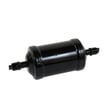
- Filter drier: protects the system by trapping moisture and debris in the refrigerant circuit.
- Accumulator: helps prevent liquid refrigerant from returning to the compressor.
- Vibration isolators and grommets: reduce noise and stress on tubing and mounts.
Here are examples of commonly replaced items available for the Carrier 38TRA048:
| Symptom you notice | Part that often fixes it | Example on this model |
|---|---|---|
| Outdoor unit runs but airflow is weak or noisy | Condenser fan motor | Central air conditioner condenser fan motor HC37GE210 |
| Hard starting, clicking, or intermittent starts | Hard start kit (when applicable) | Central air conditioner compressor hard start kit KSAHS1501AAA |
| System opened for a refrigerant repair | Filter drier (typically replaced during sealed-system work) | Filter drier (part number P502-8163S) |
| Compressor protection after a refrigerant issue | Accumulator | Accumator KH71KN161 |
The manual guidance is clear: restricted airflow and dirty coils drive up strain and heat, which shortens component life.
- Check and replace or clean indoor air filter(s) every 3 to 4 weeks
- Keep the filter completely dry before reinstalling (for reusable filters)
- Schedule a system inspection yearly (or at least every other year)
- Have the technician check wiring connections and clean indoor and outdoor coils
- Keep the outdoor unit clear of debris so the fan and coil can breathe
Most expensive AC repairs start with overheating or contamination. A dirty indoor filter can overwork the compressor and blower motor, leading to shutdowns and eventual replacement. Preventive maintenance costs less than replacing major sealed-system parts.
Last updated: February 2026
How much do AC spare parts usually cost?
For a Carrier 38TRA048 condensing unit, AC spare parts range from a few dollars for small hardware to hundreds (or more) for major refrigeration and motor components. On this model, common replacement parts on the outdoor unit run from about $3 to $1,000+, depending on what failed.
These ranges reflect common central air conditioner parts and what we see on this Carrier model page.
- Small vibration and mounting items (grommets, caps): $3 to $35
- Refrigerant-line protection parts (filter drier): $75 to $150
- Electrical add-ons (hard start kit): $150 to $300
- Motors (condenser fan motor): $300 to $700
- Major refrigeration parts (accumulator, base pan, compressor): $300 to $1,500+
Here are a few parts listed for this model and the typical role they play.
| Part type | Example part on this model | What it affects | Typical urgency |
|---|---|---|---|
| Vibration isolator | Grommet KA56GR140 | Noise, vibration, wear | Medium |
| Compressor support | Central air conditioner compressor grommet KA75UG100 | Compressor mounting and vibration | Medium |
| Start assist | Central air conditioner compressor hard start kit KSAHS1501AAA | Hard starting, high amp draw | High |
| Air movement | Central air conditioner condenser fan motor HC37GE210 | Cooling capacity, head pressure | High |
| Refrigerant protection | Filter drier (often replaced during sealed-system work) | Moisture/contaminant control | High |
The part price is only one piece of the total. Central air conditioner repairs often include diagnostic time, electrical testing, and sometimes sealed-system work (refrigerant recovery, evacuation, and recharge). Those labor steps can outweigh the part cost, especially for compressor or refrigerant-line repairs.
- Match the model number 38TRA048 and the part listing before ordering.
- Use the wiring and charging information in the owner's manual to confirm what you are troubleshooting.
- If the system has restricted airflow or a dirty coil, correct that first; it can mimic part failure.
- For refrigerant-line work, follow the tubing and filter drier guidance in the installation guide.
Last updated: February 2026
How much does a 1.5 ton carrier air conditioner cost?
A 1.5-ton Carrier central air conditioner (about 18,000 BTU) typically costs $2,500 to $6,000 installed for equipment plus professional installation. The Carrier 38TRA048 is a different size class, so use this range only for true 1.5-ton systems and confirm sizing in the installation guide.
- Efficiency level (SEER/SEER2): higher efficiency costs more up front.
- Installation scope: new line set, pad, electrical disconnect, or duct repairs add labor.
- Indoor match-up: outdoor unit must be paired with the correct indoor coil/air handler.
- Permits and code updates: varies by location.
- Refrigerant and startup work: evacuation, charging, and commissioning time affect labor.
| Cost item | Typical range | What it includes |
|---|---|---|
| Outdoor unit (1.5 ton) | $1,200 to $3,000 | Condensing unit only |
| Indoor coil/air handler (if needed) | $800 to $2,500 | Coil, air handler, or furnace coil |
| Labor and materials | $1,000 to $3,000 | Line set work, electrical, startup |
| Optional upgrades | $200 to $1,500 | Thermostat, surge protection, pad |
“Ton” is capacity; pricing and compatibility depend on matching the outdoor unit to the indoor equipment and your home’s ductwork. For Carrier 38TRA048 systems, follow the airflow and clearance guidance in the 38TRA048 owner’s manual to protect efficiency and reduce avoidable service costs.
If your goal is to compare a repair estimate to replacement cost, common outdoor-unit repairs often involve parts like a fan motor or a hard start kit. Examples for this model include:
- Central air conditioner condenser fan motor HC37GE210
- Central air conditioner compressor hard start kit KSAHS1501AAA
Last updated: February 2026