Installation guide
 Owner’s manual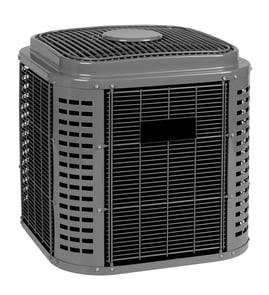



What size AC is needed for a 1200 sq ft house?
For a typical 1,200 sq ft home, we size central AC at about 24,000 BTU (2 tons) as a starting point; many homes land in the 1.5 to 2.5 ton range depending on insulation, windows, and climate. Use the sizing guidance in the owner's manual as a baseline, then confirm with a load calculation.
Most homes fall into these ranges when ceilings are around 8 ft and insulation is average:
- Mild climates / good insulation: ~18,000 to 24,000 BTU (1.5 to 2 tons)
- Hot climates / average insulation: ~24,000 to 30,000 BTU (2 to 2.5 tons)
- Lots of sun exposure or large windows: plan toward the higher end
- High occupancy or lots of cooking/heat sources: plan toward the higher end
- Duct issues (leaks, undersized returns): fix ducts first; oversizing the AC is not the right solution
A square-foot rule gets you close, but these factors decide the final tonnage:
- Climate zone and humidity (humidity control often favors correct, not oversized, capacity)
- Insulation and air sealing (attic insulation and infiltration matter a lot)
- Window area, orientation, and shading
- Ceiling height (taller ceilings increase load)
- Duct condition (leaks and poor airflow reduce delivered cooling)
Correct sizing improves comfort and protects major components.
| If the AC is… | What you’ll notice | What it can lead to |
|---|---|---|
| Too small | Runs constantly, struggles on hot days | Higher wear, poor comfort |
| Too large | Short cycles, uneven temps | Poor humidity removal, higher energy use |
For your Icp H4A336GKD200 system, keep airflow and maintenance in mind during sizing and operation. The manual emphasizes checking thermostat settings, keeping the return air filter clean, and keeping the outdoor coil and fan area clear of debris for proper performance. If cooling is weak, address those basics before assuming the system is “too small.”
A properly sized central air conditioner runs longer, steadier cycles; that improves temperature balance, dehumidification, and efficiency while reducing stress on the compressor.
Last updated: February 2026
How much should a central air conditioner cost?
A central air conditioner’s total cost is usually the installed price (equipment plus labor). For an Icp split-system like model H4A336GKD200, most homeowners land in the mid-thousands to low five-figures depending on size (tons), efficiency (SEER2), ductwork condition, and electrical or refrigerant-line work.
Central AC pricing varies because the outdoor condenser is only part of the system. These are common U.S. ranges for a like-for-like replacement.
- Outdoor condenser + indoor coil (equipment): about $2,500 to $7,500
- Installed total (equipment + labor): about $5,000 to $12,000
- Higher-complexity installs: $12,000+ (duct repairs, major electrical upgrades, difficult access)
- System size (tonnage): larger capacity costs more
- Efficiency rating (SEER2): higher efficiency typically costs more up front
- Ductwork and airflow: repairs, sealing, or resizing can add significant labor
- Electrical and controls: disconnect, wiring, and low-voltage controls
- Refrigerant line set work: flushing, replacement, or leak repair
- Permits and commissioning: required in many areas
| Cost item | Lower cost when | Higher cost when |
|---|---|---|
| Equipment | standard efficiency, common size | high efficiency, larger size |
| Labor | easy access, existing lines fit | tight access, line set changes |
| Ductwork | ducts are sound and sized well | ducts need repair or redesign |
| Electrical | existing service is adequate | panel, breaker, or wiring upgrades |
An undersized or oversized system, or one installed with poor airflow, can short-cycle, cool unevenly, and run up energy bills. Our owner's manual maintenance guidance also highlights basics like keeping filters clean and outdoor coils clear, which protects efficiency and helps prevent compressor damage.
If your system is not cooling, start with the homeowner checks in the manual (thermostat settings, filter, breakers, outdoor coil debris). If the outdoor unit is running but not starting reliably, common service parts include the central air conditioner contactor 1172472 and the central air conditioner condenser electronic control board 1088977.
Last updated: February 2026
What are the main parts of a central air conditioner?
For the Icp H4A336GKD200 split-system central air conditioner, the “main parts” are the indoor air-moving and heat-absorbing components (evaporator coil and blower) plus the outdoor heat-rejecting unit (compressor, condenser coil, condenser fan, and electrical controls), all managed by a wall thermostat.
- Thermostat (low-voltage control): Tells the system when to cool and when to stop.
- Indoor evaporator coil: Absorbs heat from indoor air; also creates condensate (water) that must drain away.
- Indoor blower/furnace or air handler: Moves air across the evaporator coil and through ductwork.
- Outdoor compressor: Pumps refrigerant through the system so heat can be moved outside.
- Outdoor condenser coil: Releases heat outdoors.
- Outdoor condenser fan and motor: Pulls air through the condenser coil to remove heat.
- Electrical components (outdoor): Start/stop and protect the system (contactor, control board, wiring/grounding).
These are common service parts for the H4A336GKD200 outdoor condenser:
| Part | What it affects | Common symptom when failing |
|---|---|---|
| Central air conditioner contactor 1172472 | Sends power to the compressor/fan when cooling is called | Outdoor unit will not start, clicking/buzzing |
| Central air conditioner condenser fan motor 1177911 | Spins the outdoor fan blade | Unit runs hot, poor cooling, fan not spinning |
| Central air conditioner condenser electronic control board 1088977 | Manages condenser electrical functions (model-dependent) | Intermittent operation, no response to call |
| Lug ground 1172300 | Provides a safe ground connection | Loose/burnt wiring, safety concerns |
Before digging into refrigerant or major repairs, we recommend these basics:
- Confirm the thermostat is set to COOL and below room temperature.
- Check the return air filter; a dirty filter is a leading cause of weak cooling and compressor stress.
- Check breakers/fuses for the indoor and outdoor units.
- Inspect the outdoor unit for blocked coils/fins and debris around the fan.
- Turn off power before removing panels; follow the safety guidance in the owner's manual.
Knowing which parts are “indoor” vs. “outdoor” helps you troubleshoot faster. For example, a dirty filter or indoor airflow issue can mimic a bad compressor, while a failed contactor can stop the outdoor unit even when the thermostat is calling for cooling.
Last updated: February 2026
What is the most expensive part to replace on an AC unit?
On an Icp central air conditioner like model H4A336GKD200, the most expensive repair is typically the sealed-system work centered on the compressor (parts plus refrigerant-handling labor). On this model’s parts list, the priciest replaceable items you commonly see are major electrical components like the control board and fan motor.
The biggest bills come from repairs that require refrigerant recovery and recharging, or major outdoor-unit component replacement.
Common high-cost categories include:
- Compressor and other sealed-system repairs (labor-intensive, refrigerant work)
- Condenser fan motor replacement
- Condenser electronic control board replacement
- Diagnosing and correcting airflow or coil restrictions that overheat the system
These are model-listed parts that can have a higher parts cost and a bigger impact on operation:
- Central air conditioner condenser electronic control board 1088977
- Central air conditioner condenser fan motor 1177911
- Central air conditioner contactor 1172472
| Repair/part area | What it affects | Typical cost impact |
|---|---|---|
| Sealed system (compressor, refrigerant work) | Cooling cycle | Highest |
| Fan motor | Heat rejection at outdoor coil | Medium to high |
| Electronic control board | Unit control and staging | Medium |
| Contactor | Power switching to outdoor unit | Low to medium |
Your H4A336GKD200 manual highlights that dirty air filters are a common cause of inadequate cooling and compressor failures. Keeping airflow and coils clean reduces stress on the compressor and electrical parts.
Maintenance steps we recommend:
- Inspect the return air filter monthly; replace or clean as needed
- Keep the outdoor coil clear of leaves, grass clippings, lint, and debris
- Verify thermostat is set to COOL and below room temperature
- Check breakers and fuses before assuming a major failure
- Turn off power to indoor and outdoor units before removing panels
For the full maintenance checklist and safety warnings, use the owner's manual.
Last updated: February 2026