 Owner’s manual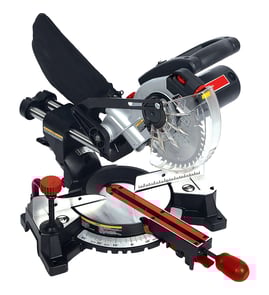

Can a 10 inch miter saw cut a 2x4?
Yes. A 10-inch compound miter saw like the Craftsman 315212040 cuts a standard 2x4 easily; the included 10-inch blade is designed to cut material up to about 2 inches thick, and up to about 6 inches wide depending on the cut angle (miter and bevel). See the owner's manual for operating and safety details.
What affects whether the cut will fit
A 2x4 is about 1-1/2 inches thick by 3-1/2 inches wide, so it’s within the normal cutting capacity of this 10-inch saw. Your real limit depends on setup and the type of cut.
- Cut angle: as you increase miter or bevel angle, max width typically decreases.
- Board orientation: flat on the table vs. standing against the fence changes what “fits.”
- Fence and table alignment: a fence that is not square can bind the blade and ruin accuracy.
- Depth stop setting: the depth stop limits downward travel; it should allow full cutting capacity.
- Blade condition: dull or damaged teeth can stall, burn wood, or pull the workpiece.
Quick capacity guide (typical for this saw class)
| Cut type | Typical result on a 2x4 | Notes |
|---|---|---|
| 90° crosscut (0° miter, 0° bevel) | Cuts through in one pass | Most common cut |
| 45° miter | Cuts through in one pass | Wider effective cut path |
| 45° bevel | Cuts through in one pass | Keep firm fence contact |
| Compound (miter + bevel) | Usually cuts, but capacity drops | Test on scrap first |
Safe, accurate way to cut a 2x4
- Keep the workpiece tight to the fence and flat on the miter table.
- Use the work clamp when possible; never cut freehand.
- Keep hands outside the “no hands zone” (at least 3 inches from the blade).
- Let the blade reach full speed before entering the wood; wait for a complete stop before lifting.
- If the cut does not go fully through, check blade sharpness and confirm the depth stop is not limiting travel.
Why it matters
A 2x4 is a common framing size; knowing your miter saw’s real-world capacity helps you avoid binding, kickback, and inaccurate miters, especially on bevel and compound cuts.
Last updated: February 2026
What are the parts of a miter saw?
On the Craftsman 315212040 10-inch compound miter saw, the main parts include the miter table and miter scale for angle cuts, the bevel scale and bevel lock knob for bevel cuts, and the switch trigger that powers the motor. For the full labeled diagram, use the owner's manual.
Main parts you will see on this saw
- Switch and trigger (with trigger lock): turns the saw on and helps prevent unauthorized use
- Miter table with miter scale and positive stops: sets common miter angles (0, 15, 22-1/2, 30, 45 degrees left and right)
- Miter lock handle and miter lock plate: locks the table at the selected miter angle
- Bevel scale and bevel lock knob: sets and locks bevel angles
- Fence: supports the workpiece during cuts
- Self-retracting lower blade guard: covers the blade and retracts as you lower the saw
- Spindle lock button: locks the spindle for blade changes
Quick “what it does” reference
| Part | What it does | When you use it |
|---|---|---|
| Miter scale/table | Sets left-right angle | Trim, framing, crosscuts |
| Bevel scale/lock knob | Tilts blade for bevel cuts | Crown molding, compound cuts |
| Fence | Stabilizes material | Every cut |
| Lower blade guard | Helps protect from blade contact | Always (automatic) |
| Spindle lock button | Helps remove/install blade | Blade changes |
Why it matters
Knowing these parts helps you set angles accurately, clamp the workpiece securely, and use safety features (guard, trigger lock, no-hands zone) correctly. That reduces kickback risk and improves cut quality.
Tips for identifying parts and using them safely
- Unplug the saw before adjusting the blade, guard, or making any alignment checks.
- Use the work clamp when possible; it keeps hands farther from the blade path.
- Confirm the miter lock handle and bevel lock knob are tight before cutting.
- Let the electric brake stop the blade fully before lifting the saw head.
- Keep the workpiece firmly against the fence and flat on the miter table.
Last updated: February 2026
What is the best mitre saw for a DIY?
For most DIY projects, the best miter saw is the one that matches your typical cut size and space: a 10-inch compound miter saw like the Craftsman 315212040 is a strong all-around choice for trim, framing, and general woodworking because it balances capacity, accuracy, and portability. For model-specific features and safe setup, use the owner's manual.
What to look for in a DIY miter saw
- Blade size and capacity: A 10-inch saw commonly handles boards up to about 2 inches thick and up to about 6 inches wide depending on the miter/bevel angle.
- Compound capability: Bevel plus miter adjustments help with crown molding and angled trim.
- Solid fence and clamping: A stable fence and work clamp help keep cuts accurate and safer.
- Electric brake: Faster blade stop improves control between cuts.
- Serviceability: Externally accessible motor brushes make maintenance easier on many saws.
How the Craftsman 315212040 fits typical DIY needs
This model is a 10-inch compound miter saw with features DIYers value for repeatable cuts.
| Feature | Why it helps DIYers | What to check before buying/using |
|---|---|---|
| 10-inch blade | Good balance of capacity and cost | Confirm your widest common cut fits your projects |
| Compound miter (miter + bevel) | Better for trim and crown molding | Verify detents and bevel lock feel solid |
| Electric brake | Blade stops quickly after trigger release | Make sure it stops consistently |
| Fence, work clamp | Supports and secures the workpiece | Keep the workpiece tight to the fence |
Setup and safety basics that matter on any DIY saw
- Mount it securely to a firm bench or stand so it cannot tip or shift during use.
- Keep hands out of the “no hands zone” and use the clamp when practical.
- Use the spindle lock only for blade changes; unplug first.
- Let the lower blade guard move freely; do not tie it back.
- Consider a zero clearance throat plate approach to reduce tear-out on finish trim.
Why it matters
Most “bad saw” experiences come from mismatch or setup issues: buying too small for the material, not mounting the saw solidly, or not keeping the workpiece tight to the fence. Choosing the right capacity and setting it up correctly improves accuracy, reduces tear-out, and helps prevent kickback.
Last updated: February 2026
What should you never cut with a miter saw?
On the Craftsman 315212040 10-inch compound miter saw, we only use it for crosscutting wood and plastic; we never use it for rip cuts (with the grain), freehand cuts, or materials the saw is not designed for (such as steel/iron or masonry). Follow the owner's manual safety rules every time.
Materials and cuts to avoid
- Rip cuts (cutting with the grain): a miter saw is built for crosscuts, not ripping.
- Ferrous metals (iron/steel) and masonry (brick, concrete, tile): these require different tools and guarding.
- Very small pieces that put your fingers close to the blade path.
- Warped, twisted, or unstable stock that cannot sit flat and be secured.
- Freehand cuts (no fence support, no clamp, no stable setup).
- Cuts beyond the saw’s capacity (too thick or too wide for the blade travel).
Safe-use rules that prevent kickback and binding
The manual’s guidance focuses on preventing blade binding, kickback, and loss of control.
- Clamp or bolt the saw to a stable bench at about hip height.
- Keep guards installed and working; never operate with guards removed.
- Keep hands out of the cutting area; never reach into the blade path.
- Support long workpieces so the board does not pinch the blade.
- Clamp the workpiece when possible; clamp on one side of the blade only so the offcut can move freely.
Quick “OK vs not OK” guide
| Task/material | OK on a miter saw? | Better approach |
|---|---|---|
| Crosscutting wood trim | Yes | Use a sharp wood blade, clamp stock |
| Crosscutting plastic | Yes | Use an accessory blade recommended in the manual |
| Ripping a 2x4 | No | Use a table saw or circular saw with a guide |
| Cutting steel angle | No | Use a metal-cutting saw designed for ferrous metal |
Why it matters
A miter saw is designed to keep the work supported against the fence during a controlled crosscut. Using the wrong material or cut type increases the chance of binding, kickback, and hand placement too close to the blade.
Last updated: February 2026