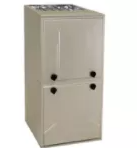
Owner’s manual
How to look up AC model number?
For a Goodman split-system outdoor unit like model CKL49-1, the model number is typically printed on the unit’s rating plate (a metal tag) or a durable label on the outdoor cabinet. Once you have it, use it to match the correct parts list and diagrams in the CKL49-1 owner's manual.
Check these common spots on the outdoor unit:
- On the outside cabinet near the electrical access panel
- On a side panel near the refrigerant line connections (copper lines)
- Inside the service panel area (after power is shut off)
- Near the top grille edge or along the base rail
- Next to the serial number on the rating plate
When you locate the tag, record these items exactly as shown:
- Model number (example: CKL49-1)
- Serial number
- Electrical ratings (volts, phase, minimum circuit ampacity)
- Any “product” or “unit” number listed
| Item | What it’s used for | Example format |
|---|---|---|
| Model number | Matching the correct parts and diagrams | CKL49-1 |
| Serial number | Identifying production run and date coding | Letters and numbers |
Goodman outdoor units often have similar-looking cabinets across multiple model families. Using the exact model number prevents ordering the wrong electrical parts (like a contactor) or hardware items (like a grommet) that may not fit your specific CKL49-1 configuration.
Last updated: February 2026
What is the average lifespan of a Goodman AC unit?
A Goodman air conditioner like model CKL49-1 typically lasts 10 to 15 years. With consistent maintenance (clean coils, correct refrigerant charge, good airflow) and proper electrical protection, it’s common to reach the high end of that range.
Most split-system outdoor units fall into these ranges:
| Condition | Typical lifespan | What usually limits life |
|---|---|---|
| Minimal maintenance | 8 to 12 years | Dirty coils, overheating, electrical wear |
| Routine maintenance | 10 to 15 years | Normal compressor and contactor wear |
| Excellent care and mild climate | 15 to 20 years | Corrosion, compressor aging |
These are the most common lifespan killers we see on outdoor condensers:
- Restricted airflow from a dirty condenser coil or blocked cabinet
- Frequent short-cycling from oversizing, thermostat issues, or low airflow indoors
- Electrical arcing and heat damage at the contactor or wire connections
- Low refrigerant charge (often from a leak) causing high compressor stress
- Corrosion from coastal air, lawn chemicals, or constant standing water
Use your CKL49-1 Owner's manual for model-specific maintenance intervals and safety steps. In general, these actions protect the compressor and electrical system:
- Keep 18 to 24 inches of clearance around the outdoor unit
- Gently rinse the outdoor coil (power off first) and keep fins unobstructed
- Replace or clean indoor air filters on schedule to prevent low airflow
- Verify the unit starts and runs smoothly; buzzing or chattering can point to a failing contactor
- Inspect wiring for heat discoloration or loose terminals (common on older systems)
If the outdoor unit struggles to start, clicks repeatedly, or won’t stay running, the contactor is a frequent wear item. For this model, we stock the central air conditioner contactor CONT2P030024VS.
Once an AC unit gets into the last third of its life, small airflow or electrical problems can turn into expensive compressor stress. Staying ahead of coil cleanliness and electrical wear is the simplest way to extend service life and reduce breakdowns.
Last updated: February 2026
What tonnage is CKL49-1?
The Goodman CKL49-1 split-system outdoor unit is typically a 4-ton central air conditioner (about 48,000 BTU/hr of cooling). For the exact capacity and any rating variations, we recommend confirming the data plate details in the owner's manual.
Cooling “tons” are a shorthand for capacity. Use this table to translate what you see on labels or listings.
| Nominal size | Approx. BTU/hr | Typical use case |
|---|---|---|
| 3 ton | 36,000 | Smaller homes, mild climates |
| 3.5 ton | 42,000 | Mid-sized homes |
| 4 ton | 48,000 | Mid-sized to larger homes |
| 5 ton | 60,000 | Larger homes, higher loads |
Use these checks to verify the capacity for your specific CKL49-1 installation.
- Check the outdoor unit rating label for BTU/hr or cooling capacity
- Look for model-number “size” cues (many systems use numbers near 48 to indicate ~48,000 BTU)
- Match the outdoor unit to the indoor coil/air handler pairing (mismatches can change delivered capacity)
- Compare the breaker size and wiring to what the owner's manual specifies
- If you are troubleshooting cooling performance, inspect electrical switching parts such as the central air conditioner contactor CONT2P030024VS (a failing contactor can prevent the compressor or fan from running)
Correct tonnage helps your system cool and dehumidify properly. An oversized unit can short-cycle and leave humidity high; an undersized unit can run constantly and still struggle on hot days.
Last updated: February 2026