Owner’s manual
 Error Codes



Where is the model number on a Kenmore upright freezer?
On Kenmore upright freezer model 2539266411, the model and serial number plate is typically located on the upper left wall inside the freezer compartment. Use the 2539266411 owner's manual location diagram and wording to confirm you are reading the correct plate.
Common places to check on an upright freezer
We recommend checking these spots in order (most common first):
- Upper left interior wall (inside the cabinet)
- Side wall inside the freezer compartment
- Ceiling area inside the freezer (some upright designs)
- Behind the lower kick plate or toe grille
- Rear exterior panel (less common, but possible)
What the label looks like and what to write down
The plate usually lists both identifiers. Record them exactly as shown:
| Item on plate | What it’s used for | Example format |
|---|---|---|
| Model number | Matching parts and diagrams | 2539266411 |
| Serial number | Dating the unit and service history | Letters and numbers |
Tips so you don’t miss it
- Open the door fully and use a flashlight; the plate can be small.
- Look for a sticker or metal plate that says Model and Serial.
- If frost or food packages block the wall, move items aside and wipe the area dry.
- If the plate is hard to read, take a close-up photo and zoom in.
Why it matters
The model number ensures you get the correct Kenmore upright freezer parts (shelves, switches, wiring, and cooling-system components) because similar-looking freezers can use different part IDs and mounting styles.
Last updated: February 2026
Is there a reset button on a Kenmore upright freezer?
Kenmore upright freezers like model 2539266411 typically do not have a dedicated “reset” button. Most “reset” situations are handled by turning the temperature control to OFF, restoring power, and then letting the freezer run long enough to stabilize temperatures (plan on about 4 hours for a full cool-down). See the 2539266411 owner's manual for the exact control location and normal indicator light behavior.
What to try first (safe reset steps)
- Turn the temperature control to OFF.
- Unplug the freezer (or switch off the breaker) for 5 minutes.
- Plug it back in.
- Set the temperature control back to the normal setting (many Kenmore uprights are factory preset around 4).
- Allow several hours for temperatures to stabilize; avoid frequent adjustments.
- If you recently added unfrozen food, keep loads small (about 3 lb per cubic foot at a time) so the freezer can recover.
If you have lights or an alarm in the handle
Some versions include a Power On light and a Temp Alarm.
| Symptom | What it usually means | What we do |
|---|---|---|
| Power On light is off | No power to the freezer (or failed light) | Check outlet/breaker; if freezer runs but light is out, the indicator may need service |
| Temp Alarm light blinking red | Warm temp after install or power outage | Let it run; avoid opening the door |
| Temp Alarm blinking red with buzzer | Warm temp condition | Press the Temp Alarm OFF button to silence, then troubleshoot airflow/cooling |
When it is a “cooling problem,” not a reset problem
A reset will not fix a freezer that cannot move air or cannot defrost. Common causes include:
- Heavy frost on the back wall (defrost system issue; defrost heater is one possible part)
- Fan not running or noisy (airflow issue)
- Door not sealing (warm air intrusion)
- Dirty or blocked condenser area (poor heat removal)
If you are diagnosing a defrost issue on this model, the freezer defrost heater 216254600 is one of the model-matched parts that can be involved.
Why it matters
Freezers need time to pull temperatures down and equalize after a power interruption, a large food load, or frequent door openings. Using the correct temperature control setting and giving the unit several hours between changes prevents false “warm” alarms and protects food quality.
Last updated: February 2026
How many cubic feet is a Kenmore freezer model 2539266411?
The exact cubic-foot capacity for Kenmore upright freezer model 2539266411 is listed in the product specifications for that model. Use the 2539266411 owner's manual to confirm the rated capacity for your unit; it is the only reliable way to match the number to your exact model.
How to find the capacity quickly
Use these checks to get the correct cubic-foot rating for 2539266411:
- Look for a Specifications or Product data section in the 2539266411 owner's manual
- Check the model and serial number plate inside the cabinet (upright models are commonly on the upper left interior wall)
- If the manual lists multiple versions, match by model number and any suffix/series info shown on the plate
- Use the capacity to plan loading; the manual guidance for many freezers is about 3 lb of fresh food per cubic foot at one time
Typical upright freezer capacity ranges (for planning)
If you are comparing sizes for storage planning, most freestanding upright freezers fall into these bands:
| Upright freezer size band | Typical capacity range | Common use |
|---|---|---|
| Compact | 3 to 9 cu ft | Small spaces, overflow |
| Medium | 10 to 17 cu ft | Family freezer, bulk shopping |
| Large | 18 to 22+ cu ft | High-volume storage |
Why it matters
Capacity affects how much food you can freeze safely at one time, how quickly temperatures recover after loading, and whether the freezer fits your long-term storage goals (bulk meat, meal prep, seasonal items).
Last updated: February 2026
How to clean coils on Kenmore upright freezer?
To clean the coils on your Kenmore 2539266411 upright freezer, unplug the freezer, pull it out for access, then gently vacuum and brush dust off the condenser coil area so airflow stays strong and the compressor can cool efficiently.
Before you start (safety and access)
- Unplug the power cord before cleaning.
- Protect the floor with cardboard or a towel before sliding the freezer out.
- Use a soft coil brush and a vacuum with a brush attachment; avoid bending tubing.
- If your model has a base panel, remove it for better access (the manual shows removing the base panel screws). See the 2539266411 owner's manual.
Step-by-step: cleaning the condenser coil
- Move the freezer away from the wall to create working space.
- Remove the lower front base panel if equipped.
- Vacuum loose dust first (this prevents pushing debris deeper).
- Brush the coil and surrounding air passages, then vacuum again.
- Reinstall the base panel, return the freezer to position, and plug it back in.
What to use (and what to avoid)
| Item | Good choice? | Why |
|---|---|---|
| Vacuum with brush tool | Yes | Lifts dust without damaging fins/tubing |
| Soft coil-cleaning brush | Yes | Reaches tight areas around the coil |
| Compressed air | Sometimes | Can blow dust into the cabinet if used carelessly |
| Water or wet rags on coils | No | Adds mess and can push grime into hard-to-dry areas |
How often should we clean the coils?
- Every 6 months in most homes
- Every 3 months if you have pets, heavy dust, or the freezer sits in a garage
- Any time you notice longer run times or warmer-than-normal cabinet sides
Why it matters
Clean coils help the sealed system reject heat; that reduces compressor run time, improves temperature stability, and can prevent overheating-related cooling problems.
Last updated: February 2026
Why is my upright freezer leaking water on the floor?
Water on the floor from your Kenmore 2539266411 upright freezer usually comes from defrost water not being routed into a pan, most often because the defrost drain plug or drain tube is open, blocked with ice, or the catch pan underneath overflowed during defrosting. See the drain-plug and drain-tube steps in the 2539266411 owner's manual.
Quick checks we recommend first
- Make sure the internal drain plug is fully seated after defrosting; an open drain lets warm air in and creates extra moisture.
- If you recently defrosted, check the shallow pan under the drain tube; it can overflow if not emptied.
- Look for ice buildup around the drain opening on the freezer floor; thaw it with warm water.
- Confirm the freezer is level; a tilt can cause water to miss the pan.
- Check the door gasket for gaps; warm, humid air can create excess condensation that turns into water.
How to drain and clear water correctly (manual method)
- Unplug the freezer and protect the floor with towels.
- Remove the drain plug on the inside floor by pulling straight out.
- If your model has a base panel, remove the base panel screws and locate the external drain tube (typically near the left-center under the cabinet).
- Place a shallow pan under the tube and monitor it so it does not overflow.
- When finished, reinstall the drain plug(s) tightly.
Common causes and what to do
| What you see | Most likely cause | What fixes it |
|---|---|---|
| Water after manual defrost | Pan overflow | Empty pan more often during defrost |
| Water even without defrosting | Door not sealing, humid air intrusion | Clean gasket, reduce door openings, level cabinet |
| Water seems to come from underneath | Drain tube not positioned over pan | Reposition tube and pan alignment |
Why it matters
Water leaks can lead to slippery floors and can also increase frost buildup inside the freezer, which reduces storage space and makes the unit work harder.
Last updated: February 2026
What are the parts of a standing freezer?
A Kenmore upright freezer like model 2539266411 cools by moving heat out of the cabinet through a sealed refrigeration system (compressor, condenser, metering device, evaporator) and then circulating cold air inside with fans and controls. The door seal and defrost system keep temperatures stable for safe food storage.
Main systems you will find in an upright freezer
- Sealed system: compressor, condenser coil, evaporator, and a filter drier
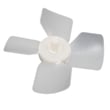
- Air movement: evaporator fan motor and fan blade
- Defrost system: defrost heater, drain path, and drain pan
- Controls and safety: thermostat/control, wiring harness, overload/starting components
- Cabinet and storage: shelves, basket/slide rails, trim, door gasket, hinges
- Lighting and switches (on models equipped): interior lamp and door/light switch
Parts on Kenmore 2539266411 that match these systems
| System | Example part on this model | What it does |
|---|---|---|
| Sealed system protection | Filter drier 5303305677 | Helps keep moisture/contaminants out of the refrigerant circuit |
| Cooling (heat removal) | Compressor 5304478809 | Pumps refrigerant to move heat out of the freezer |
| Air circulation | Blade 5308000010 | Moves air across the evaporator to distribute cold air |
| Defrost | Freezer defrost heater 216254600 | Melts frost off the evaporator during defrost cycles |
Why it matters
Knowing which system a symptom belongs to speeds up troubleshooting. For example, heavy frost points to a defrost or door-seal issue, while warm temperatures with normal frost patterns often point to airflow (fan) or sealed-system performance.
Quick checks before ordering parts
- Confirm the freezer is level and the door closes fully.
- Keep the door openings short; frequent openings increase frost.
- If you see 1/4 to 1/2 inch of frost buildup, plan a defrost and cleaning.
- Avoid extension cords; use a properly grounded outlet on its own circuit.
- Use the wiring diagram and feature descriptions in the 2539266411 owner’s manual to match symptoms to the correct system.
Last updated: February 2026
Why is my Kenmore upright freezer not freezing?
If your Kenmore 2539266411 upright freezer is running but not freezing, the most common causes are poor airflow around the cabinet, the temperature control not set cold enough, heavy frost buildup restricting airflow, or a failed cooling-system component (evaporator fan, defrost heater, compressor). Start with settings, loading, and airflow checks from the 2539266411 owner's manual.
Quick checks we recommend first
- Confirm the freezer has had a full cool-down period; allow 4 hours after startup before judging temperature.
- Verify the temperature control is set correctly; the factory preset is typically “4”, and colder is a higher number.
- Make sure packages are not blocking shelf fronts or vents; don’t let food extend past the front of shelves.
- Check for heavy frost (about 1/4 to 1/2 inch); defrost and clean if needed.
- Ensure airflow around the cabinet; leave about 3 inches of space on all sides for circulation.
What to check next (symptoms and likely causes)
| What you notice | What it usually points to | What to do |
|---|---|---|
| Runs constantly, still warm inside | Warm room, poor airflow, door not sealing | Improve clearance, reduce door openings, check door closure and leveling |
| Frost/ice coating on interior or back panel | Defrost system issue or frequent door openings | Defrost fully; if frost returns quickly, test defrost components |
| No fan sound inside, weak airflow | Evaporator fan issue (motor or blade) | Inspect fan area; consider blade 5308000010 if damaged |
| Clicks, hums, then stops; not cooling | Compressor start device or compressor problem | Have a technician diagnose; sealed-system work requires specialized tools |
Why leveling, clearance, and loading matter
Your freezer depends on a tight door seal and steady airflow. The manual notes the cabinet can feel warm because the compressor moves heat out; without proper clearance (about 3 inches) and a properly closing door, temperatures rise and frost or moisture problems can follow.
When parts are commonly involved
If the basics check out and the freezer still won’t freeze, these model-related parts are often involved in “not freezing” complaints:
- Defrost heater: freezer defrost heater 216254600 (if frost buildup is restricting airflow)
- Compressor kit: compressor 5304478809 (if the sealed system is not pumping refrigerant)
- Evaporator fan blade: blade 5308000010 (if airflow is reduced due to a damaged blade)
Last updated: February 2026