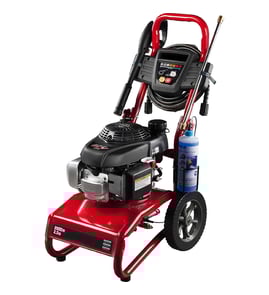



What kind of gas goes in a Craftsman CMXGWAS020737 gas power washer?
Use clean, fresh, unleaded gasoline (87 octane/87 AKI minimum) in your Craftsman CMXGWAS020737 gas power washer. Fresh fuel helps the engine start easier, run smoother, and reduces carburetor and fuel-system problems during storage.
Fuel type and what to avoid
- Use unleaded gasoline, 87 AKI (87 octane) or higher
- Buy fuel you will use within about 30 days
- Avoid old fuel that smells sour or looks dark
- Avoid mixing oil into the gas (this is a 4-cycle style setup on most units)
- Avoid overfilling; leave room for fuel expansion
Quick fill checklist (safe, no-mess)
- Shut the engine off and let it cool.
- Move the unit to a well-ventilated area.
- Clean around the fuel cap so dirt does not fall into the tank.
- Fill slowly and stop below the top of the filler neck.
- Tighten the cap and wipe up any spills before starting.
Common fuel choices
| Fuel option | Works for CMXGWAS020737? | Best for |
|---|---|---|
| Regular unleaded (87 AKI) | Yes | Everyday use |
| Mid-grade/premium (89 to 93 AKI) | Yes | Hot weather, heavy loads (not required) |
| Ethanol-free (if available) | Yes | Storage and fewer fuel issues |
Why it matters
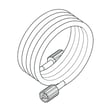
Using the right gasoline helps prevent hard starting, surging, and loss of pressure caused by fuel varnish and clogged carburetor passages. If you are also troubleshooting low pressure, a worn or leaking hose can contribute; the pressure washer water hose 84006753 is a model-matched replacement option.
You can order replacement parts for your Craftsman CMXGWAS020737 from the parts list for this model, or search by model number on Sears PartsDirect.
Last updated: February 2026
What is a good PSI for a gas pressure washer?
A good PSI for a gas pressure washer depends on what you’re cleaning. For most homeowner jobs with your Craftsman CMXGWAS020737 (siding, decks, patios, driveways), we recommend targeting about 2,000 to 3,000 PSI because it cleans effectively while staying controllable on common surfaces.
Recommended PSI by job type
Use PSI as your “cutting power” guide, then fine-tune with nozzle choice, spray distance, and detergent.
- 1,500 to 2,000 PSI: cars, outdoor furniture, grills, softer woods (use extra care)
- 2,000 to 3,000 PSI: decks, fences, siding, most concrete and pavers
- 3,000 to 4,000+ PSI: heavy concrete staining, paint prep, stubborn buildup (higher risk of surface damage)
Quick reference table
| Cleaning task | Good PSI range | Notes |
|---|---|---|
| Vehicle washing | 1,500 to 2,000 | Use a wider fan tip and keep distance |
| Deck or fence | 2,000 to 2,800 | Too much PSI can fur wood |
| Siding | 2,000 to 3,000 | Avoid forcing water behind panels |
| Driveway/patio | 2,500 to 3,200 | Use steady passes for even results |
| Paint stripping | 3,000 to 4,000+ | Test a small area first |
PSI is only half the story (PSI vs GPM)
Two pressure washers with the same PSI can clean very differently. GPM (gallons per minute) controls how fast you rinse away dirt. In real-world cleaning, a slightly lower PSI with higher GPM often finishes faster than high PSI with low flow.
How to get better cleaning without “cranking up” PSI
These steps improve results and reduce damage risk:
- Start with a 25° or 40° fan tip; avoid a 0° tip for general cleaning
- Keep the spray wand moving; don’t dwell in one spot
- Increase cleaning power by moving closer slowly, not by starting close
- Pre-soak with detergent when needed, then rinse top to bottom
- Make sure your supply hose is unrestricted; a kinked hose can cause poor performance
- Replace a worn or leaking hose so you maintain steady pressure (see pressure washer water hose 84006753)
Why it matters
Choosing the right PSI helps you clean faster while preventing common problems like etched concrete, damaged wood fibers, and water intrusion behind siding.
If you’re shopping for replacement parts or accessories for the CMXGWAS020737, we list model-matched items on the parts list for this model, and you can also search by model number on Sears PartsDirect.
Last updated: February 2026
Is 3400 PSI too much pressure to wash a car?
Yes. For washing a car, 3400 PSI is more pressure than you need and it increases the risk of damaging clear coat, forcing water past seals, or etching trim. With a Craftsman CMXGWAS020737 gas power washer, we recommend using the widest spray pattern and keeping pressure low at the surface.
Safe PSI and setup for car washing
Most car-wash results come from the right nozzle, distance, and technique, not maximum PSI.
- Target range at the paint: about 1200 to 2000 PSI
- Use a 40-degree (white) nozzle or a dedicated low-pressure soap nozzle
- Keep the tip 12 to 24 inches from the paint; increase distance on edges and decals
- Avoid spraying directly into door seals, window trim, emblems, and vents
- Test on a small lower panel first, then adjust distance and angle
Quick nozzle and risk guide
| Nozzle / pattern | Typical use on a car | Risk level |
|---|---|---|
| 40-degree (wide fan) | Rinse and gentle cleaning | Low |
| 25-degree (medium fan) | Wheels and heavy grime (carefully) | Medium |
| 15-degree (narrow fan) | Not recommended on paint | High |
| 0-degree (pencil jet) | Never on a car | Very high |
How to “turn down” a 3400 PSI pressure washer
Even if your washer is rated around 3400 PSI, you can make it car-safe by reducing effective pressure at the surface.
- Choose the widest fan nozzle you have
- Back away until the spray feels like a strong rinse, not a cutting jet
- Use soap first, then rinse; do not rely on pressure to remove stuck grit
- If your spray is pulsing or surging, check for kinks, air leaks, or a restricted supply hose
- Replace a worn or leaking supply hose so the pump stays properly fed (see pressure washer water hose 84006753)
Why it matters
Automotive paint and clear coat are thin compared to concrete or siding. Too much pressure, too close, or the wrong nozzle can cause permanent marks, lift decals, and drive water into places it should not go.
Ordering the right parts
We list model-matched replacement parts for Craftsman CMXGWAS020737 on this page (including hoses and decals). For additional parts lookups by model number, use Sears PartsDirect.
Last updated: February 2026