Owner’s manual
 View engine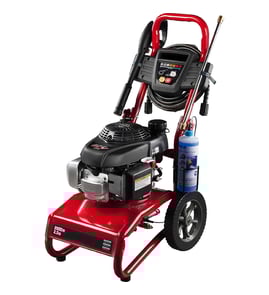



Does Craftsman have a lifetime warranty on pressure washers?
No. For the Craftsman high-pressure washer model 580762012, the owner’s manual specifies a limited one-year warranty for household use (with shorter coverage for commercial or rental use). For the exact terms and exclusions, use the 580762012 owner's manual.
What the 580762012 warranty covers (and what it does not)
The manual’s warranty language focuses on defects in materials and workmanship when the pressure washer is maintained and operated as instructed.
Common items not covered include:
- Expendable maintenance items (for example, spark plugs and air filters)
- Damage caused by running the pump with no water supply
- Damage from operator abuse or negligence
- Problems caused by skipped maintenance listed in the manual
Warranty length by usage type
| How the pressure washer is used | Warranty period stated in the manual |
|---|---|
| Household (consumer) use | 1 year from purchase date |
| Commercial use | 90 days from purchase date |
| Rental use | 30 days from purchase date |
Why maintenance matters for warranty coverage
The manual ties warranty value to proper upkeep. Following the maintenance schedule helps prevent common failures like pump damage, overheating, and poor engine performance.
Key upkeep habits that protect the machine:
- Always confirm water is flowing before starting the engine
- Check the gun and wand assembly for wear at least seasonally
- Keep the air filter clean and replace it when needed
- Replace the spark plug on a regular schedule
- Change engine oil after the first 2 hours, then about every 25 hours (more often in dusty conditions)
Parts that commonly wear during normal use
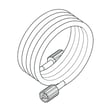
If you are troubleshooting performance issues, worn accessories are a frequent cause. For example, a damaged high-pressure line can reduce pressure and cause leaks; the hose 84006753 is a model-matched replacement option.
Last updated: February 2026
Where to find model number on Craftsman pressure washer?
On the Craftsman high-pressure washer model 580762012, we typically find the model number on the data label/decals attached to the frame. Check the upper frame first, then the lower frame, especially on the back side; confirm the exact label location in the 580762012 owner's manual.
Common places to check on a Craftsman pressure washer
Look for a silver or white sticker, or a printed decal plate. On model 580762012, the model information is commonly found in these spots:
- Top rail of the upper frame (near the handle area)
- Back side of the upper frame
- Top of the lower frame (near the pump base)
- Back side of the lower frame
- Near the instruction/decal cluster (often close to the hose hanger area)
What the label usually includes
The model label is the fastest way to match parts like a hose, wand, or pump hardware.
| What you see on the label | What it helps with |
|---|---|
| Model number (example: 580762012) | Ensures correct parts diagrams and fit |
| Serial number | Identifies production run/version |
| PSI rating and branding decals | Confirms you are looking at the correct unit |
Tips if the label is dirty or hard to read
- Wipe the frame with a damp cloth and mild soap; avoid blasting the label with high pressure
- Use a flashlight and look at an angle to read faded printing
- Take a close-up photo and zoom in to confirm characters
- If the decal is missing, compare your frame and pump layout to the exploded views in the 580762012 owner's manual
Why it matters
Craftsman pressure washer parts can look similar across models, but small differences affect fit. Using the exact model number 580762012 helps us match the correct replacement parts and hardware (for example, the hose 84006753 if you are replacing the high-pressure hose).
Last updated: February 2026
Is it worth repairing a pressure washer?
For the Craftsman pressure washer model 580762012, repair is worth it when the problem is a wear item (hose leaks, O-rings, wand or gun issues) because those fixes are straightforward and restore safe operation. If the pump or engine has major damage, replacement is usually the better value.
Quick way to decide (repair vs replace)
Use this checklist first; it matches the most common failure points we see on gas pressure washers.
- Repair when the issue is a leak, worn seal, clogged inlet screen, or a damaged spray accessory
- Replace when the pump or engine has internal failure (low pressure after troubleshooting, metal noise, seized shaft)
- Repair when the unit is otherwise in good shape and you only need 1 to 2 parts
- Replace when repairs are frequent or the washer has been run without water (this commonly damages pumps)
- Repair when you can confirm the fix in the troubleshooting steps in the 580762012 owner's manual
Common “worth repairing” fixes for model 580762012
The owner’s manual calls out several serviceable items that often solve performance and leak complaints.
| Symptom | Most likely fix | Typical effort |
|---|---|---|
| Water leaking at connections | Replace worn O-rings, reseat quick-connects | Low |
| Water spraying from hose | Replace the high-pressure hose (do not patch) | Low to medium |
| Trigger feels unsafe or won’t reset | Inspect spray gun latch and trigger action | Low |
| Low pressure after storage | Purge air/contaminants, clean inlet screen | Low |
Parts that commonly make sense to replace
- High-pressure hose (manual states to replace immediately if cut, leaking, abraded, or bulging)
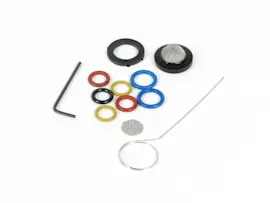
- Connection O-rings and rubber washers (leaks at gun, wand, or hose ends)
- Wand or couplers if they will not seal consistently
If your hose is leaking or damaged, use the correct replacement such as the hose 84006753 that meets the washer’s minimum pressure rating.
When replacement is the smarter choice
Replace the unit when the cost and time to repair exceed the value you get back.
- Pump has persistent low pressure after basic checks and nozzle cleaning
- Engine problems (hard starting, knocking, heavy smoke) plus pump issues at the same time
- You need multiple major assemblies at once (pump plus crankcase-related damage)
Why it matters
A leaking high-pressure hose is a safety issue; the manual warns that water spraying from a leak can inject into skin, and it also instructs to never repair a high-pressure hose. Fixing leaks correctly protects you and prevents pump damage.
Last updated: February 2026
How much does it cost to get a pressure washer fixed?
For a Craftsman pressure washer model 580762012, repair cost typically runs $50 to $300+ depending on whether you’re replacing a wear item (like O-rings or a hose) or addressing a bigger issue (pump, valves, or engine-related problems). Use the 580762012 owner's manual to match symptoms to likely fixes.
Typical repair cost ranges (what you’re paying for)
- $50 to $125: Basic tune-up items (spark plug, air filter, cleaning a clogged nozzle, replacing worn O-rings)
- $100 to $250: Leak fixes and common water-path repairs (hose, fittings, quick-connect seals)
- $150 to $400+: Pump performance problems (valves, internal wear, pressure loss diagnosis)
- $200 to $600+: Fuel system or engine service (carburetor cleaning/rebuild, governor issues)
- $300 to $1,000+: Major pump replacement or extensive engine work (often where replacement becomes the better value)
Parts that commonly drive the total cost
Many “repairs” on a gas pressure washer are really part replacements plus labor. For this model, examples include:
- Hose 84006753 if the high-pressure hose is cut, bulging, or leaking
- Wand and spray-gun connection seals (often O-rings or washers)
- Pump water seals and check valves (pressure surging, low pressure)
- Nozzle orifice cleaning or replacement (poor spray pattern, low pressure)
Quick comparison: DIY vs. service shop
| Repair type | DIY parts cost | Shop cost (parts + labor) | Notes |
|---|---|---|---|
| O-ring/connection leak | Low | Low to moderate | Fast fix if you find the leaking joint |
| High-pressure hose leak | Moderate | Moderate | Replace the hose; do not patch |
| Low pressure/surging | Low to moderate | Moderate to high | Often nozzle, inlet screen, or pump valves |
| Engine won’t start | Low to moderate | Moderate to high | Fuel, spark, air, carburetor |
Why it matters
Your manual calls out that a worn or leaking high-pressure hose should be replaced immediately and not repaired; leaks can be dangerous and can also lead to pump damage if the unit is run incorrectly. Following the maintenance schedule also helps avoid the expensive pump and engine repairs.
How we recommend deciding whether to repair
- Start with the symptom and troubleshooting steps in the manual
- Price the likely parts first, then add labor (many shops bill by the hour)
- If the pump or engine needs major work, compare the estimate to the cost of a replacement unit
- Avoid running the washer without a proper water supply to the pump
Last updated: February 2026
Are Craftsman gas pressure washers any good?
Yes. Craftsman gas pressure washers like model 580762012 are a solid choice for typical home cleaning because they deliver strong pressure and are straightforward to assemble and operate; long-term satisfaction depends on doing the routine maintenance and avoiding pump damage from running without water (as outlined in the 580762012 owner's manual).
What “good” means for this model
For the Craftsman 580762012 (2000 PSI class), “good” usually comes down to whether it starts reliably, maintains steady pressure, and stays leak-free at the hose, wand, and pump connections.
- Strong cleaning performance for driveways, siding, decks, and patio furniture
- Simple setup: hose to pump, hose to spray gun, and basic accessory assembly
- Best results when you keep a steady water supply to the pump
- Durability improves when you follow storage and maintenance steps
Common issues customers run into (and what to check first)
Many performance complaints trace back to setup, water supply, or wear items.
- Low or surging pressure: check inlet water flow, nozzle condition, and quick-connect seating
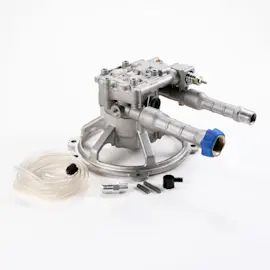
- Leaks at connections: inspect and replace worn seals; the pump uses O-rings and seal kits over time
- Soap not drawing: verify the chemical pickup tube and filter are installed and not clogged
- Excess vibration: confirm mounting hardware is tight and feet are intact
Quick “good vs. needs attention” checklist
| What you notice | Most likely cause | First action |
|---|---|---|
| Steady spray, no leaks | Normal operation | Keep up with maintenance |
| Pulsing spray | Nozzle restriction or air in supply | Clean nozzle, confirm water flow |
| Drips at hose/wand | Worn O-ring or loose fitting | Reseat fitting, replace seal |
| Won’t build pressure | Unloader/check valve issue | Inspect pump components per manual |
Parts that affect day-to-day performance
If your washer is losing performance, these model-matched parts are common touchpoints:
- Hose 84006753 (high-pressure hose condition and end fittings)
- Wand B2370 (spray wand connection and control)
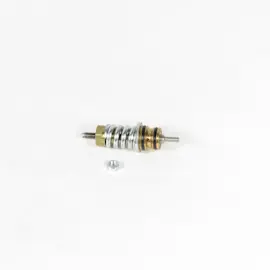
- Valve B1449 (pump valve function and sealing)
Why it matters
A gas pressure washer can feel “bad” even when the engine is fine if the pump is starved of water, seals leak, or the spray path is restricted. Preventing pump damage and keeping seals tight is what protects pressure and extends service life.
Last updated: February 2026