Owner’s manual
 View engine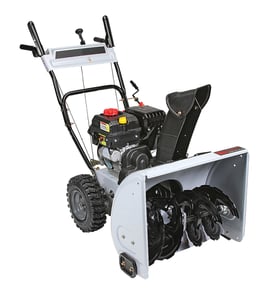



How do I tell how old my snowblower is?
To tell how old your MTD snow thrower model 31AH64EG795 is, we use the unit’s serial number date code. On many MTD-built snowblowers, the code format is: 1st character = product type, 2nd character = month (letter), 3rd and 4th characters = day of the month, and 5th character = year. Confirm the exact serial label location and format in your owner's manual.
Where to find the date code
Look for a model and serial number label on the snowblower frame. Common locations include:
- Rear of the unit near the engine or frame crossmember
- Side of the auger housing
- Under the dash panel or near the chute control area
- Near the axle area by the wheels
- On the engine area (engine serial is different from the snowblower serial)
How to decode it (example)
Once you have the serial number, read the first 5 characters as the date code.
| Position | What it means | Example value | Example meaning |
|---|---|---|---|
| 1 | Product type | (varies) | Identifies equipment family |
| 2 | Month (letter) | A-L (varies) | Month of manufacture |
| 3-4 | Day | 01-31 | Day of the month |
| 5 | Year | 0-9 | Last digit of the year |
Why it matters
Knowing the build date helps us match the correct OEM replacement parts and revisions for your 31AH64EG795, especially wear items like belts, skid shoes, shave plates, and shear pins.
Tips to avoid mix-ups
- Use the snowblower serial number for age; the engine serial number dates the engine, not the whole unit.
- If the label is worn, take a clear photo and write down every character before ordering parts.
- When replacing common wear parts, match by model first, then confirm part number and fit.
Last updated: February 2026
Should I spray my snowblower with WD-40?
Yes, we recommend using a light protectant spray on your MTD snow thrower model 31AH64EG795, but use it only on the snow-handling surfaces (chute, auger housing, impeller area) and for off-season rust protection. Keep any spray off belts, friction-drive parts, and hot engine surfaces.
Where spraying helps most
Use a light oil or silicone-type protectant to reduce sticking and help prevent rust on exposed metal.
- Inside the discharge chute (to reduce snow buildup)
- Auger housing and impeller area (light coat, then let it set)
- Exterior metal surfaces after cleaning and drying
- Fasteners and linkages that show surface rust (wipe excess)
Where not to spray (important)
Spraying the wrong area can cause slipping, belt damage, or a safety hazard.
- Belts and pulleys (auger belt, drive belt)
- Friction disc and drive plate area (if equipped)
- Tires and skid shoes (overspray can reduce traction/control)
- Muffler, cylinder, or any hot engine parts
- Any area where spray can drip onto the ground drive system
Quick safe routine (in-season and storage)
We follow the same safety steps your manual calls out before any cleaning or maintenance.
- Shut the engine off and remove the key.
- Wait for all moving parts to stop; then disconnect the spark plug wire.
- Clear packed snow using the clean-out tool, not your hands.
- Wipe surfaces dry; then apply a light coat to the chute and housing.
| When to apply | What to do | Goal |
|---|---|---|
| During the season | Light coat on chute and housing only | Reduce clogging and sticking |
| End of season (30+ days) | Clean, dry, then rustproof with light oil or silicone | Prevent corrosion in storage |
Why it matters
Your manual specifically calls out rustproofing the machine for off-season storage using a light oil or silicone coating. Keeping sprays away from the drive and auger belt areas helps prevent slippage and premature wear.
For model-specific safety and storage steps, follow the owner's manual.
Last updated: February 2026
Where to find model number on MTD snowblower?
On the MTD snow thrower model 31AH64EG795, the model number is on the model plate located at the rear of the frame. Stand in the operator’s position and look down at the back of the unit to find and record the full model and serial number (you will use them for parts and service information). See the owner's manual for the exact identification-plate callout.
Where to look on the machine
Check these common spots first (starting with the one the manual calls out):
- Rear of the frame: stand at the operator’s position and look down at the back of the snowblower
- Rear frame area between the wheels (often near the axle)
- Near the belt cover or lower side panel (varies by configuration)
- If the label is dirty or faded, wipe the area and use a flashlight to read the stamped or printed characters
What you should write down
Record both identifiers exactly as shown; they are not interchangeable.
- Model number (for example, 31AH64EG795)
- Serial number (unique to your specific machine)
- Any suffix letters or extra digits (do not omit them)
Quick ID guide
| Item | What it’s used for | Example format |
|---|---|---|
| Model number | Matching the correct parts diagrams and part numbers | 31XXXXXXXXXX |
| Serial number | Production run details and service reference | Letters and numbers |
Why it matters
MTD operator’s manuals often cover multiple two-stage snow thrower variations, so the model plate is the fastest way to ensure you’re ordering the correct belt, cable, shear pin, skid shoe, or shave plate for your exact build.
Last updated: February 2026
Which snow blower throws snow the farthest?
Snow throw distance depends more on snow conditions and how the machine is set up than on one “farthest-throwing” model. On your MTD snow thrower model 31AH64EG795, you can increase or decrease throw distance by adjusting the chute angle and keeping the auger system working correctly; see the owner's manual.
What actually makes a snowblower throw farther
Throw distance is mainly a combination of impeller speed, snow type, and chute settings.
- Snow type: light, dry snow throws farther than wet, heavy snow
- Engine RPM: running at fast throttle typically improves discharge performance
- Chute angle: higher angle usually increases distance; lower angle reduces distance
- Chute direction controls: help aim the stream without changing distance much
- Auger condition: worn belts or slipping drive reduces how hard snow is fed and discharged
How to adjust throw distance on model 31AH64EG795
Your manual explains that you adjust distance by changing the angle of the chute assembly.
- Stop the engine, remove the key.
- Loosen the chute knob.
- Pivot the chute up or down.
- Tighten the knob and test.
If your unit has a 4-way chute control, you can also change the chute tilt (up or down) at the control to fine-tune distance.
Quick comparison: “farthest throw” claims vs real-world results
| Factor | What you might expect | What usually happens |
|---|---|---|
| Bigger engine/impeller | Longer throw | Only if snow is dry and RPM stays high |
| Wet, heavy snow | Still long throw | Shorter throw, more clogging |
| Chute aimed higher | Longer throw | Can reduce accuracy in wind |
| Belt slip/wear | No change | Noticeably shorter throw and weak discharge |
When to suspect a performance problem (not a “short-throw” design)
If your 31AH64EG795 suddenly throws much shorter than it used to, these are common causes:
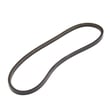
- Auger drive belt worn or stretched (see snowblower auger drive belt 256963)
- Shear pin broken so an auger is not turning (common on two-stage units)
- Chute packed with snow or ice
- Engine not reaching full speed (fuel, spark plug, or carburetion issue)
Why it matters
Maximizing throw distance helps you place snow where you want it and reduces re-clearing. Correct chute adjustment and a healthy auger drive system usually make a bigger difference than chasing a specific “60-foot” claim.
Last updated: February 2026