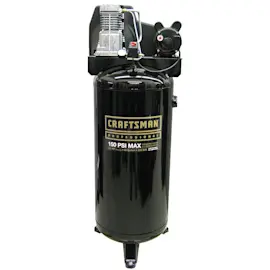
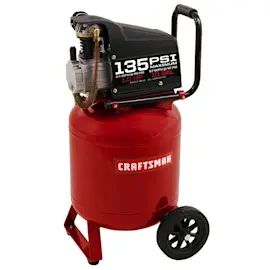
Owner’s manual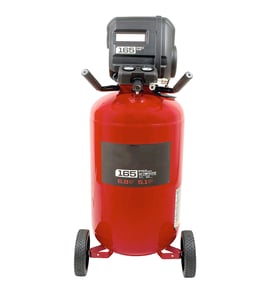

Is a 150 psi air compressor good for car tires?
Yes. A 150 PSI air compressor is more than enough for inflating car tires because most passenger tires are typically set around 32 to 36 PSI; the key is regulating the outlet pressure so you never exceed the tire’s maximum rating. For your Craftsman 919150270 compact air compressor, use the adjustable pressure valve to control tire inflation as described in the owner's manual.
How to inflate car tires safely with the Craftsman 919150270
We recommend using the compressor’s adjustable pressure valve and increasing pressure slowly.
- Check the tire sidewall for the tire’s maximum PSI and follow the vehicle placard for the correct target PSI
- Set the adjustable pressure valve to the “Start” position before turning the compressor on
- Connect the air hose securely to the outlet, then attach an air chuck to the tire valve stem
- Turn the compressor on, then slowly increase the pressure setting
- Stop frequently to check pressure with a tire gauge for accuracy
- If you cannot hear or feel pressure being relieved while adjusting, shut the compressor off and address the pressure valve issue before continuing
What “150 PSI” really means for tire inflation
“150 PSI” is the compressor’s maximum capability, not what you should put into a tire. Tire inflation depends on controlled outlet pressure and airflow.
| Tire type | Typical target pressure | 150 PSI compressor suitable? |
|---|---|---|
| Passenger car | 32 to 36 PSI | Yes |
| Light truck / SUV | 35 to 55 PSI | Yes |
| Trailer (some types) | 50 to 80 PSI | Yes |
Why it matters
Too much air pressure can rupture or explode a tire. The manual specifically warns to verify the maximum pressure rating for the tire and ensure the compressor outlet pressure never exceeds that rating; controlled adjustment is what makes a higher-PSI compressor safe and useful.
Last updated: February 2026
Is it worth it to repair a compressor?
It’s worth repairing a Craftsman compact air compressor model 919150270 when the problem is a common, low-cost fix (air leak, clogged intake filter, loose wiring, bad hose). It’s usually not worth it when the pump or motor is failing repeatedly, or when safety-critical pressure controls are faulty.
Quick decision checklist
- Repair it if the issue is air leaks, a restricted air intake filter, or a loose fitting.
- Repair it if the compressor otherwise runs normally and the fix is straightforward.
- Replace it if the motor is faulty or the pump is worn and performance keeps dropping.
- Replace it immediately if the adjustable pressure valve is not functioning (do not operate in that condition).
- Replace it if you need more air than the unit can deliver for your tools (chronic low air delivery).
What we see most often on this model
The troubleshooting guidance for model 919150270 points to a few high-impact, repairable causes:
- Not enough air delivery: prolonged excessive air use (tool demand exceeds compressor output), restricted intake filter, hole in hose, or leaks.
- Electrical issues: wrong extension cord length/gauge, loose electrical connections.
For model-specific safety steps and the troubleshooting table, use the owner's manual.
Repair vs. replace: practical comparison
| Situation | Best choice | Why |
|---|---|---|
| Hose/fitting leak, minor air leak | Repair | Low cost, quick improvement in performance |
| Dirty or restricted air intake filter | Repair | Restores airflow and reduces overheating |
| Wrong extension cord or loose connection | Repair | Prevents voltage drop and nuisance problems |
| Faulty motor | Replace (often) | Higher cost and labor; reliability risk |
| Pressure valve not functioning | Replace the valve before use | Safety-critical; do not operate until corrected |
Why it matters
A compressor that can’t regulate pressure or that runs hot from restricted airflow can fail sooner and create unsafe operating conditions. Fixing simple airflow and leak issues first protects the pump and motor and helps you decide if a bigger repair is justified.
Last updated: February 2026
What is the average lifespan of an air compressor?
A typical air compressor lasts 10 to 15 years with normal homeowner use and basic maintenance. For your Craftsman 919150270 compact air compressor, keeping it clean, well ventilated, and serviced on schedule is what most directly determines whether it lands closer to 10 years or closer to 15.
Typical lifespan by compressor type
Lifespan depends heavily on design and duty cycle.
- Small oil-free piston (DIY/portable): 5 to 10 years
- Heavier cast-iron piston (shop use): 10 to 15 years
- Rotary screw (commercial/industrial): 15 to 20+ years
| Compressor type | Typical use | Typical lifespan |
|---|---|---|
| Oil-free piston | Home, intermittent | 5 to 10 years |
| Piston (lubricated/cast-iron) | Garage/shop | 10 to 15 years |
| Rotary screw | Continuous/commercial | 15 to 20+ years |
What extends the life of the Craftsman 919150270
These are the biggest life-extenders we see for compact air compressors:
- Run it in a dry, clean, cool, well-ventilated area so the pump and motor stay cooler.
- Keep the air intake area clear so airflow is not restricted.
- Blow off dust and dirt regularly; a clean compressor runs cooler and typically lasts longer.
- Use extra air hose instead of an extension cord to reduce voltage drop and motor strain.
- If you must use an extension cord: use a grounded 3-wire cord, 50 ft or shorter, and 12 AWG or larger.
For the model-specific maintenance schedule and operating limits, follow the owner's manual.
Why it matters
Compressor wear accelerates when the motor runs hot or struggles for power. Good ventilation, clean cooling surfaces, and proper electrical supply reduce heat and load, which directly protects the pump, valves, and motor windings.
Last updated: February 2026
What is the common problem with an air compressor?
The most common problems we see on the Craftsman 919150270 compact air compressor are air leaks, low air delivery (not enough pressure or flow for the tool), and starting issues caused by pressure trapped in the pump. These usually trace back to loose fittings, a dirty air intake filter, or using more air than the compressor can supply.
Most common problems (and what they look like)
- Air leaks: hissing at the hose connection, regulator, or fittings
- Low pressure or low flow: tool runs weak, compressor runs constantly, tank pressure drops fast
- Compressor will not start: motor hums or trips, especially after it just shut off
- Overheating: hot pump/motor, frequent thermal shutdowns (often from poor ventilation or heavy use)
- Excessive noise or vibration: loose mounting hardware or worn internal components
Quick checks you can do safely
Before any inspection or adjustment, we unplug the compressor and bleed off air pressure by turning the adjustable pressure valve to the START position (this is also the correct setting to relieve trapped pressure before restarting). See the owner's manual.
- Confirm the regulator outlet pressure is set for your tool (never above the tool rating)
- Listen for leaks; snug fittings if you hear hissing
- Check the air intake muffler/filter area for dust buildup and clean it
- If it will not restart, set the adjustable pressure valve knob to START to unload pressure
- Avoid extension cords when possible; use extra air hose instead
Troubleshooting guide: symptom to likely cause
| Symptom | Likely cause | What to do |
|---|---|---|
| Hissing leak | Loose fitting or damaged hose | Tighten fittings; replace hose if damaged |
| Not enough air | Excessive air demand | Reduce air usage; use a lower-demand tool |
| Not enough air | Restricted/dirty intake filter | Clean or replace the intake filter |
| Will not start | Air trapped in pump | Set valve knob to START to relieve pressure |
Why it matters
Air leaks and restricted intake reduce air delivery and make the compressor run hotter and longer. Keeping the unit clean, well-ventilated, and matched to the tool’s pressure and flow needs helps prevent repeat failures and extends service life.
Last updated: February 2026