Owner’s manual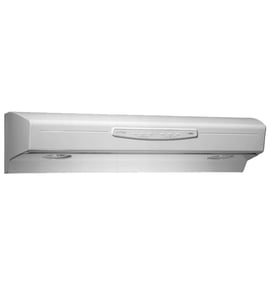




Does GE make range hoods?
Yes. GE makes a full line of range hoods, including the GE JVX5300DJ2WW, designed to remove smoke, steam, and cooking odors using either ducted venting or recirculating airflow. For model-specific features and operating details, use the JVX5300DJ2WW owner’s manual.
GE range hoods are built to ventilate the cooking area and typically include a blower (fan), lights, and filters. The JVX5300DJ2WW can be set up to vent outside or to recirculate air back into the kitchen (with the correct filter setup).
Common GE range hood features you may see
- Ducted or recirculating installation options
- Multiple fan speeds and a control panel
- Cooktop lighting (bulb and light socket)
- Grease filtration to help reduce buildup in the hood
- Optional charcoal filtration for recirculating setups
If you are maintaining a JVX5300DJ2WW, these are typical wear or failure items:
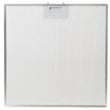
- Range hood grease filter WB02X27207 (helps capture grease before it reaches the blower)
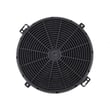
- Range hood charcoal filter JXCF55 (used for recirculating installations)
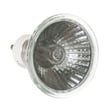
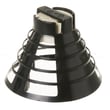
- Range hood light bulb WB25X24863 (if the hood light is out)
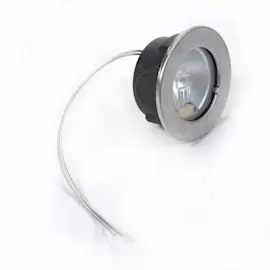
- Range hood light socket WB18X27245 (if the bulb is good but the light still fails)
| Setup type | Where air goes | Filters typically used | When it’s common |
|---|---|---|---|
| Ducted (vented) | Outside through ductwork | Grease filter | Best odor and moisture removal |
| Recirculating | Back into the kitchen | Grease filter + charcoal filter | When outside venting is not available |
Choosing the correct venting method and filters affects how well your GE range hood clears smoke and odors, and it also helps protect internal parts like the blower assembly and control components from grease buildup.
Last updated: February 2026
How to change the light in a GE range hood?
To change the light in your GE JVX5300DJ2WW range hood, turn the light off, let the bulb cool, remove the light cover if your version has one, then rotate the bulb counterclockwise to unlock and pull it out. Install the same type bulb and lock it in place.
- Turn the hood light switch to Off.
- Allow the lamp to cool before touching it.
- Use latex or nitrile gloves for better grip and to keep oils off the bulb.
- Support the lens or cover as you remove it so it does not drop.
- Confirm your hood uses a GU10 compatible lamp style (common on this model family).
- Turn the light Off at the hood control.
- If your hood has a lens, remove the light cover.
- Rotate the bulb counterclockwise to unlock.
- Pull the bulb straight out.
- Install the replacement bulb:
- Align the pins with the socket openings.
- Push in fully, then rotate clockwise to lock.
- Reinstall the light cover (if used) and test the light.
For the JVX5300DJ2WW, we match the light to the OEM-style lamp used in the hood.
| What you are replacing | What it does | Sears PartsDirect part |
|---|---|---|
| Light bulb | Provides cooktop lighting | Range hood light bulb WB25X24863 |
| Light socket (if bulb is good but won’t light) | Holds bulb and supplies power | Range hood light socket WB18X27245 |
- Make sure the bulb is fully seated and locked (pins must be in the narrow neck of the socket).
- Try the light button sequence (On, Night, Off) if your control panel uses that style.
- If the socket looks heat-damaged or loose, replace the socket.
- If both lights and fan act erratically, reset power at the breaker for 30 seconds.
A correctly installed, correct-type bulb prevents early light failure and avoids overheating the lamp holder, which helps protect the wiring and control components.
For model-specific diagrams and the exact light style notes, use the JVX5300DJ2WW owner’s manual.
Last updated: February 2026
Why is the fan not working on my GE stove?
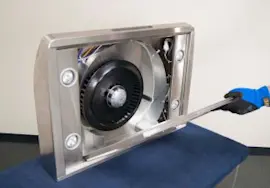
On the GE JVX5300DJ2WW range hood, a “fan not working” problem is usually caused by a tripped breaker/blown fuse, a loose blower wiring connector, or airflow restrictions from dirty filters or blocked ducting. We follow the troubleshooting steps in the JVX5300DJ2WW owner’s manual first.
- Reset the circuit breaker or replace the house fuse (the hood will act dead if power is lost).
- Press Lo/Med/Hi and listen for any motor hum; humming with no airflow often points to a stuck blower wheel or a weak motor capacitor.
- Remove the grease filters and look up at the blower area for a loose or dangling connector.
- Clean the metal grease filter; replace the charcoal filter if you run the hood in recirculating mode.
- Check the wall/roof cap damper door for sticking or flipping over.
Turn off power at the breaker, then remove the filters and inspect these common causes:
| What you find | What it usually means | What to do next |
|---|---|---|
| Blower connector loose/unplugged | Fan will not run on any speed | Reseat the connector firmly (per manual guidance) |
| Filters heavily greasy or charcoal filter saturated | Fan runs but moves little air | Clean/replace filters and retest |
| Damper stuck or duct blocked | Poor airflow, loud airflow noise | Clear obstruction; verify damper swings freely |
| Motor won’t start, may just hum | Failed motor capacitor or blower assembly | Test/replace the failed component |
If power is good and the connector is secure, the failure is typically in the motor circuit:
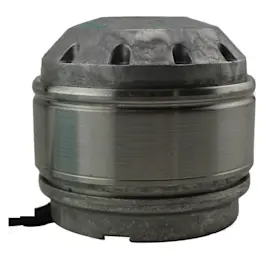
- Range hood blower assembly WB26X30785 (motor and blower as an assembly)
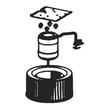
- Capacitor 18mfd 450v WB27X27239 (helps the blower motor start and run)
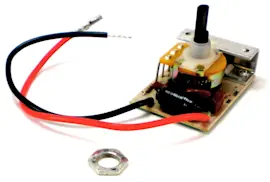
- Control board and button WB27X27205 (if buttons do not reliably command the fan)
A non-working hood fan lets heat, smoke, and grease stay in the kitchen. Even when the motor runs, dirty filters or a stuck damper can make it seem like the fan “isn’t working” because airflow drops sharply.
Last updated: February 2026