Installation guide
 Owner’s manual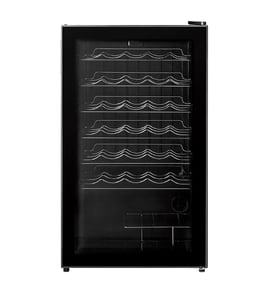




How to order GE appliance parts?
For your GE ZDWR240PABS wine and beverage cooler, we recommend ordering replacement parts by matching your exact model number and then selecting the correct part from the ZDWR240PABS parts list; the ZDWR240PABS owner's manual also helps you identify components and confirms safe handling steps before any repair.
- Complete model number: ZDWR240PABS
- Serial number (helps confirm production details)
- A clear description of the symptom (not cooling, noisy, door not sealing)
- The part name and part ID from the parts list (example: start relay, control)
- Basic safety step: unplug the unit before inspecting parts (per the manual guidance)
If you are troubleshooting, these are frequently selected items for cooling, control, and door fit issues:
- Wine cooler compressor start relay WR07X10072
- Temperature control WR02X11845
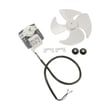
- Refrigerator condenser fan motor assembly WR60X10163
- Wine cooler door gasket WR24X10161
- Wine cooler door reverse hinge kit WR13X10275
| Symptom | Most likely area | Example part on this model |
|---|---|---|
| Not cooling or warm cabinet | Start components, airflow | WR07X10072, WR60X10163 |
| Temperature swings | Temperature sensing/control | WR02X11845 |
| Door not sealing, sweating, poor temps | Door seal, alignment | WR24X10161, WR13X10275 |
Ordering by the exact model number and part ID prevents fit and wiring mismatches. On a built-in style wine and beverage cooler like the GE ZDWR240PABS, correct door closure and stable temperature control directly affect cooling performance and beverage storage conditions.
Last updated: February 2026
Can wine coolers be repaired?
Yes. A GE wine and beverage cooler like model ZDWR240PABS can be repaired in many common situations by diagnosing the symptom, checking the basics (power, airflow, door seal, controls), and replacing the failed part when needed; the ZDWR240PABS owner's manual also includes a problem solver section to guide next steps.
- Confirm the unit has power; reset the breaker if needed.
- Verify the temperature setting and that the control responds.
- Make sure the door closes and seals fully; warm air leaks cause poor cooling.
- Keep the door openings to a minimum after a power outage to stabilize temperature.
- Unplug the unit (or shut off power at the breaker for built-in installs) before any inspection or cleaning.
Many repairs are straightforward part replacements once the symptom is clear.
| Symptom | What it usually points to | Example part for ZDWR240PABS |
|---|---|---|
| Not cooling, compressor clicks | Start device issue | Wine cooler compressor start relay WR07X10072 |
| Runs warm, poor heat removal | Condenser fan not running | Refrigerator condenser fan motor assembly WR60X10163 |
| Temperature won’t regulate | Control issue | Temperature control WR02X11845 |
| Door won’t seal, sweating | Gasket leak | Wine cooler door gasket WR24X10161 |
Some repairs are best handled by a qualified technician because they involve sealed-system work or advanced electrical diagnosis.
- Refrigerant leaks or sealed-system restrictions
- Compressor replacement (if needed)
- Repeated tripping of the breaker
- Burnt wiring, melted connectors, or strong electrical odor
A wine reserve is designed for storing and cooling beverages (not perishable foods). Keeping the door sealed, airflow clear, and controls working protects temperature stability and helps the compressor and condenser system run efficiently.
Last updated: February 2026
What causes a wine cooler to stop working?
A GE wine and beverage cooler like model ZDWR240PABS usually stops working because it is not getting power, airflow is restricted (overheating the sealed system area), or a key cooling or control component fails. We recommend checking the basics first, then testing the cooling circuit parts.
- Confirm the outlet has power and the breaker is not tripped.
- Make sure the door is closing fully; warm air leaks can mimic a cooling failure.
- Verify the temperature setting is correct and not locked (the manual describes a control lockout using the + and - pads).
- Keep door openings to a minimum after a power interruption; temperatures can rise gradually without harming wine.
- If the unit is built-in, confirm it has the required clearances and ventilation per the installation guide.
If the unit has lights but will not cool, or you hear clicking/humming, these are common suspects:
- Failed start device: wine cooler compressor start relay WR07X10072
- Failed condenser fan (no airflow across condenser): refrigerator condenser fan motor assembly WR60X10163
- Failed temperature control: temperature control WR02X11845
- Control board or power supply issue (intermittent or dead unit): control electronics may be involved
| Symptom | What it often points to | What we check next |
|---|---|---|
| No lights, no display, no sound | Power supply issue | Outlet, cord, breaker, internal wiring |
| Lights on, not cooling | Cooling circuit or airflow problem | Fan operation, relay, temperature control |
| Clicking every few minutes | Start relay/overload issue | Test/replace start relay |
| Runs constantly, weak cooling | Dirty condenser/poor ventilation or sealed system strain | Clean airflow path, verify install clearances |
A wine cooler depends on steady airflow and stable temperature control. When airflow is blocked or the compressor cannot start reliably, cabinet temperatures drift and the unit can appear “dead” even though it still has power.
For model-specific operating details like setting temperature and using the control lockout, use the owner's manual.
Last updated: February 2026
Why is my GE wine fridge not cooling?
If your GE ZDWR240PABS wine and beverage cooler is not cooling, the most common causes are warm air leaking past the door, restricted airflow from dirty condenser areas, or a failed cooling-system control or start component. Start with door closure and ventilation checks, then move to electrical parts testing using the ZDWR240PABS owner's manual.
- Confirm the door closes fully and the cabinet is level; poor leveling can prevent proper door alignment and closure.
- Check the door gasket for gaps, tears, or areas that are not sealing.
- Keep the door openings to a minimum; frequent openings quickly raise cabinet temperature.
- Verify the unit has adequate ventilation around the kick plate and condenser area (no blocked airflow).
- If there was a recent power outage, allow several hours for temperatures to stabilize after power is restored.
If the basic checks look good, these model-compatible parts are common suspects:
| Symptom | What it often points to | Example part for ZDWR240PABS |
|---|---|---|
| Compressor hums, then clicks off | Start device issue | Wine cooler compressor start relay WR07X10072 |
| Warm cabinet, fan not running near condenser | Condenser fan problem | Refrigerator condenser fan motor assembly WR60X10163 |
| Temperature swings or won’t respond to setting | Control issue | Temperature control WR02X11845 |
| Frosty edges, sweating, or warm air leaks | Door seal leak | Wine cooler door gasket WR24X10161 |
- Unplug the unit (or switch off the breaker if built-in) before inspecting or testing components.
- Inspect the door gasket contact all the way around; clean the gasket and mating surface so it seals.
- Listen for the condenser fan and compressor when the unit calls for cooling.
- If the compressor repeatedly clicks on and off, test the start relay and wiring connections.
- If you use a meter, follow safe testing practices; our guide how to use a multimeter to test electrical parts video helps you check components correctly.
A wine and beverage cooler depends on a tight door seal and steady airflow across the condenser to remove heat. Even a small air leak or a stalled condenser fan can keep temperatures stuck around the mid-50s or higher and overwork the compressor.
Last updated: February 2026